
 Apple Podcasts
 RSS
 Amazon Music
 Spotify
 YouTube
 PocketCasts
 CastBox
 Player.fm
 TuneIn
 Audible
 App not listed? Try this RSS link

Humans’ relationships with the other creatures on this planet range from deep love to dreadful cruelty and everything in between. What are the roots of this confused and contradictory reality? This week, we are joined by Dr Pia Salk to discuss the mysteries of human psychology as it relates to animals.
ABOUT OUR GUEST

Pia Salk is a clinical psychologist and expert on the human-animal bond. In her clinical work and her writing, Dr. Salk addresses topics ranging from the loss of a companion animal to the unique stresses of animal welfare work and the climate of animal welfare as it relates to social justice on a larger scale. Dr. Salk’s media appearances cover topics such as how adopting an animal not only saves lives, but is also good parenting that promotes prosocial behavior in today’s youth. She lives and practices in Sleepy Hollow, NY.
RESOURCES
- Damien Mander on Instagram
- Help Stop the World’s First Octopus Farm
- In Move to Protect Whales, Polynesian Indigenous Groups Give Them ‘Personhood’
- Dr Pia Salk’s website
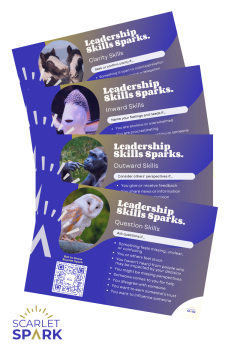
- Scarlet Spark’s Leadership Skill Sparks
- Scarlet Spark’s FREE Leadership Skills Workshops
- Scarlet Spark’s Leadership Tools
- Scarlet Spark website
INTERVIEW TRANSCRIPT
[00:00:00] Mariann Sullivan: Welcome to Our Hen House, Pia.
[00:00:03] Pia Salk: Thank you so much for having me.
[00:00:05] Mariann Sullivan: Delighted to have you for a number of reasons. I'm really intrigued with the kind of work you do because it covers a bunch of areas relating to animals, but I just really feel like the main problem we face in trying to advocate for animals is psychological. And I just don't understand like why everybody isn't vegan.
It just seems to make sense to me and I don't understand what are the reasons that people have for not, you know, agreeing with me about everything. So, let's start with the people who actually do care about animals. The people who are maybe even flirting with the idea of not eating them.
What would be the obstacles that would get in their way that would keep them from actually making this kind of a change?
[00:00:44] Pia Salk: Well, I think generally an obstacle for anyone is fear. They may not feel it as such, but you know, most people have been raised to eat meat and raised to believe that that is what we need for our bodies and that somehow it's okay. The part that makes it okay, I'm not sure exactly how people get there, but it's usually a matter of being raised in a culture that sanctions that and by a family that sanctions that because they're part of the dominant culture. You know, that's really the problem.
[00:01:15] Mariann Sullivan: So do you think that, I've always thought this, and maybe I'm wrong, I don't think that vegans are necessarily better people than other people. Sometimes they are, but they're doing one thing that I think is better than what a lot of people do. Do you think it comes from being a little bit not quite so embedded in the culture, you know, being a little bit iconoclastic or whatever?
Is that a personality factor that would go into helping somebody make that change?
[00:01:38] Pia Salk: I think it certainly can, and it wouldn't surprise me to find that that was the case. However, I think that anyone who is trying to live in a way that's congruent with their values, who's willing to see things outside of what is the predominant norm, would be open to being vegan or vegetarian if they really thought about it.
[00:01:58] Mariann Sullivan: Yeah, I guess it is really hard to get them to think about it.
Let's talk a little bit about children, because a lot of times, when people are very young, they do kind of develop this interest in animals, and they do kind of make the connection, and then they have to deal with their families.
What can children do when they want to stop eating animals and their parents are just horrified?
[00:02:17] Pia Salk: You know, it's a great question because I do find that I have that even in my practice of parents who are alarmed that their child wants to stop eating animals. And I think the child can certainly, educate the adult as much as they're willing to listen. The reason though the adult is typically resistant is because they fear that this will change their ability to get proper protein into their child, or that this will change family meals and family customs, all these things. And I often say to families, you know, it doesn't have to do any of that. Support it in the broad spectrum, but you can still eat customary meals in the way you have traditionally done.
Whenever the kids are not eating animals, it's better for animals, so do some of it at least. But support these kids because we're also simultaneously trying to teach a culture of nonviolence and empathy and so on, and those are characteristic of mental health.
You know, when we look at serial killers and people like that, they lack empathy. So this is something we want to really cultivate in a child, so parents should look at their own issues of why they feel so threatened. They should do the research on protein because it bears out that one, it's not as important as we think, also, you can get it easily in a vegan diet. So, you know, it's an openness of the parents that really is important.
[00:03:37] Mariann Sullivan: Yeah, and I feel like once you open yourself to being vegan, you have to go vegan because at least for us, it's such an all or nothing thing and it's such a big change for people to make and they're so resistant to it so they don't even want to think about it at all because of the fear that they'll have to actually do something about it.
One of the expressions I saw that you speak about is the emotional side to veganism. Can you tell us a little bit more about what you mean by that?
[00:04:05] Pia Salk: Sure. I think there's a lot of work done to help people figure out how to make their diet balanced and things like that. But there's an entire emotional side to veganism, especially if you're going to it for ethical reasons. For one, you're confronted with just unbearable suffering that you've either seen in videos, you've learned about, and it's suffering that largely you have been complacent to a large part of your life.
So there's a lot of guilt that comes in, but just being confronted with that. And then there's this whole culture that it seems okay to make fun of the vegan, to ridicule, to moo at them, to silly things like that. And families resist it. People get up in arms about it in a way that they never would if you said, I want to start exercising or I want to, you know, whatever it is. It's bizarre, the defensiveness.
But there's a huge emotional toil that needs to be supported.
[00:05:01] Mariann Sullivan: What about getting past that and getting past the whole problem of, you know, finding the people who are sort of on the fence and like dealing with the psychology, just dealing with the people like you're never going to talk them into it. They don't even vaguely want to go vegan, which is pretty much everyone.
This is the vast majority of people. But a lot of people in the movement have started thinking like, all right, we're not going to talk people into being vegan. We have to do something much more systemic. I think I've heard the expression choice architecture. Can you talk a little bit about what are maybe some of the kinds of things that we can do?
We had somebody from Greener by Default on, and they were talking about in the cafeteria, put the vegan food in front. People choose it just because people choose the default. Is that really how we should be thinking and what is the role of psychology in devising those kinds of strategies?
[00:05:54] Pia Salk: One strategy that I have just generally speaking, when somebody sort of confronts me in a defensive, aggressive way, I typically say, I'm happy to speak to you about veganism if you'd like to, but if you're not honestly open to talking about it, I'd prefer not to. That's a good way to sort of stop people from going at you, you know, and then they usually will step back and say, Oh no, okay, tell me a little more about it.
So that's a good way without being too aggressive. I think we have to not be very aggressive. I know the feelings come up when somebody is challenging it, but our best way to enroll others is to think of them as people who've been embedded in a culture that they aren't even conscious of.
So try to have some sort of empathy and think of yourself as educating them. People make changes based on proximity. So the more proximity people have to vegans who are not aggressive, the better off they will be. They'll start to ask questions, you can also say, hey, give this a shot.
I prefer everyone be a total vegan, but honestly, when I say you don't have to do it all every day of the year, that disarms people.
[00:07:07] Mariann Sullivan: Yeah. And nobody has to do anything. So of course they don't have to do it. I mean, it's ridiculous for us to say you have to do it all the time, or you're not a real, like who, they don't want to do it at all. So what does that, we can't force them to, unfortunately. I
[00:07:20] Pia Salk: They often say, you people can't eat this, and I always correct them and say, I can eat whatever I want, but I choose not to.
[00:07:26] Mariann Sullivan: Yeah. They hate it when you say that. So I've heard both of these terms, I assume they're from psychology, motivated reasoning and cognitive dissonance in relationship to this problem of what it is that gets in people's way. And I'm talking now, not about just the general person, but about the person who actually really cares about animals, which is an enormous number of people.
Most people would never personally do these things to animals. So that covers a lot of people but people who actually care and don't do anything. Can you just talk about those two terms? Are they the same thing and how do they operate in how people change their behavior?
[00:08:00] Pia Salk: Well, people often do something that is counter to what their beliefs are. I mean, not often, but in this case, that's often going on. They've tricked themselves in some way into believing that their behavior is okay. But what we find is, people can be motivated if you can get beyond their defenses to look at the reasoning.
But if their defenses are mobilized to begin with, that is not going to happen, so you really want to get people in a mental space where they are not feeling attacked, where you're making good points in a non aggressive way. So I think one point that really seems valuable to make is the likeness of people's companion animals to farm animals and so on.
I think that's important. The other point that I often make is apes get enough protein, giraffes get enough protein, like these big strong animals don't need protein. That they have been fooled into thinking this, that there's a propaganda machine out there trying to support this.
That really gets people curious because they don't want to think they've been fooled into something. So those are some kinds of things that you can use to get around people's sort of blind spots.
[00:09:14] Mariann Sullivan: What is cognitive dissonance? I mean, do people really hold two contradictory ideas in their head at the same time? That's a simple explanation of what it is, but I don't really understand how that works. I mean, I don't feel like I do that. Maybe that's just a factor.
Maybe I'm cognitively dissonant all the time. I mean, there are loads of things that I feel like I don't know and that maybe I don't do right. And that I don't always do the right thing, but are you ever aware of cognitive dissonance that you're holding two dissonant ideas at the same time? Or is that something that goes on completely subconsciously?
[00:09:47] Pia Salk: Certainly people are aware of it because they constantly say it, like don't tell me I don't want to know.
So a part of them knows that the news is going to cause them to have to change their behavior. Now generally speaking people will change their beliefs before they'll change their behavior.
So they will alter their beliefs to match their behavior. So if they like eating meat, they will alter their beliefs and find data to support that. So data that we have to, we're meant to, evolution, my teeth, they're built... they gather that data to support it because it's harder to change their behavior than their beliefs, which sounds outlandish.
[00:10:25] Mariann Sullivan: Yeah, but you know, anybody who's ever been on a diet gets that. But, you know, being on a diet, you have to be hungry. Being vegan, you just have to eat vegan food, which is totally fine.
[00:10:34] Pia Salk: Well, I always say to people, if I don't have to take a life to eat, why would I? It's as simple as that. It really is.
[00:10:41] Mariann Sullivan: Yeah, I know. It's so simple. This is what we talk about all the time, like, the mindset of the people who want to continue to eat meat.
But I also want to talk, since I have you here, and you're a psychologist, about what the activists are going through. Because that's a lot. And it reminds me of this meme I saw this morning, what you just said about protein. Somebody said, forget protein, the real question is where do vegans get their patience from? Which is so true.
[00:11:07] Pia Salk: Awesome. I love it!
[00:11:08] Mariann Sullivan: So hard to put up with people, but it's not just a matter of needing patience. It's not just a matter of frustration. It's really dealing with unbelievable levels of anger and grief for most people and, like you were saying before, you know, we should approach them in this charitable way and listen, and we all know that's true, but sometimes it's just so hard.
So, what is your advice to people who are just, have reached that point where they just hate the world?
[00:11:35] Pia Salk: Well, I mean, the thing I said before about establishing with a person who's starting to lay into you, do they really want to know? Because you're happy to have a conversation, but if that's not what it's about, you would really prefer not to. That is a great way to weed out people who are curious or to make people who weren't curious, curious.
The other thing is we have to take breaks sometimes from fellow activists. I hate to say that. We're a group of people that need each other's support. But depending on where a fellow activist is in their journey and how their anger is going can trigger us. So, shielding yourself a bit from the sort of momentum of anger, you know, just taking some time alone.
One thing I find also, it's interesting when you see, or even just think of, the suffering of an animal. Your whole body gets into a reaction. I mean, I can't even describe it. But one mind kind of trick you can do to help yourself is close your eyes and start to send healing and peace to that animal you're thinking about.
There's something about that that mobilizes, it takes you away from the extreme empathy that gets inside that hurts, and there's a real change. Try it in your mindset. Obviously it's not actively... well, who knows what it's doing, because energy makes a difference.
[00:12:56] Mariann Sullivan: But your point is also that you don't actually have to believe, I mean you can if you want to, but you don't have to believe that you're actually accomplishing anything other than for yourself, but you are accomplishing something for yourself even by doing that. Even if you don't have this belief that you're conveying, and you're not helping the animal at all.
You don't even have to have that belief. If you put yourself in that mindset, it can actually ease your own angst, is that right?
[00:13:19] Pia Salk: You can ease your own angst. I mean, there are some cases in which, we identify with these animals. There are some cases, you know, I've asked myself sometimes, when I've watched an activist really kind of work against the goal in a weird way, or refusing to see a positive change in some way and really latched on to this as needing them specifically.
Sometimes people over identify a bit in such a way that they, it's hard to explain this, but in such a way that they can't get out of their own way. And so for those people, they really need to seek therapy and find some ways to understand and heal their own pain that is being played out here.
[00:14:00] Mariann Sullivan: Yeah. No, it's unbelievably challenging to detach from this horror enough to remain effective and sane and still not just to be in denial about it. I mean, I know I'm patting myself on my own back, but I'm patting every other person on the back too who deals with this. It's unbelievably difficult.
[00:14:18] Pia Salk: Oh, I absolutely agree. I mean, I'm in tears constantly just generating visions in my own head of things that I know are happening.
[00:14:25] Mariann Sullivan: And it's totally voluntary. You know, like, we take it on voluntarily. Well, it's not exactly voluntarily. I'm not sure I could stop if I wanted to, but it's not like we're in a war zone where we're being attacked. I mean, we just kind of voluntarily have decided to think about this horror that people are trying to hide from us.
[00:14:43] Pia Salk: I know, but people will say, sometimes they'll say, Well, Pia, it's just like religion, I accept the differences and so on. And where I stop them with that is to say, No, there are non consenting casualties. So, it's not just about differences. It's about non consenting casualties suffering in the face of this belief system.
I mean, some could argue that that's happening with religion, and of course, to some degree it is. But, they're suffering and they're not consenting in any way, shape, or form, and we are the only ones who can make a difference for them.
[00:15:14] Mariann Sullivan: So another challenge that activists face, I think, and I could say quite honestly or not quite honestly that I'm asking for a friend here because this is really a problem, is dealing with information overload. I mean, maybe this is a little bit more coach than therapist, it's something that everybody in any profession works on, but there's so... it's not even just that all the information is horrible.
There's just so much information. There's so many different areas in which animals are being attacked and harmed. And there's so many different ways you could deal with it. Do you have suggestions for how people deal with just saying, it's just too overwhelming, I can't, I just can't keep up? Because this happens to me pretty regularly.
[00:15:55] Pia Salk: I mean, you know, it's up to a person whether they want to hold themselves to keeping up or not. We know the devastation. You don't have to know every nuance and everything. I think it's safe to say if the animals are involved in some money making business, they are suffering, if somebody's using animals in that way,. So, the main principles in broad strokes remain. Needing to watch videos of suffering and things like that.
I don't do it because I know it. I've seen it and it just debilitates me. It debilitates me. Some people want to bear witness, which I understand, but I feel like anything that takes me out of the effort to enroll people who are not already with us, I'm not going to do it. You just have to limit that.
[00:16:39] Mariann Sullivan: Yeah. I also think that some of the most effective activists are people who have specifically focused on one thing, like horse racing or dog racing or companion animal rescue, you know, they have a vague idea of what's going on with the rest and they're not eating them. But their efforts are focused on one thing, and I think that can make you very effective, even though you feel like you're ignoring many other things.
[00:17:03] Pia Salk: I know, but it's a little bit of a know thyself, because if you know that you're really good at rehabbing animals, or fostering animals, or you're really good at going into shelters and pulling animals for fosters. Like, I can't go into a shelter. I don't want to make those decisions, but I can foster an animal, I can do hospice for an animal. I can do all sorts of stuff. So really knowing what undoes you to the point that you're not effective and what really is your skill set is important.
[00:17:34] Mariann Sullivan: That brings us to the other topic that I want to talk to you about, because you also specialize in your practice on a lot of different aspects of people's relationships with their companion animals. And one is, of course, something that I imagine a lot of people seek therapy for and that's bereavement.
I do feel like things have shifted to some extent, but I don't really know how much, in how much respect or disrespect people get for their grief for their companion animal. So how is grief when an animal dies similar to but different than grieving a human?
[00:18:05] Pia Salk: It's similar in so many obvious ways, just in terms of the loss that one faces, never being able to see or be with that being again, things like that. But there's some very deep, specific things about loss of an animal that are... you know, I'm not really big on better, worse, but I will say that some of the loss is so deep that people don't recognize that this is, for some, the only nonjudgmental being in their life.
This being has been with them for decades, and they've been with them in a nonverbal way. The connection is really visceral. And, you know, you don't even know. I don't even realize your life with an animal, you walk certain ways in your home, your proximity, you put their food up here and this down there and, your whole physical being changes when they're not with you.
And not only that, their gaze is not on you anymore. You've gotten very used to and it helps from loneliness and things like that. And the other thing, it's like having children who pre decease you over and over again. They are our charges to take care of.
And so, so often the death is a difficult one in that we've had to decide to euthanize, or we've struggled and had to give them treatment for something that we couldn't explain to them why we're giving that pill or that injection. So we're left with a lot of guilt.
[00:19:31] Mariann Sullivan: Yeah, I imagine there are a lot of people, I'm lucky enough never to have been in this position, but there have got to be a lot of people who just can't afford the care.
And have to let their animal go for financial reasons, which just must feel horrifying.
[00:19:45] Pia Salk: Horrifying and it stays with people and it's criminal that they're even in that position.
[00:19:51] Mariann Sullivan: Yeah, though, as care gets more and more expensive, I mean, there are probably many people in that position. It's not just death either, is it, that can interrupt the bond with an animal? I feel like I've seen a lot of this in cases that I've taught in my class, I teach animal law, and it's divorce. Do you find that companion animals play an important and very undervalued role in managing kind of an amicable divorce because I just think that from what I've seen, there's both genuine desire on both parties to keep the animal and also the animal can become a pawn just as children can.
[00:20:30] Pia Salk: Unfortunately, I see that a lot where the animal becomes a pawn and you didn't even want the animal to begin with and you didn't, you know, absolutely. I mean, and it has to be like it should be for children. What's in the best interest of the animal? But just like anything else becomes a pawn and not only that, animals do respond when there's conflict in their home and things like that.
And then on the worst case scenario, there are a lot of abusers, who abuse people, will take the animal as well and abuse the animal. So any kind of domestic violence situation, animals need to be taken out of those situations. Sometimes abusers will take the animal and leave them at a shelter as punishment to someone else.
So those are things that people should be mindful of. Another thing that I wanted to touch on is that, you know, I always take a history with people when I see them, and so often, I can't tell you how many times, there's been some sort of painful event with an animal where a parent took a dog away and didn't tell them, didn't let them say goodbye, took them to the farm, you know, that kind of stuff.
That's the kind of thing that we don't even ask about.
[00:21:35] Mariann Sullivan: Yeah, no, I'm sure that has been a very traumatic event for a lot of children. You mentioned that you do fostering. It seems to me that that would also be an area in which there was a psychological toll, probably one that people manage to manage because there's both positives and negatives, but I think a lot of people may be resistant to it because they are so frightened of like forming a bond and then having it broken.
Can you talk a little bit about that issue and perhaps, not push people to foster who don't want to, but maybe dissipate some of the fears that people might have.
[00:22:08] Pia Salk: It's a great thing and it is an obstacle because I recommend it so often and that's exactly what people say. I'm going to get attached. I think as with any of our activism, we have to keep an eye on the broader goals, which is to save them, protect them from suffering. So if you go into it with that, and you're working with a rescue group that you trust, you have to be working with a rescue group that you trust to place the animal in a home that would be good for you.
I try not to get involved in the placement. I like to trust because that will pull at me and make me over obsessive about the home. You can also sort of put a time limit for yourself, if you can. You know, I think I can do roughly this amount of time before getting too attached.
Fosters are needed for immediate situations, for long term situations. But the other thing is to remember that with every animal that you foster and move on, you've got space in your home for another, and you're saving a life every single time. So you have to remain in touch with the bigger goals.
[00:23:07] Mariann Sullivan: Yeah. I know that some agencies too, and of course, this puts them in a difficult position, but it seems so important that they say, we'll take the animal back at any time, like if it doesn't work, if it's too much for you or if it's too much for your other animals or whatever, we'll take them right back.
And though I understand that for foster agencies, it's a difficult deal to make, I think it must make a big difference to people knowing that they can get out of it if they need to. And as fostering becomes such a fundamental part of the rescue community.
I mean, even in the time, you know, like I've only been familiar with what's been going on for 20 years and I think it has completely changed everything. So many animals go into foster care. We would still be back in the days where we were killing so... we're still killing too many of them, but we'd be killing so many more of them if we did not have foster care. I just think it's a fundamental part of what we do for animals.
[00:23:58] Pia Salk: Yeah, I agree, and I wish we could enroll more people in it because the fear is that they'll get attached. I also just say, like, if you get too attached and you want to adopt, you can adopt. It's not the end of the world!
[00:24:08] Mariann Sullivan: I think another block too, and I don't know whether there's anything you can do about this, but people who want to do foster care usually have animals and they're worried about the interactions between the animals. People who do foster care, I think successfully are generally very, very good at handling difficult issues with animals and not everybody is. Another issue about companion animals that always intrigues me so much is how people buy very expensive dogs and increasingly very expensive cats as well.
And then they pay a lot of money and yet the animal is pretty much instantly worthless, monetarily. I mean, they don't maintain that value. And then they come to love the animal just as deeply as anybody who adopted, even though they get old and scraggly. What's going on here?
What are people looking for when they buy an animal? And is it different in important ways to what people are looking for when they adopt an animal? Is the mindset different? Do they think they're going to get something different? Because it seems to end up very much the same.
[00:25:05] Pia Salk: It's so true. And so many purebred animals have behavior issues.
[00:25:10] Mariann Sullivan: Right. No, they're, they're not the healthiest animals, both mentally and physically.
[00:25:14] Pia Salk: I think people are looking for a few things. Some people are just looking for status, and they want to go to the most expensive breeder. Other people, they're very focused on control, and they want to rule out any possibility, which they're not doing, in fact, but they're trying to rule out allergies, which there's no such thing as a hypoallergenic dog, and behavioral things.
So they think that if they get them as a puppy, they'll be able to train them perfectly.
[00:25:40] Mariann Sullivan: Even though they don't know anything about training a
[00:25:43] Pia Salk: Right, exactly. And they don't always go about training them, but every time they see a rescue dog, they attribute anything negative to the fact that it was rescued. We as rescuers need to do a better job not saying, Oh, she's a rescue.
Because that just sends the message that all her problems are because she's rescued. But, you know, it's interesting because if you adopt an adult dog, it's a known quantity, which is so much better than getting a puppy that you have no idea what their personality traits are going to be like and stuff like that.
But yeah, it's status and it's fear. Fear that there's going to be some unknown thing that will show up that they can't control, which is still the case.
[00:26:21] Mariann Sullivan: Yeah, it really is extraordinary that we haven't managed to get the true story across to more people.
[00:26:27] Pia Salk: Right? A lot of people also assume the animals have been abused. They haven't all been abused by any stretch. Sometimes it's a divorce. A lot of it, it's people having a baby and they want to get rid of their animal. Some people get rid of their animal because they can't afford care.
There's all sorts of reasons,
[00:26:42] Mariann Sullivan: I have a dog I've only had for a few months and she's very elderly and her person went into a nursing home I'm sure that happens all the time.
And you know with rescued dogs, too, you have that about... this is my theory, but I think it's true... that three month window where they realize that they were, you know, they they know they were in big trouble, they know now they're someplace sort of safe, and they just try really, really hard to figure out everything you want and do it.
So you have this three month window of they will learn anything. Then they start to relax and realize you love them and they're like, eh. Yeah,
[00:27:18] Pia Salk: They're all trainable, it's all about the human and consistency and...
[00:27:22] Mariann Sullivan: But they're very, they're very, very motivated for a while.
All right, so, overall, we've talked about eating them. We've talked about companions.
How, how would you describe the state of the human animal bond? Do you think it's getting better? Do you think it's getting worse? Like, what's the overall vision?
[00:27:40] Pia Salk: It's a good question in terms of the state of the human animal bond. I mean, I think people are starting to see companion animals as part of the family. People are seeing companion animals as family members, much more than they used to.
People used to just not allow a dog to be in the house and now that's not really the case. I mean, in some, some areas it is the case.
So the bond has always been there, it's getting recognized a bit better than it used to, but now we're just talking about companion animals in this scenario. The bond with cows, sheep, chickens, you know, they bond just as easily and people who have met them and been around them know this.
They care for their young the way dogs and cats do, all the things, you know this. I'm preaching to the choir, but that is still problematic. People still don't see these animals as beings unless they've had direct experience with them.
[00:28:38] Mariann Sullivan: I am not noted for being hopeful, um, but, I try. I say this every once in a while. I do actually believe it. Like, to me, it's just so bizarre how many people care about animals, would never harm an animal. Never. You know, most people I think are like that. Would never dream of kicking an animal or whatever, and yet are participating in this horror.
I feel like it's really hard to imagine it turning around, but if it does turn around, it could turn around very quickly. It's like a thunderbolt that hits you kind of when you wake up to animals. It's like a consciousness raising kind of thing that you can't even kind of remember how you used to think.
Like when you go vegan, like what was I thinking when I was eating animals? I don't know because I guess because I wasn't thinking. I feel like things could change dramatically, do you?
[00:29:27] Pia Salk: I hope they could. I think they could. I think a lot of the change, unfortunately, will come in the way of if there was some really egregious thing that came about health wise by eating animals, people would respond more quickly. If there was some financial issue around buying meat. You know, but for some reason the environmental issue and the compassion issue doesn't rise to the top as reasons that people do it.
But I totally agree if people could be made to realize, overtly, that they're not living in a congruent way to their values, and that there are ways... people need to see access to vegan food. They need to not feel they're going to be deprived. See people respond as if it's going to be deprivation.
[00:30:11] Mariann Sullivan: Yeah, and they won't even try the food.
[00:30:14] Pia Salk: Right? And they say it's gross, which I think is bizarre.
[00:30:16] Mariann Sullivan: They say ridiculous things about it and they won't try it. Yeah.
[00:30:20] Pia Salk: Yeah, the fact that they won't even try. So that's where you need to get them into situations where they'll try. You know, I think Burger King getting, I don't know if they got Beyond or Impossible, I think that was a great one.
[00:30:30] Mariann Sullivan: I think it was Impossible.
[00:30:32] Pia Salk: That kind of thing is super important. You know, it's interesting, I always think when you're watching the news and there's a cow that's gotten free from a truck or something, from slaughter.
Everyone's captivated, like, save that animal, and then they go eat a burger!
[00:30:47] Mariann Sullivan: We're all astounded!
[00:30:48] Pia Salk: There's a disconnect, but you see what happens is when they have a personal view of the animal, and the plight of that animal, they will feel it, and they just don't make the connection, though.
[00:30:59] Mariann Sullivan: Yeah. As frustrating as that fact is, I think it's the thing that we have to hold on to because that's where the hope lies. Is that whatever's going on with humans, and I increasingly think that humans are even unbelievably more bizarre than I had thought before. We're a very strange species.
It's very hard to understand, but as hard as it is to believe that anything good is going to happen, when you see that connection to the individual animal, you know that there is something here. There's some kind of decency here. We just have to tap into it.
[00:31:30] Pia Salk: Yeah, no, agreed. And also, I mean, I think, unfortunately, some of the labels of, humanely raised, organic, free range, have done more disservice than they have a service, because people don't know what they really mean.
[00:31:44] Mariann Sullivan: Yeah. Well, they really mean virtually nothing, or sometimes absolutely nothing.
[00:31:48] Pia Salk: Right, exactly. But it just makes them feel better. So any guilt that might have changed their behavior has been eased.
[00:31:55] Mariann Sullivan: Yeah, I always feel like that's probably true, but they don't seem to feel a whole lot of guilt anyway. Like, I don't think they have that much guilt to ease.
[00:32:04] Pia Salk: It's their defense when they're talking to you.
[00:32:07] Mariann Sullivan: Maybe once a month they go to some like farm to table restaurant and they order that and they think that that means that that's all they eat. But, that's not the case.
[00:32:14] Pia Salk: No, it's crazy. I was once eating with somebody and they asked if the veal was free range.
By definition, it's not free range.
[00:32:22] Mariann Sullivan: Yeah. Oy, people. I don't envy you for spending your life dealing with them.
[00:32:28] Pia Salk: Yeah, it's not easy.
[00:32:29] Mariann Sullivan: They're a trip. Thank you so much for sharing your wisdom with us, Pia.
[00:32:33] Pia Salk: You're welcome. Thank you for having me and for all you do for the animals.
_____________________________________________

Thank you for listening to the Our Hen House podcast! If you enjoy our podcasts, believe in our mission to effectively mainstream the movement to end the exploitation of animals, find community and solace in our shows and resources, and would like to show your support for vegan indie media, please make a donation today.
Subscribe to our show on Apple Podcasts or your favorite podcatcher, and don’t forget to leave a 5-star review!
Check out Our Hen House’s other podcasts: The Animal Law Podcast, The Teaching Jasmin How to Cook Vegan Podcast, and the Antiracism in Animal Advocacy Audio Series.
Follow us on social media! You can find Our Hen House on Facebook, Instagram, TikTok, or X (formerly Twitter).
The Our Hen House theme song is written and performed by Michael Harren.
__________________________
This episode is brought to you in part through the generosity of A Well-Fed World. A Well-Fed World provides the means for change by empowering individuals, social justice organizations, and political decision-makers to embrace the benefits of plant-based foods and farming. Learn more at awfw.org.