
 Apple Podcasts
 RSS
 Amazon Music
 Spotify
 YouTube
 PocketCasts
 CastBox
 Player.fm
 TuneIn
 Audible
 App not listed? Try this RSS link

More vegan options for everybody? Yes, please!!! Britty Mann of Planted Society joins us to tell us about their Plant Based for the Planet Initiative, which encourages local restaurants to put delicious plant-based options on the menu.
ABOUT OUR GUEST

Britty Mann is the Founder & Executive Director of Planted Society, a nonprofit whose mission is making plant-based eating more accessible to ensure a better future for the planet and all living beings. Planted Society manages the Plant Based for the Planet initiative, which works closely with climate offices, small businesses, and local governments to help cities reduce their environmental impact. Britty believes that we all have the capacity to help improve the food system, starting with fostering change in our own small networks and local communities, and affirming our instinctive connection with animals.
RESOURCES

-
- Therisina on X (formerly Twitter)
- Dr Crystal Heath on X (formerly Twitter)
- Online course: The science behind alternative proteins
- ‘Shocking’: Bird-Flu Infected Cattle Dumped at California Roadside
- Physicians Committee Survey Finds Most Americans Favor Ending Animal Research
- Tim Spector, Chris Packham, And Health Experts Urge NHS To Go Plant-Based
- Italian Meat Giant Gruppo Tonazzo Stops Selling Meat
- Planted Society website
- Planted Society on Instagram
- Planted Society on Facebook
INTERVIEW TRANSCRIPT
Jasmin Singer: Welcome to Our Hen House, Britty.
Britty Mann: Hi. Thanks for having me.
Jasmin Singer: I love your name!
Mariann Sullivan: I do too.
Jasmin Singer: What is, is it short for something?
Britty Mann: It's short for Brittany.
Jasmin Singer: But Britty is so good. Like I've never heard that before.
Mariann Sullivan: Yeah, it's a really good name.
Britty Mann: I've been going by Britty since I was a teenager, well actually earlier than that, but I have met more Brittneys recently who have changed to Brittys.
Jasmin Singer: Really?
Mariann Sullivan: You started a trend.
Britty Mann: I would like to think I started it.
Jasmin Singer: I think you are a trend setter and I think that is a perfect note to get into this interview with because you're doing something that is very cool and you have a slightly different take on it. We're going to talk about what we mean, but give us the quick version of what the Plant Based for the Planet initiative is and then we'll get into the details.
Britty Mann: Sure. So the initiative itself is a climate initiative that we do with cities to help them lower their greenhouse gas emissions by making plant based food more accessible in their community.
Jasmin Singer: That's so great. And I, you know, I've been working in animal protection for like 20 years and I know that campaigns like that have existed in one form or another for probably well, well longer than that. But you do things a little bit differently. First of all, what kinds of businesses do you seek to get involved and what do they do?
Britty Mann: So we partner with a lot of people, with the city, we partner with nonprofits, we partner with community members, but primarily we work with non vegan restaurants. And we get them to offer a couple of new plant based specials for the month of the initiative. And we specifically seek out really small businesses, not chains, we're not working with Chipotle, and we get them to offer these specials to their general audience.
So we're not calling in a lot of the vegan community, they find it anyway, which as y'all know, we find the vegan stuff.
Our audience really are the people who are walking into those restaurants and see these things on special.
Mariann Sullivan: So what kind of labeling are people, I know this has kind of always been an issue with offering vegan food in non vegan restaurants and the, you know, from a vegan point of view, we always like it labeled, and some people say that, you know, that's not really the best way to go. Which do you do?
Britty Mann: So we have historically, I say historically, this initiative is pretty new. The first one we did was in 2022 and we're on our ninth initiative right now. But so far we've been kind of lax about how restaurants decide to name their specials, how they decide to label them. We do ask that they kind of match the vibe of their menu right now.
Like we don't want a sushi restaurant putting nachos on the menu, but we do allow them to use the word vegan if they like, we do allow them to use the word plant based, but we've been collecting data on this since the very beginning of the initiative. And like all of the studies show, so far people will buy products more often if they're not labeled plant based, vegan, or even climate friendly.
Mariann Sullivan: Yeah, that does seem to be the way to go, which I'm thinking something like, like you're saying, like there's the research on it. There didn't used to be that research, and I think people just didn't realize that that that was the way to go. There was also, I think, sometimes you would run into fear, on the part of restaurants, that they might make a mistake.
And if they labeled it vegan, they could get sued. Do you run into that kind of an attitude too?
Britty Mann: Not really. Like every now and then, yes, we've had some restaurants go like, "oh, I can never do that because changing my whole kitchen would be a nightmare and it would..."
Mariann Sullivan: Yeah, no, they think they have to like, have a separate kitchen, like it has to be a kosher kitchen or something, yeah. Because some vegans care about that, but you know, that's not really what you're going for, is it?
Britty Mann: Well, yeah, some vegans do care and we do want vegans to feel very comfortable engaging in the initiative, so we are pretty aggressive on ingredients and, you know, all those things. I say pretty, like, everything's vegan that's on this initiative. But, we don't require the full gamut of um, preparation and all that.
So no separate friers. This is for their general audience anyway, and that's really who we're trying to capture.
Mariann Sullivan: So do you totally leave the design of the dish up to them, or some of them just stymied, like, how would I ever do such a thing?
Britty Mann: Typically once we have a restaurant who agrees to partner with us, they already know what they're doing. They're excited about it and they have their own ideas. Usually these are really great ideas. Sometimes we've had to go in and be like, "hey, we've done this initiative a few times. Products like this do not fly. People don't buy them. You're going to be disappointed at the end of this. Let me make a suggestion."
And usually they're pretty open to it.
Mariann Sullivan: This may be an unfair question, but do you have an example of something like that? That, you know, they design a dish and you're like, Oh, geez, maybe not.
Britty Mann: Yeah. I have several. I mean, I'm not going to call out the restaurant.
Mariann Sullivan: No, no, that would be unfair.
Yeah.
Britty Mann: They wanted to do two dishes that were basically the same thing. It was lettuce with raw veggies and some kind of salsa.
Mariann Sullivan: Oh, yeah. Been there, done that.
Britty Mann: Yeah.
And so I started by saying like, "Hey, let's change the name of these."
Cause it was like vegan lettuce something. And then, it was a slow roll into let's also maybe make this a little bit more dynamic. And we usually come from the point of view of data. So I think chefs appreciate that we're not coming from the point of view of creativity. Like this isn't creative enough, or this isn't interesting enough. We just say like, "Hey, these ingredients are great. I love that you're using fresh ones. This is healthy. It's awesome. You can do this in another way. And here's how you can make more sales." And they generally respect that.
Mariann Sullivan: Where do you lean on how healthy should this be? Like a lot of restaurants probably think that people go vegan for health and some people do go vegan for health and like, would want it very like lettuce and raw vegetables, so what kind of advice do you give them on where to fall on that spectrum?
Britty Mann: We just tell them to match their menu. If they have a super healthy menu, the people that are going in there are expecting super healthy food. We do have a few louder vegan participants who often, when they do try to go to these restaurants and get the specials, they are sometimes really upset that the products themselves are not very healthy. I do think though that that's a very small minority of people who would be disappointed.
Mariann Sullivan: Health vegans. So fucking annoying.
Jasmin Singer: Loud vegans. I'm shocked.
Britty Mann: Well, I love loud vegans. I'm a loud vegan, but, like, I think what it does is scare restaurants into thinking that they have to fit some kind of mold that they don't.
Jasmin Singer: I think that's kind of what I meant in my subtext.
Mariann Sullivan: Like no oil, no, you know, like.
Jasmin Singer: No GMO.
Britty Mann: Yeah, yeah. And to go back to it too, vegans aren't our audience. So we really, don't care what they think. We really want to capture the people who would never even think of going vegan or plant based in order to save GHGs or to be a healthier person. Like, by default, these options are going to be healthier. So I'm happy with whatever restaurants put out as long as they're selling and their customers are happy.
Jasmin Singer: I had this issue once, when the most miraculous amazing thing ever in the world happened and Burger King started carrying the Impossible Burger, where I was in a conversation with one of those health vegans, I guess, and there was a lot of ire and I was like, can we just pause and like, look at this from a thousand feet high for a second and also don't go there.
If you don't go to Burger King and you don't want to go to Burger King, don't go to Burger King. It isn't for you, dude. So you're speaking my language.
Mariann Sullivan: I'm just going to say one thing on the other side, I think that sometimes non vegans on the night that they are choosing the, even if they're not thinking of it as being vegan, but they're just looking, "Oh, this has a lot of vegetables."
They are thinking, "Oh, I want to keep kind of healthy tonight." So it's kind of good if it's kind of healthy.
Britty Mann: Sometimes, yeah. I think that's why it's important just to work with a bunch of different restaurants. We try very hard to make all of this information available to them before they even step foot in the restaurant, if there's someone that we've gotten through a social media campaign or on Google, like, if they've found us instead of them going to the restaurant and seeing the specials, then they have a way to view these menus ahead of time. So if someone does want to participate and they see the website, they'll see who has healthier options.
Jasmin Singer: What are the major obstacles for restaurants in adopting more plant based dishes? Because that's one of the things I think has changed since, you know, 20 years ago.
Britty Mann: I think there's some things that they know are obstacles and some things that are obstacles they're creating for themselves. I think the things they know that are true are cost. A lot of vegan products that they would like to have on the menu are just not at the cost that they need to be to be on a restaurant menu. I think that a lot of restaurants have an idea of what vegan food is, just like Mariann was saying, they have an idea of what vegan food might be, and that might not actually translate to what customers want. I also think that if they have tried something in the past and it hasn't worked perfectly, a lot of restaurateurs are like, I'm not going to touch that anymore.
And who knows why it didn't work perfectly. Might be marketing, it might be that they had a bad dish. But especially when you're trying new things as a small business owner, and it doesn't work, it creates this kind of habit that you go back to, which is like, I'm not going to touch that anymore. And we are trying to make the opposite happen through our campaign.
Mariann Sullivan: On the other hand, I actually find, compared to 10 years ago, and I'm sure everybody agrees that there are a lot of restaurants that are already trying out a vegan option. Like what do you do with that? You know, they might have one on the menu or something that might be labeled vegan. It might just, you know, look like it probably is.
Do you work with those kinds of restaurants, try to get them to expand or maybe improve?
Britty Mann: I think that's our sweet spot, is restaurants who already have one or two vegan options, who kind of have the infrastructure there. They know what vegan is, they know how to make a dish that's vegan, and for it to be a happy dish that people want to buy. Those are great, and they have room to grow, so we like to see their ratios grow at the end of the campaign.
Like, we want them to adopt more and more and more vegan options as time goes on. They're great. We do have the wonderful privilege of working with restaurants who don't yet have anything on their menu, but that is often a longer conversation, a longer process to get them on board, for them to understand exactly what's in a bun, or why they can't just use mayonnaise on that vegan burger. But it's worth it. But yeah, that is definitely a sweet spot. The people who already have a couple options who just can add more
Mariann Sullivan: Yeah, well, that way, I mean, especially if they're doing something stupid, like just using regular mayonnaise or something, that's such an easy fix. And then they just, they only expand their audience for that dish. There's just no, no downside.
Britty Mann: Yeah, exactly.
Mariann Sullivan: All right, you were talking in the beginning that you work with governments and community organizations and whatever. So what role did local governments play in this whole project? So far, it sounds like you're just going to restaurants and I'm not sure I see how the whole structure works.
Britty Mann: So yeah, I guess it's confusing if you've never seen it before. I don't see anyone else really doing what we're doing in the kind of way we're doing it. So right now the role of cities really just depends on the city. Some cities are like, "We have an Office of Sustainability. Our Office of Sustainability will support this and we'll market the heck out of it on our newsletter." That's wonderful. We're reaching people who are on a city newsletter, who are interested in changing their own habits in other ways, why not this? Some go further to help us recruit restaurants. Right now we're operating in San Antonio, Texas and they have a wonderful program called the ProVita program, which is run out of their Metro Health Department. And the community health workers, who work in that department, have actually been the people primarily responsible for onboarding restaurants. So they are going out and getting restaurants who are already interested in being part of a healthy program they run through the city. And they're actually dedicating their labor and time to making it happen.
Mariann Sullivan: So they're like, they're doing it all for you.
Britty Mann: Not all of it, but a lot of it. Yeah, a lot of very meaningful work. Absolutely, and that's really what we want is for this campaign to be taken by cities. That's kind of how we pitch this to city council members, to offices of sustainability, is this is something you could be doing, but we'll do it for you, and hopefully eventually you will also do it.
Jasmin Singer: Well, I mean, speaking of that, I know a lot of our listeners are probably intrigued by this kind of advocacy. I know that this is something a lot of people feel like they can do. What is the first step in contacting someone in a city or a local government about doing something like this? Like who do you go to?
What do you ask for?
Britty Mann: My favorite people to reach out to first are offices of climate action or offices of sustainability. If you don't have that, sometimes there are commissions or community boards. It looks different for every single city and a lot of cities have different kinds of governments. So if there also are not like Committees or commissions, then you can go to a non profit.
They might have connections to people who work in government, or you can go straight to city council members. Sometimes, especially if you're in a city that doesn't already have a climate office, most likely there won't be climate policy.
And so a lot of the city council members will be people who have not passed climate policy or who have not passed any kind of food justice policy. So you can't really determine which council members are best to reach out to, but if I'm being honest, data wise, going for the left most politicians that work in government is a pretty surefire way to get a successful endorsement for your campaign.
Jasmin Singer: Yeah, I could totally see that. And also there's probably, you could probably be tipped off to where they might stand on this just from where they've stood on other issues, even like dog and cat related issues, which I know can come up in city politics a lot. Speaking of other issues, do you bring in other issues like health or animal suffering or even environmental issues?
Or is it exclusively climate based?
Britty Mann: So our end is exclusively climate based, but we do bring in other organizations that are adjacent. One of the orgs we work with is called Humane Montclair. They operate out of Montclair, New Jersey, and they are a dog and cat fundraising organization. They fundraise for the local animal shelter and also do all of this vegan outreach in the community.
So we certainly partner with other like minded organizations to do this work. We are expanding that in 2025 to include other climate or sustainability organizations into our work to also include their work during the campaign on our impact reports at the end. Which sounds confusing the way I said it, but basically right now working the way we do with plant based in the name of our campaign kind of limits us in terms of how many other organizations can really get behind it. A lot of non profits feel that if plant based is not in their methodology already, then they really don't have a place in the campaign. So we're actually changing the name of the campaign next year.
Yeah!
Jasmin Singer: Can you tell us?
Britty Mann: I don't know.
Jasmin Singer: What if you whisper?
Mariann Sullivan: It's kinda up to you, Britty!
Jasmin Singer: What if you whisper it?
No I'm just kidding. You don't have to. It's okay.
Britty Mann: The only reason I say no is because I think that our fundraising volunteers are wanting to do some kind of end of year fundraising, like exposing the new name.
Mariann Sullivan: You wanna make a splash.
Jasmin Singer: Why don't you do it like charades? Because we're at you. Like, sounds like... oh, oh, wow. Amazing. I'm so excited for other people. All right, no, we can't repeat that. No, we're not going to say anything, but wow.
Mariann Sullivan: Anyway, actually, I have a really important question about that. I mean, if you're changing the name... actually, I have two questions.
I'll ask them one at a time, but I'll probably forget the second one by the time you answer the first one. If you change the name, are you going to change the rules? Is it still going to have to be totally plant based? And how are you going to, like, enforce that?
Britty Mann: So the reason that we're actually changing the name and we're taking the word plant based out of the name, is the main change. And the reason that we are taking that out of the name is because we have so many hurdles to jump over when we start the conversation like that. I think plant based for the planet does a really good job of explaining exactly what the goal and methodology is, but that doesn't really capture people's attention and curiosity like we want it to.
We want people to go, Hmm, what does that mean? And look further instead of going, Hmm, that's not for me because I see that word and that's not me. So we anticipate that changing the name will A, help restaurants be able to use the name on the menus so that there can be more harmony between the educational campaign part of this and the food part of this. And B, It'll also allow more city council members, mayors, to be able to sign an endorsement for this. We've gotten three proclamations so far from the cities that we've worked with, so like Plant Based for the Planet Month is the proclamation that we asked for, and we've gotten three of those, but I think we could have gotten probably all the cities on board if the name had not contained something that was so polarizing.
Mariann Sullivan: It's so annoying.
Britty Mann: it's
Jasmin Singer: something that hasn't changed.
Mariann Sullivan: Well, actually, my second question was going to be, and it's just related to the answer to your first. Like, I feel like there's been some shift within the climate movement and the environmental movement to recognize that this is an issue and that they should take a, you know, a strong position on it.
But what you're telling me is that not really that much, and they're really not recognizing that it's as important an issue as it is. Or that the issue really is meat. It's not like some abstract, like there's some, there may be some foods out there that are bad for the climate. We don't know what they are, but when we find out, we'll try something about it instead of us all understanding exactly what those bad foods are for the climate.
But I guess I'll just come back a little to revisit my question. Like, how are you going to be sure of enforcement if you spread this out there and you have volunteers and whatever, and some of them are fine with it not having the word plant based in it. How are you going to make sure it's plant based?
Britty Mann: I guess just by being really mean. Um, no, we have rules, you know, we have rules that are even stricter than the name implies. Like one of our rules is that you can't price your new menu item above the average price of your existing menu. Things like that are already enforced and we can do it.
Our methodology does not have to be the name of our initiative. And I have full confidence that we'll be able to accurately communicate that to all of our partners and still be able to invite more people in to participate. This also, I think will allow other organizations to come in and kind of showcase and highlight their work as well for Scope 3 missions cause that's really when we're talking to cities, we're talking about Scope 3. Which is all the human activity that occurs in a city. And cities just do not care about Scope 3 like they should. They are way more interested in Scope 1 and 2, which is all carbon emissions, city owned things, energy, buildings. And that's fine. They're funded to care about those things. And so we really want to bring in more and more local organizations who are doing work that might not be plant based, but that can be showcased for people to really support after this initiative is over because the initiative doesn't last forever. We're hoping that people take the information, that they become plant based, and you know at least start eating more plant based food or at least are not scared of plant based foods.
But we really are going to be relying on those local organizations to kind of carry the torch so bringing in more people is really the goal right now of the name change.
Jasmin Singer: How do you think we create change? Like, what is your theory of change? This is something we like to ask a lot of the people we interview because, you know, we have interviewed people who are coming from a multiplicity of perspectives and actions. What is Britty's theory of change?
Britty Mann: I was hopeful that it would be more about like what we do because my theory of change for veganism for the animal rights movement is big. For us, we view this as a way to get people in authority in cities to be able to sign off on this methodology for becoming a better city. I think if COVID taught us anything, people are more likely to follow the rules, like masking, when someone in authority says that A, it's the best thing to do, or B, we have to do it now. So what we are trying to do is influence policy later through our interactions with city governments. We want to show city government that people are interested in doing this. We want to show city government that it's good for the local economy for this to happen and that they should be doing it themselves. This has led to food action plans, taking on plant based on the food action plans itself, which is going to influence policy. We want to create voters. And most of all, we want to show communities that this is something they can dip their toes into without fully changing who they are. So that more and more people are doing these small things and becoming a little bit closer to the kind of ethical, climate action oriented people that we want to be.
Jasmin Singer: Cool. Well, I'm not gonna let you get away with at least giving us a hint to what Britty's theory of change is. cause you said it's, yeah. I just like, I'm just so curious. You dangled that carrot like, give me a clue, even if you don't wanna get into the whole thing.
Britty Mann: I just think, so I've been a vegan since I was a teenager. And if I told young Britty that she was now leading an initiative that was trying to take out the word vegan, or already successfully took out the word vegan, and then changed it to plant based, and then trying to get people to just stop eating beef sometimes, she would go, what the heck are you doing? That's not good for animals. The only thing that's good for animals is teaching people that veganism is the only thing you can do. And if you're not 100 percent vegan, then who are you and what are you doing?
And I think that for every person out there, there's a different way to get the message to them. We don't all speak the same language, and I don't just mean that literally. My mom didn't consider changing her diet until she met a turkey on a sanctuary in Colorado. I went vegan because late at night I watched a video on PETA and I changed immediately. And I think that there is not one way for this world to go vegan, but I think one of the best ways is to change policy and to make it a requirement that people who are raising animals for food are doing it more expensively and that vegan food that is good from restaurants that we love and enjoy is more readily available everywhere. That's, I think, a really big way to do it.
Mariann Sullivan: Yeah. I love all of those thoughts. And the way you said it. I think it's hugely important. I'm kind of curious, I know that New York City is doing a lot with hospital food, that's their really big initiative, and school food, not as big, but still a focus. Of course, I don't know whether Eric Adams is going to be mayor much longer, so who knows what's going to happen.
But anyway, but they've made huge progress there in those. Is that something that you've thought of, that you're starting with restaurants and you would like to go to more institutional food groups?
Britty Mann: Not right now. I don't see us taking on work that's already being done so well. I think that those methodologies are sound and so important and they're making such a huge splash and a really, really big impact. That's not where our specialty is. Our specialty is working with communities and small businesses, with people in local politics.
Like that's who our audience is, I guess. But, I fully, fully support those initiatives and I wish that they would also be in all the cities that we are operating in.
Ours is a little easier to pull off, but it's a lot smaller of an impact. But the way we do it, we're hoping that it's so easy that more and more and more cities can do it really quickly.
Mariann Sullivan: Well, since there are nine, that seems like a small enough number for you to list them. Is that possible? Can you tell us where you are now?
Britty Mann: Yeah, so we've had nine initiatives, but we have operated in six cities. So three of them are actually repeat initiatives. So the first one ever was in Austin, Texas, and we're about to do our third one with them coming up in April of 2025. The second one we ever did was Montclair, New Jersey, then San Antonio, Texas. Yeah, by March of next year, we will have done three cities in New Jersey. New Jersey is like all about this.
Jasmin Singer: Awesome. I love it.
Britty Mann: One of the cool things about this is people in adjacent towns find out about it and they want to do it themselves, which is the best. Like, hopefully one day I can just be like, here's the program, do it.
We haven't reached that point yet. We'll always have like a little hand in it, I think, but we want to reach the point where people can just like take this and do it. Okay, so Dallas, Texas, we just finished up Dallas, Texas, Morristown, New Jersey, and Alexandria, Virginia. We did it in combination with the AVA Summit.
Jasmin Singer: Cool.
Mariann Sullivan: I just remembered a question I wanted to ask when we were talking about the restaurants themselves that I don't want to go without asking. Like they agree to do this for a while, right? Like a certain period of time. How long is that period of time? And then do you find that they usually keep them on the menu?
Britty Mann: Yes, so we've done mostly one month initiatives, and we will continue doing one month initiatives. We tried one time to do a two-week initiative, and it was just as much work with less impact and not enough ramp up time for people to get used to the initiative. We have had over 400 commitments from this initiative, which means that restaurants are taking the options, keeping them on the menu, or changing them and doing something better. We do encourage restaurants to change up their specials whenever they can during the month, as long as they let us know so that we could change the website a little bit. So if something's not working, they can switch it up real quick. Some restaurants have also opted to add a plant based menu key, which I think is way better than calling something plant based.
As we talked about, vegans will find the options and that's, I think the best way to do it, just put a leaf next to it. It doesn't really intimidate a lot of people. It does a job. And I think it creates a lot more access, when people are looking for healthier or plant based options. Yes, the short answer is absolutely.
Some restaurants every now and then they're going to be like, "nah, like I liked it, but no thanks." But most keep at least one thing. If not two.
Jasmin Singer: That's great. How do you recruit local volunteers?
Britty Mann: It's changed over time. In Austin, like I live in Pflugerville, Texas, which is like a little barnacle city right outside of Austin. In Austin, it's real easy. Like we're already part of the community here. We can get volunteers super easily. In other cities, so we had this kind of dream that it would be hyper strategic and that we'd be like we're going to go to the city next because it's the most strategic thing to do and they like are on the cusp of having some kind of an action plan that can like, it's a dream. We are now kind of very opportunistic and we only go where there are enough volunteers to manage the program, which is like a minimum of two. It's actually a very easy thing to do. You make a list of restaurants, you make a list of people who can endorse this, potential partners, reach out to them first, and then once you have a few partners on board, you start calling restaurants, going like, "Hey, we're backed by the mayor or city council, we're going to get a proclamation, we want you on this." And it becomes pretty easy to do this.
So, yeah, we have a list of like 50 cities that would be great to have this initiative in and the last thing I did, which I think works very well and that we might continue doing, is just go onto their Facebook pages and go like, "hey vegans! Do you want to lead an initiative?" And a lot of them do. So, we might keep doing that for a little while.
Jasmin Singer: Is there a way our listeners can help support your efforts?
Britty Mann: Yeah, the best thing right now, if you live in a city where you want this to happen, the best thing to do is to apply. We have an application on plantedsociety. org where you can apply for your city. We do have a little bit of requirement, which is that you have enough ramp up time to actually plan this initiative. A lot of people are like, I want to do it tomorrow and what a great idea. And if I can't do it tomorrow, then I don't want to do it. So you definitely have to be someone who is patient and has the ability to plan really well. Second, follow our newsletter, we are trying to get enough people to see this name change to hopefully get a little bit more traction, I think, to our educational campaign.
Jasmin Singer: Fantastic. Well, that is so exciting. I love this kind of work. I mean, I, like I said, I think it's really changed from 20 years ago. I'm hearing the ways it's not changed too, which is frustrating, but the fact that like, it's such an organized effort and that you're putting so many resources and such organization into something and making it scalable, I'm just so excited by that.
Are you excited by your work? It seems like it.
Britty Mann: Yeah, I'm doing what I love. I worked in supply chain for a very long time, making rich people richer. And like, I know young Britty would be horrified to know that the campaign we're doing is so not aggro and so not punk, but I am doing what I'm really good at and what I love.
Jasmin Singer: I think we can thank and honor young Britty and say like, you know, we'll take it from here, kiddo. Thanks for, you know, creating this foundation. I'm getting a little weird, aren't I? Just a little like inner family work or something. I totally said that the other day when I was like at rehearsal for a play I'm in and someone said something to me and like adult Jasmin was like, oh, okay.
And little kid Jasmin was like, why do they hate me? And I was like, dude, Shut up.
Britty Mann: Shut up with your family systems.
Jasmin Singer: Exactly. Uh, exactly. I knew you were going to be my bestie. Anyway, let's wrap up for now, but don't go anywhere because I'd love to chat with you a little bit for our bonus content for our flock, if that's okay with you.
But Britty, thank you so much for all that you're doing. We'll link to your work on our show notes for this episode, and we're excited about you veganizing every restaurant in the United States of America.
Britty Mann: Those are big shoes, but I appreciate it. Thank you so much for having me.
Jasmin Singer: Of course.
_____________________________________________
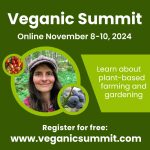
The Veganic Summit is a free online event from November 8th to 10th, 2024. You’ll learn how plant foods can be grown using techniques that are both vegan and organic, without any chemical fertilizers or any animal byproducts like manure or bonemeal. If you’d like to start your own veganic garden or learn about sustainable plant-based farming, sign up for the Veganic Summit today at https://veganicsummit.com/
_____________________________________________

Thank you for listening to the Our Hen House podcast! If you enjoy our podcasts, believe in our mission to effectively mainstream the movement to end the exploitation of animals, find community and solace in our shows and resources, and would like to show your support for vegan indie media, please make a donation today.
Subscribe to our show on Apple Podcasts or your favorite podcatcher, and don’t forget to leave a 5-star review!
Check out Our Hen House’s other podcasts: The Animal Law Podcast, The Teaching Jasmin How to Cook Vegan Podcast, and the Antiracism in Animal Advocacy Audio Series.
Follow us on social media! You can find Our Hen House on Facebook, Instagram, TikTok, or X (formerly Twitter).
The Our Hen House theme song is written and performed by Michael Harren.