
 Apple Podcasts
 RSS
 Amazon Music
 Spotify
 YouTube
 PocketCasts
 CastBox
 Player.fm
 TuneIn
 Audible
 App not listed? Try this RSS link

Turning a goat dairy farm into a goat sanctuary isn’t something that happens every day. But that’s exactly what just happened in Bloomington, Indiana, and Nicole Schonemann is here to share the whole beautiful story.
ABOUT OUR GUEST
 Nicole Schonemann is one of the four original founders of the Goat Conspiracy, a former goat dairy farm in Bloomington, Indiana, that is now a goat sanctuary. She began this journey with a very naive understanding of dairy, and, as a result, she learned that dairy, even when done as well as possible, leaves sustainability and animal welfare gaps that are impossible to close. She and her partner thus began their own journey towards veganism, away from dairy farming, and helped to start the Goat Conspiracy Sanctuary. In the fall of 2023, they started Planted Bloomington (a plant-based food truck and catering biz) and are now immersed in their current project of converting the former creamery into a vegan commercial kitchen.
RESOURCES

-
- ‘The Sting’ Oscar Winner David S. Ward to Direct Biopic on Plant-Based Nutrition Pioneer Dr. T. Colin Campbell (EXCLUSIVE)
- Inside the Bungled Bird Flu Response, Where Profits Collide With Public Health
- Watermelon Seed Milk Is The Latest Dairy-Free Innovation
- SECRET RECORDINGS SHOW UGLY CONDITIONS AHEAD OF DENVER’S SLAUGHTERHOUSE BAN REFERENDUM
- The Goat Conspiracy website
- The Goat Conspiracy on Instagram
- The Goat Conspiracy on Facebook
- Planted Bloomington website
- Planted Bloomington on Instagram
- Planted Bloomington on Facebook
INTERVIEW TRANSCRIPT
Jasmin Singer: Welcome to Our Hen House, Nicole.
Nicole Schonemann: Thank you.
Jasmin Singer: We're glad you're here. We've been hearing about your work and we have so many questions on such a variety of topics. Now, I want to start with something that we love more than anything.
We love sanctuaries so much and they all have amazing animals, but they don't all have stories, or at least we don't know all the stories that they have. So I would say maybe that's the best place to start is for you to tell us. You went from goat farmers of a sort to a goat sanctuary. So how did this all start?
There were four of you, right?
Nicole Schonemann: Yeah, there were four of us. So, actually at that time I was working at the university, I'd been there for a while and I was kind of ready to move on. And so, thinking about different kinds of things that might interest me to do. And I really loved goat cheese at that time, and I really liked homemade soaps, and I love goats. I mean, I didn't know goats then, but I mean, I was, you know, I love animals, whatever, you know. It was just kind of like a good combination of things. We had talked about having a goat farm. How cool would it be to have a goat farm? We can make cheese. We could really be concerned about, you know, put sustainability into practice. We could do localism and education. I mean, we had all these like, kind of ideas about what we could do. That's kind of where that idea came from is really I was looking for a job change and I had some friends who were also looking for a job change. You know, like I said, my interest was really in making cheese and making soap.
And they were real big animal people and I knew them quite well. And so we brought up to them about working with them and then they would do all the animal care, which is immense. Then I would do kind of the value added sort of things like making the cheese and making the soap. We have vacation rental on the farm that I manage, you know, any events that happened on the farm and email.
So I did all the kind of stuff that are around, you know, the essential thing, which is the care of the animals. We went into this, I mean, I'm going to talk about myself and not them because we're very different people and we see the world very differently and those differences have become a lot more visible through, you know, the changes that we've had with the farm, but I would say I went into it very naively. Like I did not know anything about dairy, so I think I said something earlier, that we went into it for sustainability reasons.
And that's one of the things that I've learned is that you're on the wrong side of the equation if you're engaged in dairy. And of course, animal welfare issues. I had no clue about any of that. And we kind of made it up as we went along. We had some dairy farmers who kind of helped us with, you know, this is what you're supposed to do.
And my feeling is like, if people can do it, I can probably figure out a way to do it. So I wasn't like intimidated by it, and I don't think Josh and Tanya were intimidated. It was just kind of like, we'll figure this out. And we had the help of some dairy farms around.
Mariann Sullivan: Like, it just sounds so much like a pipe dream that so many people have, and you actually made it a reality. Like this idea of doing something wholesome and rural and with animals and you bought into that, almost into a myth that a lot of people live with. We can do this right. I mean, it's sort of a tragedy, but of course you turn the tragedy into something good.
All right, I interrupted you in the middle of your story, so.
Nicole Schonemann: Please interrupt me, because I will talk and ramble and also, like, I feel like my brain as I get older, like, I'll often go off into another area, not completely, but I'll just feel free to interrupt and try to get me back on track if I seem like I'm
Mariann Sullivan: No, I interrupted just because that struck me, not because you were off track. It just struck me that it sounds like so many people's dream, and most people don't make it a reality, but you made it a reality, and then it turned out not to be so much of a dream.
Nicole Schonemann: I mean, so, you know, some things... I mean, I'll say how we did things differently. And I feel like we tried to do them as best as possible, I think, in part, because we just didn't know what the precedent was entirely. So, we did not artificially inseminate, you know, the goats would go into heat, and the males would go into rut, and that's when we would put the goats together, the babies stayed with their mothers for two months, and then at that point we separated them at night, and they could be together with their babies during the day. I mean, this is not at all the way dairies operate.
And we did that for a while. And then, the production of milk would stop after six months, cause babies aren't, you know, and we did this for a few years that way. But we were then advised by a friend of mine who's a farmer. She was like, you have to milk twice a day, that's why they're drying up. And so we started milking twice a day at that point. But we did the same in terms of keeping the babies. They were always in the same barn. They could see each other, never took mothers to slaughter, never took babies to slaughter.
Actually, that's not entirely true. There were two times early on, that we did what is called, um, I can't even remember what it's called. There's a euphemism for bringing goats to slaughter. I think it's processed, you know, something like that. We did that twice. And the first time, and my farm partners, they came back after the first time and they were like pretty traumatized.
And they were like, we need to find another slaughterhouse. This one is terrible. And they went to another one then, and they were like, this is terrible. And so we're like, we're just not going to do this anymore. I think people who don't know envision that there are good slaughterhouses and bad ones.
Mariann Sullivan: That is such a great point. Such a great point that I kind of never thought of.
Jasmin Singer: Totally. Yeah.
Nicole Schonemann: Well, it's just like, you know, like it's a clean place, maybe they're stunned. They don't know what's going on you know, like really like that it could be done humanely. And so I think that's kind of where we were and then we decided we weren't gonna do that. As a group, we were just like we're not doing that anymore so we adopted out as many goats as we could, which we were also doing at that time.
Jasmin Singer: Let me ask you a logistical question just so that I have the full picture. Where was this located first of all?
Nicole Schonemann: We're in Bloomington, we're just outside of Bloomington, Indiana.
Jasmin Singer: And for people listening to this, we have listeners all over the world. Describe what that area is like.
Nicole Schonemann: It's pretty rural, you know, there's a lot of rural places. It's not big ag because I guess the glaciers never, you know, got completely there, so it's a little bit hilly, but there's quite a few small farms in that area. College Town that I worked at, Indiana University is there, yeah.
Jasmin Singer: So what kind of place was it? I mean, did you offer tours or like, tell me a little bit more about what we were looking at before the big change.
Nicole Schonemann: Yeah, so we did farm tours, and we did goat yoga, and I did soap workshops. I have three dogs in here right now with me, and if you hear like snoring and little noises, one of them's
Mariann Sullivan: This is an occupational hazard for our podcast.
Nicole Schonemann: Okay.
Mariann Sullivan: don't
Jasmin Singer: We, we welcome it, like who, who are, we have to pause so you can tell us who's snoring and barking.
Nicole Schonemann: Yeah, okay. I mean, I just heard Twiggy's, Twiggy's, she's like sleeping, but she's making her little whimpering noises. And then, um, and then I've got Tiny Pickle, who's actually not tiny. He's a pit bull, but he's,
Jasmin Singer: Oh my God.
Mariann Sullivan: You have great names, I was going to say the name of your sanctuary is so great, The Goat Conspiracy, but you have great names for your dogs too, Tiny Pickle.
Nicole Schonemann: So the goat conspiracy, actually I want to talk about the name, I definitely want to talk about that. But I also want to say a little bit more about like how we really saw ourselves as different, you know, or like we were just, you know, we believed you could do it differently.
We disbudded and that was one thing we were advised in favor of and that's where they sear off the the horns when they're like, really days old, maybe two weeks, I think under two weeks old. And we were told that it, the horns are really to protect themselves, which I believe is true, but there are also nerve, nerves in there.
I mean, there are other reasons why they have those horns, but they have them to protect themselves, but that they don't need that protection because we're protecting them. They can use it against themselves by mistake. They can get them caught in equipment. They can use them against each other and against us.
So we did disbudding, which you know, it's kind of like you're told to do something and I don't know. I don't want to make myself seem, I mean, I want to say like, I just believed what I believed.
Jasmin Singer: We all did, Nicole.
Mariann Sullivan: I think that we've all been there. I mean, we didn't all start a goat farm, but you know, there are so many things that we've all believed about animals and how we should treat them. When I think of what I did with my first dog, who I loved more than anybody on the planet, like training things that I was told, I just feel like I made so many mistakes, so many mistakes, because that's what we're told to do.
And you know, you're, we'll get to that, but You are one of the few people who kind of at some point said, wait a second, but tell us more.
Nicole Schonemann: Well I guess I just want to say like we, you know, we tried to do it humanely and even sustainable. So when we created the Creamery, you know, we have radiant floor heatings and solar and passive solar and, you know, like we did things by hand. I mean, we really tried to do things a certain way.
Mariann Sullivan: I think what's so powerful about your story is that it does demonstrate that there's no way to fix this.
Like, there's just no way to fix dairy. Like, you tried as hard as you could and probably really bit into any profits you were making. And still, like, it was not good. So I think that makes it a very powerful story, how hard you tried to make it humane.
Nicole Schonemann: Yeah, you know, it's interesting because, I mean, I've been a vegetarian on and off in my life for quite a few years. I mean, the first time was when I was in high school, but at the time we started the farm, I wasn't, and I was, you know, believing that you could eat meat humanely. And we even ate some of our goats that were processed you know, so it was just like... I don't know. It's very weird to me to think about it now.
Mariann Sullivan: I know. It's weird for all of us to think of what we used to do.
Nicole Schonemann: Well, so this is like, maybe I'm going to say like, maybe about three years ago, we were just on the porch and it was our farm partners and us, my boyfriend, Mark and I. Josh had cooked up some chicken sausages, which I'd eaten many times, and I just took a bite, and I was like, I can't. It wasn't even like a thought process, it was really weird, I was like, I can't eat this, and I stopped, and that was at a point I wasn't even thinking about being vegan.
Mariann Sullivan: So had you started to second guess things before that or did it just all hit you at once? And did that moment of not eating the chicken sausage also have to do with starting to second guess the farm?
Nicole Schonemann: It was not a thoughtful thing at all, it was just an emotional thing. And I don't know where it came from. It wasn't like something I'd been talking about or discussing. It was very weird. I was just like, I'm not doing this anymore. So this is kind of odd, but I feel like the way my boyfriend and I got to this point is we adopted a pit bull, and we were like kind of of the generation that's really terrified of pit bulls.
And he was an old pit bull who'd been abused and he was in the shelter for like six months because it was a court case and we were really hesitant about adopting him, but he just totally transformed our lives, and we became really interested in, you know, looking at animal rescues, and very concerned about companion animals.
You know, we loved companion animals before, but we've never had an abused companion animal. We were just really touched by Baby, that was one thing. And then I saw this infographic at Animal Charity Evaluators. They have two graphs, and one of the graphs shows, um, they have companion animals, they have farmed animals, or animals as food, they have animals in laboratory, or animals as fashion. With those variables, they show the impact of human beings on their death, I guess. Just like how many die as a result of being companion animals, because shelters are over capacity. And the animal agriculture just covers almost the entire block. And the companion animal was so small and then they show a reverse kind of graphic where they show where resources go, and resources, whether it's financial or attention. I mean, it's really true, the overwhelming majority, like, stunning majority of animals that are abused and killed are farmed animals, they're not companion animals.
And I'm concerned about companion animals, but that kind of turned everything on its side. We were like, I don't know, I think Baby had a lot to do with it. Another really important thing was because we were still trying to do things correctly. You know, we saw Cowspiracy 10 years too late, and that had a huge impact.
My boyfriend and I, we were vacationing and we saw it and I said, you know, we need to stop. We're on the wrong side of the equation. I mean, even if we're trying to do things right, we were really struggling with it. Anyhow, but that movie, it was just like, I don't want to have anything to do with this. And so our name is The Goat Conspiracy, and I was like, we should be called The Oat Conspiracy, and our logo should have like the G kind of knocked off, like someone kicked the G. So I mean, that was kind of like the first time.
And, you know, it took a little bit. And I had actually before that started becoming vegan, I think that Cowspiracy was the thing that like, when I started learning about kind of that, you know, attention and devastation. And then when I saw this thing with Cowspiracy, that was like a bigger commitment.
Jasmin Singer: And you say you're 10 years too late with it. But the first thing I thought of was, well, you could have watched it 10 years from now. I mean, we all have our moments.
Mariann Sullivan: Yeah, and you could have watched it 10 years earlier and it wouldn't have had the same impact. Who knows?
Nicole Schonemann: That is definitely true. So yeah, that is definitely true. And it's funny with the name, The Goat Conspiracy came because we were leaving our jobs. I was at IU, I was done. You know, I was like, I need something else. Josh and Tanya were working somewhere, they were kind of done. And then my boyfriend was still at his job.
And I was talking to a friend and I said, we're all kind of leaving our jobs and starting a goat farm. And my friend was like, sounds like a goat conspiracy. And so we've always kind of played with that. Like, you know, when people ask us, well, what's the conspiracy? And my boyfriend and I now, started thinking the real conspiracy was the goats.
They're like, we are going to teach you about this that is really hidden and we're going to show you that it's wrong. So we feel like that's kind of the conspiracy. And I feel like one of the best kept secrets is that cheese is not vegetarian. I went to Vermont and took like a week course to learn how to make cheese and they used veal rennet and I used what they used when I came back.
I mean, I didn't think twice about it. But then I started thinking twice about it so then I moved over to microbial rennet and we had like this little poster and it was like vegetarian cheese, because we're using vegetarian rennet and I really believed it at that time.
You know, our cheese is vegetarian, but the process is not. I mean, the cheese is just not vegetarian. There is blood, and it's, exploitation of animals, you know? So, I don't know, it was a huge learning experience. And it is kind of crazy, because if we hadn't started that farm, we wouldn't have started the sanctuary. I started this vegan food truck. I'm very committed to animal agriculture, I think about it all the time. So I feel like, you know, maybe if I'd seen it 10 years before, maybe we would not be in this place that we are right now, which I, feel like is an important place.
Mariann Sullivan: I think that's the only way to look at it. Like we all, we all have regrets.
Jasmin Singer: Right. And I am curious though, do you feel you were like in a way, how should I say, victims of the myths that we're all fed about animal agriculture?
Nicole Schonemann: No, I don't think the wording rings true to me.
Jasmin Singer: Well, how would you put it?
Nicole Schonemann: It's the word victims that I feel like human beings are like the cause, so it's hard to be like victims, you know, but I do think maybe we're dupes, is maybe a word that I would like better than victims, but definitely I didn't know anything about it at all.
Jasmin Singer: Yeah.
Mariann Sullivan: Does that include the sustainability issues? Like were you totally shocked by how completely unsustainable it is? Cause that sounds like it was a big motivation for you.
Nicole Schonemann: That was a big one for when I saw Cowspiracy, because I did not realize like how fucked, I'm sorry.
Mariann Sullivan: You can say fuck all day long if you want.
Nicole Schonemann: Okay, I didn't realize how messed up that was. But I would say, you know, the original concern came from like, you know, this very strong attachment to this dog, this elderly dog who had been abused, it's kind of like a gateway. Gateway animal or something, to realizing like the impact of
Mariann Sullivan: How many of us can really trace this to a dog? I mean, not everybody, but a hell of a lot of people you talk to, it started with a dog. I, I sometimes think that, you know, dogs really have it hard because they're stuck with us and we are not a joy, and they just somehow are that gateway. They, they crossed over to be with us, from the kingdom of, of animals, where animals live free.
They're kind of this crossover animal, but they're here to teach us. Like so many many people. It was certainly true of me. If it wasn't for that dog I wouldn't have never awakened about this. So you've been talking about all four of you, but it seems unlikely that all four of you just had the same moment of enlightenment all at the same time.
Was that an issue or did you all just kind of like get it?
Nicole Schonemann: Yeah, so my boyfriend and I really went on this journey together, like we talk about everything and we see the same movies and, you know, have the same experiences or talk about our experiences. So our personal transformation was very well aligned. Our farm partners don't see the world the same way we do. but they were... it was interesting because despite the fact that I didn't want anything to do with it, I trained two people that were going to take over my job and I had talked to them about giving them like, my portion of the farm, as a business, and then two months after that, our farm partners were like, we just don't want to do it anymore.
It's breeding season. It's exhausting. And, farming is, it's not a slow pace of life, it's pretty exhausting. And, so they wanted to stop because breeding season and kidding season and the work involved. But they're not vegetarian so, it's interesting, we came to the same conclusion that this was something that none of us wanted anything to do with anymore, but we didn't come to it for the same reasons.
Mariann Sullivan: Okay, that makes more sense because it would have been hard for four people to come to this moment at the same time.
You know, the reason your story is so interesting, I think, is because most people in this position, of course, a lot of people are in this position of the, the small farm movement and the locavore movement and all of this, and, and part of it is animal agriculture.
And when people have made this huge, big decision, they usually dig in. I mean, they don't usually change their minds, but you totally rethought what you were doing. I know this is a hard question to ask somebody, but, but I'm really not asking just to like say, Oh, you're such a wonderful person, Nicole, though I'm sure you are such a wonderful person.
But, but why do you think, because this is the crucial question. Why do you think it was possible for you to have that moment to like change, to see the truth? Was it because you were where you were in life, or does it something about your personality? What can we learn from that about helping other people? Cause that's what people do. They dig in. Once they've made a decision, they stick with it.
Nicole Schonemann: I think there has to be, I don't know if there has to be, but I think it's very helpful to have steps for people to make that transformation on their own. So, I think presenting it as a challenge to somebody is probably not going to be super successful with a lot of people. So maybe the fact that I wasn't defending what I was doing, but I was experiencing learning, you know, and having conversations, was really helpful to me to do that. And that's kind of what we try to do with the sanctuary. So, you know, like, we want it to be a place where people can make that personal transformation. So I often use reducetarian, but you know, to say like, we're reducetarians. I mean, we're vegan, our sanctuary.
Mariann Sullivan: We reduced it down to nothing.
Nicole Schonemann: Yeah, I mean, they, the Reducetarian Foundation, they talk about vegans as being reducetarians.
I mean, it's just like, you know, we're all about reduction, but trying to offer those kind of not super intimidating opportunities for people to connect with animals and to learn about our story and not have to be put on the defensive, you know. So I think there's room for everything in the movement to help animals.
Like, I don't think one way is better than the other. But I think having a space where people can make steps on their own, is an important space. You know, it's not the only important space, but I think it's good to have something like that.
Mariann Sullivan: Yeah. That's really well said. I mean, I really agree with you that there's no point in trying to come up with the one perfect way to communicate with people about this, but I like the fact that you built on your own experience, you know, the way it was for you is kind of the way you try to communicate with other people. By I guess, offering opportunities and not arguments, even though the arguments are there.
Nicole Schonemann: I feel like people have to be ready for them, you know? Like, I feel like, you know, it can be really counterproductive. Even though I feel like if people saw things, saw some of those footage reels of people going into, CAFOs or slaughterhouses. You know, I mean, I think if people saw those...
Mariann Sullivan: if we could just force them to see them.
Nicole Schonemann: Yeah, I know, but I do feel like it's important to have that ready, the spaces for people.
Mariann Sullivan: Yeah, exactly.
Jasmin Singer: Did you also have chickens or is that more recent?
Nicole Schonemann: We have chickens as well, and so the sanctuary right now is just goats and chickens. And that's part of a conversation, too, about whether we'd expand. I think we kind of like the idea of being goats and chickens. There's, you know, like some pig sanctuaries. We were talking about maybe we could work with different sanctuaries and have like, kind of a sanctuary tour, like they have bourbon tours and things like that,
Mariann Sullivan: Oh,
Nicole Schonemann: tours, but just where people could visit different sanctuaries.
But yeah, we have chickens. And people will be like, I don't eat meat, but I eat chicken, or I don't eat meat, but I eat fish. So I think having experiences where they can really connect.
So one of our board members is a, a vet and she was saying, you know, like it would be so nice in the chicken area, we're still like building it up, but in the chicken area to have these nice benches where people can sit and read and just listen to the cooing of the chickens. Cause she's like, if people just connect with them, it'll be harder for them to eat them They're just such amazing creatures.
Mariann Sullivan: I love this idea so much because I always, I mean, that's where I'm always drawn to when I go to a sanctuary. And you can just watch chickens forever. They're so interesting. They're so unbelievably engaged in their lives. Like somebody lays an egg and they're all like, like, Everything is exciting.
Everything is big. They're so busy. I just find chickens to be the most entertaining animals.
Nicole Schonemann: Yeah that you know that picture I sent you with me with chickens? First I was just like pointing to something and a chicken landed on my arm, and then I bent over to pet a chicken and one jumped on my back. I mean, they're just they're playful,
Mariann Sullivan: And they're so, yeah, they're just curious and they're always so busy. You know, Nicole, I think I sort of alluded to this in the beginning, but I think what you've done here is pretty unusual. I mean, I guess I could be wrong, but I, I mean, there's a lot of transformation stories, you know, that's a big thing in the movement.
Well, not a lot, but there's a few, but they're mostly people who have been persuaded to get out of factory farming situations. People who were, to some extent, exploited themselves and encouraged to get into plant based farming. Your story is just different. It, like, goes to that whole locavore mentality and you saw it yourself and you got out of it.
Like, do you feel like you might have a really important story to share? Are you prepared to become a star?
Nicole Schonemann: No, not prepared, not interested. I feel like it's pretty similar to The Last Pig that maybe I saw. I really connected with the dude.
Mariann Sullivan: Love that. Yeah, I love that movie.
Nicole Schonemann: I mean, I don't know, but I mean, I've heard that since we've done this, where like, someone was just telling me his parents had a pig and cattle farm and. You know, just got attached to the animals. I don't think my story is going to be, or is that unusual. Yeah.
Mariann Sullivan: I hope that's true.
Jasmin Singer: Well, I think it is, but that's okay. I mean, to me, you have a different vantage point and I understand that you're centering the animals and you don't want to censor yourself. Like I, I totally hear that. But, you're just such a bright light for these animals, especially with your story.
Mariann Sullivan: And The Last Pig, I mean, speaking of The Last Pig is such a, it was such a moving film. And, but there was a film about it, like, that's important, or else we would never have heard about it.
Jasmin Singer: And so there you are with a farm and a lot of goats and you wanted out. I want to go back to this moment in time for you. Why a sanctuary?
Nicole Schonemann: We had no intention of starting a sanctuary, but we had, we didn't actually know how many goats, we were always saying like 150, but it turns out it's like 130, I think. I mean, it's not exactly 130, but we had a lot of goats, you know, and like, we're not going to take them anywhere.
So what are we going to do? We're going to do a sanctuary. I mean, I think that was the only obvious thing
Mariann Sullivan: Because you had 150 goats, and you didn't know what to do with them.
Nicole Schonemann: Something around there.
A lot of goats, a lot of chickens, and you know, we were just like, well, you know, we've got a farm! And I do want to say with the sanctuary, we hired an executive director, Alex Valdez, and then a farm manager, Ben Walker, and they are amazing, and they really make the decisions. You know, like right now I was just at the farm sanctuary and I was just talking to Ben and he's coming with all these things for the chickens, like turning that area into this big playground for the chickens.
They built like a chicken out of, I don't know, they've just been doing like some crazy things for enrichment for the chickens. And, I mean, they're just really good people and energetic people, great ideas. And the sanctuary is really led by them. And the board is there to support the work that they do.
Mariann Sullivan: So who visits? Like what is the sanctuary program? I mean, I've seen from your social media that you have some kind of cool events, you have some musical events, et cetera. Give us a picture of how the sanctuary is now. And this is all relatively recent, right?
Nicole Schonemann: Yeah, so, we hired Alex in July and maybe Ben in August. So very very recent. Yeah. But I mean, they've been amazing. Like they've been insanely just beyond. They're great. Yeah, I think, you know, kind of that whole idea of a bridge, like we already had a lot of people who were interested in our farm and loved our farm and came to our events.
And so, you know, we didn't create a new social media account.
Mariann Sullivan: Right.
Nicole Schonemann: I got rid of a lot of the cheese stuff, like I left it at the bottom, but I did not want people coming to us thinking we were going to have cheese or we were still a dairy. So I think I took away a lot of social so that people would not go there and be like, oh, I want to go and see cheese. I did get rid of a little bit of that, not to erase the history. The history is on our web page, but just really to make it more clear to people that we're really about the goats. But definitely if you scroll down, like, I don't know, a year, you'll see a lot of cheese stuff.
But, you know, it's kind of this idea of a bridge that we already have people that were coming to our place because of our great experiences. And we just keep those things going. So you know, the goat yoga connections that we've made. The music we've had that music concert that was the fourth year that we'd had that classical music piano concert, sunset piano recital in the farm. You know, there are groups of people that might not go to a sanctuary, but they're there and what we've done. And Alex has been really great at doing this, has been like, building in information in every event that we do about the sanctuary. So it's not just this Sunset Piano recital anymore. It's a Sunset Piano recital with a lot of information. And we used to actually serve cheese at the Sunset recital, and now we're serving vegan food from my food truck.
So, yeah. It's, it's kind of this bridge, you know, like using what we've done before with those events, and then kind of transforming them a little bit. And Alex and Ben have some great ideas. We've been talking about the International Vegan Film Festival and seeing if we could show some of those movies on the farm. So we'd have some things that are very kind of obviously mission driven things, but then some things that are these light experiences that we are going to be helping people take those steps.
Jasmin Singer: That's so cool. So tell us a little bit about goats because, you know, I know that there's a whole like hashtag goat culture and obviously a lot of it is based in exploitation, but you didn't really pick them because you particularly loved goats, I guess. Are you glad that goats became such a big part of your life?
And tell us a little bit about them.
Nicole Schonemann: Yeah, that's interesting. I mean, it was like, it was my idea because of cheese, you know. It's like, I like the cheese. Yeah, no, goats are amazing creatures. I mean, a lot of times people say they're like dogs, and they kind of are. You know, they'll make eye contact. They'll nibble on your finger.
They'll follow you. They know their names. They're predictable and they're unpredictable. They're very much individuals.
Yeah, that's interesting. I haven't not thought about that, but the reason I said goat farm was really about the cheese. Weird.
Jasmin Singer: So what have you learned about them? I mean, I have met goats at sanctuaries, and obviously they're all different, but in general, can you just tell us a little bit about what these magnificent animals are like.
Nicole Schonemann: I mean, they're very affectionate, they're very individual. Some of them are not as affectionate as others, they have their pecking order, just like chickens and probably just like humans, you know, and dogs. Yeah, I mean, they're, pretty much, they're individuals.
We have some that are hypersocial and some that are less social. I mean, some of that has to do with, I'm guessing, breed. The reason we had so many goats is that we started with Nigerian dwarfs, which are tiny goats, and we got them from a goat farm that was doing cheese too, and in general, they're less social than the La Manchas, which we actually got from someone who had them as show goats or something, so they had a lot more attention.
I don't know how much is breed and how much is like attention, but they're, they're sweet, they're very affectionate.
Mariann Sullivan: How does goat yoga work? You used to do goat yoga, and that's the one activity you still do, right? That basically carried over?
Nicole Schonemann: Well, so the tours, the farm visits...They're all changed, you know, they're all changed to be more mission driven, but yeah, the concert, the tours, and goat yoga are all things that we brought over, but it's really just the goats are in the area where people are doing yoga. And I feel like people go to the farm to kind of have a farm experience a lot of times, you know, like, you're doing yoga, it's a sunset, goats are around. We have some grain we might give them or some hay. . This is one thing I think is odd about goats, but they like the dried hay I think they like the hay in the field too, but they're definitely two different things. So like even if they're in the haying field and the hay is high and it's green. they'll want the stuff that's dry, maybe for a varied diet for their rumen. But we'll have things like the hay and they'll come over while people are doing yoga. We don't put the goats on top of people. You know, the goats can do whatever they want. They kind of just hang out in that area.
And I think people enjoy it because it's a opportunity to get away from their busy pace of life, you know?
Jasmin Singer: Yeah.
Mariann Sullivan: We've talked a lot about it, and there's a lot more to say, but we have to get on to your second project because it's unbelievable, truly unbelievable, your food truck.
I mean, we have to discuss it. You have to tell people the menu. You have to plan to get people to come to Bloomington, Indiana to go to this food truck because I'm considering a 10 hour drive because it looks unbelievable! People who listen to the podcast all the time understand that I don't go on about things like that. It really looks unbelievable. So tell us how it started and how did you get this menu and is the food as good as it looks?
Nicole Schonemann: Yeah. In a way it's kind of, I mean, there are some parallels with the sanctuary. It's reducetarian too. My thought was when I was becoming vegan, and I was talking to this friend of mine, and we were like, it would be great to have just really, really good vegan food, or just even vegan fast food. Because one of the big, I feel like, stumbling blocks for people to go to a plant based diet is like, what am I going to eat? And just making that easier for people, and for us, who were becoming vegan, you know, it's like, there should be some really good food. So, that's kind of how it started, but the idea is reducitarian. I mean, I wanted to have food that was so good that my target audience would be meat eaters and not vegans, because I feel like vegans will figure out what we're going to eat, but, you know, to have something appetizing that people would want to eat. The whole thing with the Reducetarian, from what I understand it, is that it's harder to get someone to become vegan than it is to try to get people to reduce and that can have a tremendous impact on the animals that are trapped in the food system and it can have a tremendous impact on the environment.
So, that was it. Like, let's come up with some really fantastic food that everyone wants to eat. And I happen to know, I have a friend who's like, I think one of the most amazing chefs I've ever met, and her name's Erica Yocum, and she designed the original menu. What I said is I want great food, and I wanted to have no single use plastic on the truck. I was thinking originally, like, a sandwich, you wrap it in paper napkin, and you just hand it to someone, and then there's no waste, kind of thing, but she came up with a menu that's a lot more varied, so we have paper boats, and sometimes the bamboo forks or wooden forks or something. But she came up with the menu.
Mariann Sullivan: Let me just clarify, because you said it's reducetarian, but the food is all vegan, right?
Nicole Schonemann: Oh gosh, yeah, the food is vegan.
Mariann Sullivan: Yeah, I get it. I just wanted to make sure people were clear. Yeah.
Nicole Schonemann: Yeah, we don't have vegan on the truck at all. Like, I want people, it's a bright orange truck with flowers on it. I want people to go because they want to check it out. I think I just read in Sentient Media there was a whole thing on how the word vegan just terrifies people. So, you know, just making it more accessible. Yeah, no, everything on the truck is vegan.
And then, she trained someone named Leah Wolfe, who's our head chef, who has now taken creativity in other directions and amazing, beautiful food. So I just happen to have these two amazing people who are creating things, and then we have a whole truck staff of people who then, someone else helps in the kitchen, and there are multiple people who actually sell it, put the food together, and heat it up, and, I mean, it's a big process. I feel like it's the best food in Bloomington. It's super beautiful. I mean, they pay attention to detail, like color and crunch, texture and taste. I mean, everything. And, yeah, it's amazing food. From what I can tell, when I talk to people, the majority of people I talk to who are at the food truck are not vegan.
So I feel like that's a success.
Jasmin Singer: No kidding. It really is. Do you have any favorite meals that you like to get from the food truck?
Nicole Schonemann: They've just switched the menu and like, I have nothing to do with the food. Like, I feel like totally comfortable raving about it. But some of the new stuff I haven't even had a chance to try.
So like, I just gave this concept, you know, that I want it to be as using no single use plastic. I want it to be beautiful, amazing food that meat eaters will eat. There's a couple other things I was thinking with that, seasonal and local. And so the menu does change. So, you know, we always have so many different kinds of entrees and sides and stuff that they'll switch around. There was a daylily, we name them after wildflowers, flowering plants in our area, and the original daylily was, that just got switched over, so I haven't tried the new daylily, but
Mariann Sullivan: All right. If you're not going to do it, I'm going to do it. I'm just going to read a couple of these descriptions because they just totally blew me away. There's the Aster. These are like kind of open faced sandwiches you call flats. Aster, a flat with a zesty, fresh curry paste and cauliflower topped off with tamarind date chutney, mint cilantro chutney, and Sev, a crunchy chickpea topping, or Breakfast Magnolia, flat with local squash and leeks, toasted sunflower seed, and sage pesto, in house Wolfe cheese. I assume that's vegan cheese. Well, I'm, I'm sure that's vegan cheese. And smoked toasted mushrooms on a toasted slice of muddy fork bread. Gluten free option available. Like it just goes on and on like that. It looks amazing.
Nicole Schonemann: Yeah, so our head chef is Leah Wolfe, and so we call her Cheese Wolfe Cheese, because we thought that was kind of funny.
Jasmin Singer: Ha ha ha ha ha! I love that.
Nicole Schonemann: Our ice cream, I love the ice cream, and it's coconut, they use coconut milk and coconut cream, and Leah sources it to make sure that there's no monkey labor involved, I think it was PETA approved or something, coconut milk. So we really try, the staff does an amazing job of, like, sourcing. I do a lot of the behind the scenes stuff, but the people that actually make it work and come up with the ideas and stuff are not me. I'm just a frequent customer.
Jasmin Singer: Yeah, well,
Nicole Schonemann: And you should come! I would love you guys to come and check out the sanctuary. And...
Mariann Sullivan: I actually looked today when I was prepping for the interview, it's about a 10 hour drive. I mean, you could do 10 hours in one day.
I'd have to wait until before winter. I'm sure your winters are as intense as ours. I'm not sure I'd want to do that drive in January, but, uh...
Nicole Schonemann: Are you guys in New York?
Mariann Sullivan: We're in Rochester, New York, so not as far as the city and also, you know, right along the Great Lakes as well. Well, you're not right along the Great Lakes, but Indiana is.
Nicole Schonemann: Yeah, we are not in it. We're in the
Mariann Sullivan: Actually, the one time Jasmin and I, I think, were ever in Indiana, we drove through Indiana with our dog Rose, and it was in the northern part of the state, our pit bull, and I, we went to the Indiana Dunes, which was the most beautiful beaches. Like some of the most beautiful beaches I've ever seen.
Like we had no idea this was even there. We just, it's like, we're wandering around, we found these beaches, and Rose proceeded to try to drink Lake Michigan. That was, you know, how pit bulls are. They set themselves a goal and then they like to achieve it.
Jasmin Singer: She was like, I'm not sure why there's such a large body of water here, but I'm going to
Mariann Sullivan: And it's, fresh. This is exciting. This is fresh
Jasmin Singer: Yeah, because we were living in New York City at the time and she was like, this is not the Hudson River.
Mariann Sullivan: I was like, why doesn't everybody know about these beaches? They should be famous, but they're not.
Jasmin Singer: So funny. Well, Nicole, we have so many more questions that we could ask you, but we've kept you for a long time and we want to keep you a little bit longer for the bonus segment for our flock. But I just want to say that you're just so cool and interesting, and I'm so, so glad that we were able to pick your brain a bit today about all that you're doing in so many different realms.
You, you give me hope that people can change and I appreciate you. So thank you so much for joining us today on Our Hen House and I hope that you'll stick on a little bit longer with us.
Nicole Schonemann: Yeah, for sure. Thank you. It's been fun talking with you guys.
_____________________________________________
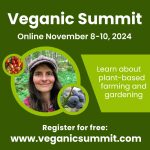
The Veganic Summit is a free online event from November 8th to 10th, 2024. You’ll learn how plant foods can be grown using techniques that are both vegan and organic, without any chemical fertilizers or any animal byproducts like manure or bonemeal. If you’d like to start your own veganic garden or learn about sustainable plant-based farming, sign up for the Veganic Summit today at https://veganicsummit.com/
_____________________________________________

Thank you for listening to the Our Hen House podcast! If you enjoy our podcasts, believe in our mission to effectively mainstream the movement to end the exploitation of animals, find community and solace in our shows and resources, and would like to show your support for vegan indie media, please make a donation today.
Subscribe to our show on Apple Podcasts or your favorite podcatcher, and don’t forget to leave a 5-star review!
Check out Our Hen House’s other podcasts: The Animal Law Podcast, The Teaching Jasmin How to Cook Vegan Podcast, and the Antiracism in Animal Advocacy Audio Series.
Follow us on social media! You can find Our Hen House on Facebook, Instagram, TikTok, or X (formerly Twitter).
The Our Hen House theme song is written and performed by Michael Harren.