
 Apple Podcasts
 RSS
 Amazon Music
 Spotify
 YouTube
 PocketCasts
 CastBox
 Player.fm
 TuneIn
 Audible
 App not listed? Try this RSS link

From unmasking fake “rescues” on social media to getting stories placed in major media outlets, the work of Lady Freethinker tells people all over the world about some of the worst things that are happening to animals and, crucially, what they can do about it. This week, we are joined by Nina Jackel to hear about her work publicizing and fighting to shut down cruelty to animals.
ABOUT OUR GUEST
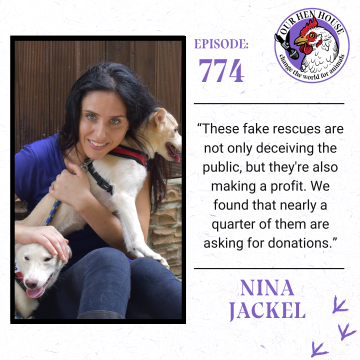
Nina Jackel is a global activist and journalist effecting change for animals through her nonprofit media organization, Lady Freethinker, which has published thousands of news articles and petitions against animal cruelty. Nina’s work has been covered in major media outlets, including The New York Times, People, Newsweek, National Geographic, The Guardian, Salon, The Daily Mail, and many others. She believes that humans can evolve for the better through reason and compassion and feels that animal protection is among the most important social justice issues of our time.
RESOURCES
-
- Why are people still moving to high-risk climate areas?
- Rescued cows inspire S. Korean village’s vegan move to draw younger residents
- Landmark Victory In Romania After Fur Farming Ban Is Approved By Parliament
- Lady Freethinker website
- Lady Freethinker on Instagram
- Lady Freethinker on Facebook
- Lady Freethinker on X (formerly Twitter)
INTERVIEW TRANSCRIPT
Jasmin Singer: Welcome to Our Hen House, Nina.
Nina Jackel: Thank you so much for having me. It's great to be here.
Mariann Sullivan: Nina, are you actually Lady Freethinker, or is that the name of the organization?
Nina Jackel: That is the name of the organization. And people ask very often why it's named that. It doesn't sound like an animal protection organization. And that's because it actually started as my blog, over 10 years ago. And, I was writing a lot about animal issues. Then it just kind of morphed into a non profit media organization.
And, now we do more than that and focus, you know, almost exclusively on helping animals.
Jasmin Singer: Yeah.
Mariann Sullivan: We can so identify with that story.
Jasmin Singer: Yeah. Totally.
Mariann Sullivan: We just, we started a blog, and you know, like, on one afternoon, in about 15 minutes, said, Oh, like, we're kind of Hens, like let's call it Hen House and the Hen House, of course, was taken as a URL. So we said, all right, let's call it Our Hen House.
Nina Jackel: Oh!
Mariann Sullivan: 15 years later, here we are.
Jasmin Singer: Yeah.
Nina Jackel: It worked out.
Mariann Sullivan: A lot of people think that we raise chickens for eggs.
Jasmin Singer: Yeah, well, you know what? We should create some kind of a response specifically to those people at the ready. I don't know why 15 years later we're realizing this, but in any case, back to Nina. So you just started to get into it a little bit, but for those who are unfamiliar with it, how would you describe the work of Lady Freethinker now?
Nina Jackel: We are a hundred percent dedicated to exposing and stopping suffering, particularly animal suffering. And we do this by publishing news articles, publishing petitions, we do investigations into, um, usually industrialized cruelty, like what happens in zoos and the tourism industry, the dog meat trade, social media, that's a big one. We do a lot of research and reporting on animal cruelty on social media platforms ranging from, you know, the mainstream ones, like Facebook and YouTube to, you know, Telegram and the more encrypted groups where some of the worst stuff really happens. But our main mission is to expose animal issues to as wide an audience as possible and ideally allow people to take action.
Whether that's signing a petition, making a lifestyle change, making one choice not to view a video, whatever that is. I believe that when you present people with a problem, you also need to give them a way that they can help. And that's really what we strive to do.
Mariann Sullivan: Yeah, you know, again, it reminds me, in some ways, in some ways not, about what we think of as our role at Our Hen House, kind of. Well, you are actually doing more things directly, but we're all, I think, kind of amplifying the voices of those who are trying to help animals. I think our audience is a little more activist and your audience is a little more the public because you reach a huge variety of people, which is great.
But it really does ring a bell for me. Do you feel that way too, Jasmin?
Jasmin Singer: Yeah, absolutely. I mean, it's like a Venn diagram. I like kind of hearing about how you are approaching advocacy. Like, would you say one of the roles is to amplify the voices of those working to free the animals?
Nina Jackel: Absolutely. I come from a journalism background and we're publishing daily news articles and petitions that talk about not just animal issues, but the work that other organizations are doing. Because the animals, I don't believe they're voiceless. They communicate with us very well, but they definitely don't have a platform.
So it's really up to us to amplify their voices and speak out on their behalf to achieve justice for them.
Mariann Sullivan: Yeah, that voices for the voiceless thing became kind of controversial because at some point a lot of people realized, Oh, maybe that's not the best way to put it. Because it's not like they can't yell. They have a voice, but they have a very hard time getting anybody to hear them that's for sure.
Nina Jackel: Exactly. And I appreciate the metaphor. I don't have anything against people who, who use that, you know, voiceless
Mariann Sullivan: too, me too,
Nina Jackel: term, but yeah, I, I definitely hear the voices of the animals around me and, you know, want to help them express their needs and their suffering to people who can, you know, help make change.
Jasmin Singer: I hear the voices of my dogs a little too often.
Mariann Sullivan: Yeah, we all do.
Jasmin Singer: And they, and they are very vocal about their suffering.
Mariann Sullivan: At any moment we may start to hear the voices of your dogs.
Jasmin Singer: Exactly. Yeah.
Nina Jackel: When dinner's an hour late, I'm sure
Jasmin Singer: Or like a minute, a minute late. Yeah. Well, tell us a little bit more about your online petitions, like how they work and how you get attention for them.
Nina Jackel: Yeah. So, you know, we publish petitions on a very wide variety of issues, really. Anytime there's animal suffering that we believe can be stopped and we can, you know, help raise awareness and encourage people to speak out to stop it, we will publish a petition. And that issue could come from a collaboration with another organization.
It could just come from something that was in a local news article. It could be something that someone sends to us because people send us a lot of animal cruelty stories, you know, knowing that we do this. And then we send them out to our audience and gather as many signatures as possible. And then, we take that petition and reach out to the target who is ultimately some sort of decision maker, it could be a prosecutor, it could be a politician, and say, "Hey, look, you know, 30,000 people signed this petition because they stand against this abuse or this policy that creates suffering and they want to see change." And so we basically collect the voices of others in a sense, and, you know, direct that toward someone with the power to create change.
To me, a petition is very much like a protest, it's just not a physical protest. It's an online protest. And in that sense, more people are able to participate, because you can be anywhere and add your name to a petition,
Mariann Sullivan: Yeah, I really appreciated what you said earlier, where like, if you're going to show people these terrible things, you have to give them something to do. I mean, if you're not going to do that, why would they look at them?
Nina Jackel: right? It's just depressing.
Mariann Sullivan: painful. Yeah.
Nina Jackel: I don't want to see this stuff and not do anything about it, you know?
Mariann Sullivan: So I think that in and of itself is a good reason. Well, it's a reason to have a petition, but you also want, obviously, for a petition to accomplish something. Do you always know ahead of time who you're going to take it to and what you're going to ask them to do? Does that vary depending on the issue? And do you have some instances in where you feel your petition really had a piece of the puzzle in actually creating real change?
Nina Jackel: Yeah, so, you know, we generally do know who we're going to target. There's usually a specific person who, you know, in this step of the process is able to make change, whether it's an administrator or, you know, a prosecutor who we want to take a case seriously.
Mariann Sullivan: So it's usually a governmental person or is it sometimes a company?
Nina Jackel: It is definitely a company, sometimes, yeah. In an instance where there's industrialized cruelty happening because of a certain company like Facebook, for example. I still have yet to get the ear of Mark Zuckerberg, but, you know, we're, we're still trying!
Jasmin Singer: The night's still young.
Nina Jackel: If you know his email address, please forward it to me.
Jasmin Singer: Oh, sure. It's mark dot
Mariann Sullivan: Mark. at
Nina Jackel: we tried.
Mariann Sullivan: Facebook dot com. It would be interesting if that worked, wouldn't it?
Nina Jackel: Technically, well, according to the internet, yeah, that is his email address. We actually do have a metacontact we've been speaking with, but,
Mariann Sullivan: All right, we'll get it. And that's a huge issue when we want to get
Nina Jackel: Yeah, yeah, I'm getting ahead of myself. Sorry.
Mariann Sullivan: But I was just curious, like, more as a global issue. You know, when somebody signs a petition, do they really have a right to feel, well, this is going to translate into change? Or this has the possibility.
Obviously, creating change for animals is hard, but it has the possibility of contributing to change.
Nina Jackel: Yes, I mean, as much as any act of activism has that chance, yes. You know, as we know change happens very slowly and, generally a single protest or a single action doesn't result in wide systemic change. Everything is a step in that direction that we want to go to.
That said, you know, there are instances where immediate results happen. For instance, we had a petition to stop a school possum hunt in New Zealand, where kids as young as kindergarten age were supposed to participate in this, you know, killing contest and be rewarded. We posted a petition to stop it and it stopped.
Mariann Sullivan: Well, that, that must feel so good.
Nina Jackel: Yes. It's nice to see immediate rewards.
Um, in activism, you don't always get that, you know, you're really constantly fighting. You know, factory farms still exist, and all of these horrible things still exist, but you make progress, you make progress with every action, every petition, every letter that you write to a policymaker, every person who you educate. You know, all of those steps matter to get to this end goal that can sometimes take a long time to reach.
But I do believe that eventually we will reach a world where systemic animal suffering is not tolerated any longer. And it might not be in my lifetime, but I'm going to do my part to work to get there while I'm here.
Mariann Sullivan: Yeah. The way you're putting that really reminds me of the way I often talk about vegan advocacy. Like you can talk to somebody about veganism or answer their question or accost them or whatever and they're probably not going to change. But they might have to hear it 40 times, so now they only have to hear it 39 times. You can't expect it to always have an effect, but I bet a lot of the times it has some effect, and it must be exciting when it has, when it has a fast effect.
Nina Jackel: Yeah, and I mean, there are cases of individual animal abuse when we've posted a petition and seen a strong sentence and, you know, I, I feel these petitions contribute to that and, at the very least, they make policymakers aware and prosecutors and judges aware that, hey, this is something that people care about. And you need to take it seriously because with animal issues, that's not often the case. People say, Oh, it's just an animal, you know? So what if they, you know, beat the crap out of a dog? It's, it's just a dog who cares. But when you say, "Hey, like, you know, X thousands of people are appalled by this and they want to see some action," that is going to have some influence in the way that they treat that case. So, I absolutely believe that there is an impact.
Mariann Sullivan: I am so often reminded of the old AIDS slogan, silence equals death, when doing, animal work because so much of what happens to animals remains silent. And I think it's so important that that stop. And just because you don't always, sometimes you do, but you don't always see the result, you should never, I mean, the worst thing that you can do is just to remain silent about them.
Nina Jackel: Exactly.
Jasmin Singer: So how do you work on placing stories in major news outlets? Cause that's always been so incredibly impressive to me.
Mariann Sullivan: Yeah, you have managed a lot. I mean, tell us some of the outlets that you have and then tell us how you did it.
Nina Jackel: So our work has appeared in the New York Times, National Geographic, The Guardian, the Daily Mail, Vice, Several others. And, you know, media outreach is a very important part of our strategy, because if you work to raise awareness, of course, you can reach more eyeballs through mainstream media than through your own audience.
I mean, our subscribers are always going to care about these issues, but we also want to reach people who probably care about animals, but just don't really understand what's happening. And, that wider audience is critical to major change. You know, it's really, I wish I had a magic bullet tip, but it's really a grind.
You know, you write a press release, you research reporters who have covered something similar in the past. Repeat, repeat, repeat, repeat, and eventually you get the coverage. You know, it's like anything else. It's something that you really have to work at and work with people with experience with it, but that's not actually necessary.
It's very possible to do PR by yourself. And, you know, if you write a very concise, coherent, clear, compelling press release and research reporters to send it to, it's very possible to get press.
Mariann Sullivan: What kind of stories do you find are the ones that you, you put your efforts into because you think they might get some attention?
Nina Jackel: Yeah, so generally, if we issue a press release, it's for something that we've put a significant amount of work into or exposed something that's new. You know, reporters really want something fresh that hasn't been reported on a million times already, or at least a fresh angle on a topic, if it has been reported on.
So, generally, our investigations, or major reports, or just very new explorations of animal suffering are, that's what gets the coverage. Our investigations into, like tiger cruelty at zoos for photo ops, the dog meat trade, and the social media cruelty as well have tended to get the most coverage. Particularly the social media cruelty, and I know we're going to talk more about that in detail, but I think that, if you can tie your issue to something that's non animal related, I mean, as crappy as that is in a way. You know, if you can reach a different audience like the tech world or the business world or appeal to reporters and readers who, you know, aren't already in animal circles and give them an animal issue that's not only about animals, I think it's a little bit easier to get a response from them.
Jasmin Singer: That's all great advice. I mean, I especially like that you're emboldening people to just go out there and do it, and I often think that people think of themselves as inferior so often, but really the only difference between you and someone who's doing the thing that you want to be doing is that they're doing the thing that you want to be doing.
It's kind of like literally doing it. And if you don't know, kind of figuring it out as you go. I really appreciate that you're empowering people. And I know you also focus on undercover investigations. I'm curious, in what ways do you participate in these undercover investigations? Like, because they're all over the world.
Is it, how do you do that? Is it generally in partnership with local organizations or are you cloning yourself in one of those like cultivated meat labs?
Nina Jackel: Um, no, as much as I wish I could be on the ground in all of these places. I have done investigations myself, but for the most part, we collaborate with either other nonprofits or people who work in photojournalism and have access to places. There are some incredibly talented, you know, photographers who do this, who go and document animal cruelty and collaborating with them has, you know, gotten some great results.
Mariann Sullivan: Are you able to provide funding?
Nina Jackel: Yes, generally we will hire someone to do this.
Mariann Sullivan: Okay. That's really cool. Can you give us an example of one that you were really proud of?
Nina Jackel: Yeah, so we did a pretty extensive investigation into zoos in Thailand, and documented tigers, orangutans, elephants. These were at separate times. we sort of focused on one species, but we've done a pretty extensive portfolio of investigative work at these zoos. And I think exposed to many people why these tourist attractions with animals are just not something you should do when you travel abroad.
I think a lot of people really love animals and they think, Oh, look, here's a place where I can take a photo with an orangutan or bathe an elephant, and you know, in our circles, like, we definitely know better, right? And it seems like a no brainer that you just don't do that, right? But to a great many people, that's a way to interact with animals and they just don't understand the suffering.
It's not that they're bad people, they're very good people who love animals, but they don't know. So unless somebody tells them and shows them what's happening then, then they're not going to, to realize it. So, those investigations have gotten media coverage and, I believe have made an impact in that way.
And, you know, the next step, of course, is to get these places banned, get laws changed, which is a whole other piece of the puzzle, that is more difficult, certainly, because as you well know I'm sure, anytime animal exploitation is bringing in profit, it's very difficult to convince somebody to stop doing that exploitation.
So that is the ultimate goal. But, you know, you can also go the other way and stop these places from existing because there's simply no one who goes. And I think that that is an achievable goal.
Mariann Sullivan: I totally agree with you. I mean, I think it's in all, All aspects of animal advocacy, it's both stopping consumer participation and trying to get laws passed. Yeah, both of them are very hard, but,
Nina Jackel: Yes.
Mariann Sullivan: they do work on each other. The fewer people who are supporting them, the more likely you are to get a law passed.
Nina Jackel: Exactly.
Mariann Sullivan: So I did notice, I think, that you don't just hire people, but sometimes you partner with other organizations, which totally makes sense.
Nina Jackel: Collaborations are a large part of our work.
Mariann Sullivan: SInce they're all over the world, how do you know who are the good guys?
Nina Jackel: I mean, it's just taken years to build relationships. Honestly, it's organic. We also have a, a grant program and a lot of fantastic organizations will apply for funding for projects that they're doing. And so we'll meet some that way and then continue a partnership. Others are just through people I know, you know, I've been doing this long enough that,
Mariann Sullivan: Yeah.
Nina Jackel: that I've sort of accumulated a pretty, uh, extensive network, I suppose.
Mariann Sullivan: Yeah. I mean, even though we are all over the world, I always like to think of us as like sort of this separate nation of people all over the world who care about animals and we do, we do find each other.
Nina Jackel: Absolutely. And it's, I mean, you know, what's achievable now in terms of global partnerships, wasn't 20 years ago. So, you know, I think in that sense, as a relatively younger organization, you know, we might operate a little bit differently than those who are more traditional. And, those collaborations that can happen on WhatsApp or other networks are a pretty pivotal part of our work.
Jasmin Singer: And how do you publicize the investigations and hopefully get the authorities involved.
Nina Jackel: Yeah. So, obviously we post at our own website, we send things out in our e newsletter, posts on social media, you know, the press outreach aspect, obviously. In the more private realm, you know, it's writing letters, writing emails, making phone calls, all of those things that happen behind the scenes, to make sure that they're aware of all this other work that we're doing publicly.
Jasmin Singer: Speaking of things you're doing publicly, one of the major campaigns you're working on right now is your fake rescue report. Tell us about it. What did it uncover? What are the most serious problems created by social media for animals?
Nina Jackel: Yeah. So, the Lady Freethinker team has been working on animal cruelty on social media for about four years now, since 2020, when it really started to spike right around the early days of the pandemic. Fake rescues were one of the first types of abuse that we identified. Unfortunately it has continued, even though there is some progress that has been made. When we first exposed it, you know, YouTube actually, explicitly banned fake rescues in their guidelines. And, you know, there were some steps along the way that were promising. However, it still exists. And, most recently the Social Media Animal Cruelty Coalition, of which Lady Freethinker is a founding member, produced a report showing what's really happening with fake rescues on social media now.
The SMAC coalition is a membership coalition with 29 different organizations around the world, and the team found, I mean, more than a thousand links, but I want to preface that by saying that just because we were able to find a thousand links does not mean that there are only a thousand videos of animal cruelty.
Like the actual number is not known. Social media companies do not track animal cruelty videos. They will not tell you how many they removed or found or anything like that. You know, that a team of volunteers and small staff found a thousand means that there are probably many, many, many more than that. These fake rescues are not only deceiving the public, but they're also making a profit. We found that nearly a quarter of them are asking for donations. They really are fooling people, and while they're fooling people, they're putting animals in harm's way, and sometimes even in deadly situations. And there are a few different types of fake rescue. Kind of the original one, when we first discovered it years back was the staged animal attack. And, and that's where you see a small, small, prey animal, and that could be anything from a puppy or a kitten to a chicken or a duck kind of wrapped in the grips of a deadly python. And, here comes this rescuer who bursts onto the scene, is shocked and appalled to see this, you know, unfolding in front of their eyes and rushes over and unwraps the python and saves the puppy. I mean, it's been debunked by experts. It's not something that would really happen. I mean, in an extreme rare situation, perhaps someone would stumble upon this, but even in that situation, they're not just going to be able to go by themselves and unwrap a giant snake from an animal while the snake just sort of complies and is docile while the person is, you know, taking their dinner away. It's not just cruel to the prey animal, it's cruel to the snake who is clearly a captive animal themselves and, you know, being exploited for this use.
That's one of the very common ones and, you know, kind of the first ones that we ever discovered. And those unfortunately are still prevalent somehow. The other types that have emerged relatively more recently, or perhaps, you know, we just discovered them more recently, it's not 100 percent possible to know for sure, but you see the sort of fake medical attention or fake abandonment where someone, you know, just sort of spots an animal like near comatose in a pool of water on the ground, or stuffed in a box, or wrapped up in tape, you know, hanging from a tree, so many different variations of this. And then they come along and they're shocked and horrified and they go and they save the poor animal. And, sometimes now, as they get more sophisticated, you'll see medical treatment in which someone who looks like a vet most likely isn't, it's not possible to tell with a hundred percent certainty what is fake and what is not. Like, there's not concrete evidence, but there are telltale signs and, you know, very often in these, you'll see really bad veterinary medicine being applied, like they won't be wearing gloves, the syringe is way too big for that animal, things that no experienced vet would really be doing. You know, they won't really show aftercare, or if they do, it'll just be like a quick shot of like the happy, healthy puppy, you know, running around or eating from a bowl of food and that's it. What I suspect and what many others suspect is that in those cases, often the after shot is actually filmed before the supposed before shot.
So, you know, instead of that animal healing, it's very likely that that was a healthy animal that was in fact harmed to make that video. And then it was edited in reverse order.
Mariann Sullivan: Wow.
Nina Jackel: That was a lot.
Mariann Sullivan: Yeah.
Jasmin Singer: No, that's horrifying.
Mariann Sullivan: I mean, and you had mentioned, I just wanted to add this before I forget, you had mentioned that some of them are trying to raise money, but when they're on YouTube, just getting a lot of eyes on a YouTube video raises you money, right? So there's lots of incentives here.
Nina Jackel: Absolutely. On YouTube, especially you can monetize your channel if you apply for it and are accepted into their partnership program. Because they're not transparent, it's impossible to tell which channels are and which aren't in the program. Um, but if they are in the program, then yes, they can actually earn money from engagement.
Mariann Sullivan: You mentioned telltale signs. Without going into, you know, those were very explicit details, but for somebody who's just goes on YouTube, like a person who's listening, who loves to, you know, go on to The Dodo and really feel good, like, what should they be watching for that they should not be watching?
Nina Jackel: I understand. I love to watch rescue videos.
They make me feel good. Most of them are authentic, but there are unfortunately some bad actors who are taking advantage of our empathy and compassion. There are a few things to check for. First, always check the source, don't go by the video alone, look at who posted it. Are they an authentic rescue? Are they somebody that has a website? Do they have any other sort of social media presence besides just posting a bunch of videos? Do they show real follow up and and real stories about what happened to that animal, not just, you know, a shot of them running around happily, but an actual progression of healing and all those things. Do they show their face, you know, very, very often in these videos, you will never see the rescuers face, um, or the vet, you know, why is that? Or they'll have, you know, kind of a generic like animal rescue shirt, but there won't be an organization name. And what rescue are you with? What is your phone number? You know, what is the identifying information? Who are you?
Also if the human rescuer is always the same person, and this isn't always the case because there are some amazing independent rescuers out there who help animals, but in these fake rescues, it's generally the same person. And one real telltale sign is, do you see the same animal? Because very often they will use the same puppy or the same kitten in multiple videos.
And then it's quite obviously going to be fake. Another thing to ask yourself is just how realistic is this? You kind of can sense when something's off, when something's implausible. Is it filmed in a way that real rescuers don't film? For example, often they'll just start with a really long shot of the animal struggling or suffering and they won't intervene.
You know, and that's really telling because that means that they're exploiting that animal suffering just for the camera and not doing anything to help right away. And, you know, just some of these situations are so ridiculous. Like, you know, the snake thing. I mean, obviously that's implausible.
You know, if you see a puppy tied in a bag and left on railroad tracks and somebody stumbles on that, is that something that really happens a lot? Probably not. And then, you know, you see a kitten in the same bag on the same railroad tracks in another one of their videos and that's clearly fake.
Mariann Sullivan: Yeah. And why is somebody happened to be filming this? Like we're so used to looking at videos or whatever and not thinking about, well, who's doing the camera work or, you know, like why is the, why was the camera either set up or why was there another person there who was immediately filming the entire episode?
Nina Jackel: Exactly. Because a real rescuer might get a call about a rescue, but there's some background, there's some story, there's some humans involved and names and details and all those things. It's not just, yeah, somebody stumbles on a suffering animal and happens to have a camera. Like, you know,
Mariann Sullivan: yeah. And the more perfectly it's filmed from the exact right angle, probably the more likely it is that it's fake.
Nina Jackel: Exactly. Yeah. And sometimes when you see the thumbnail, it doesn't match the video, which means like they probably did multiple takes and as. Yeah,
Mariann Sullivan: I wanted to ask one more question about, because you mentioned Facebook and trying to get them active, but what should they be doing that they're not doing?
Nina Jackel: Well, what Facebook really needs to do is more actively monitor these, and they also need to improve their reporting system, because they have one, and it's possible for us to flag these videos, and people should flag these videos if they see them, but, in my experience, flagging a video doesn't usually get the result that you want.
So they need to improve that system. They need to increase their monitoring and quite frankly, they need to make this a priority because from what I've seen, I don't believe that ending animal cruelty is a priority. Fake rescues represent just one type of cruelty on the platform.
There's also sadistic torture to animals, which, you know, I don't need to go into detail about, but fake rescues are really the tip of the iceberg in terms of what's going on. And, there have been many conversations and there just hasn't been the type of action or the type of attention needed to stop this.
Jasmin Singer: So tell us, you mentioned YouTube. I wanna go back to YouTube. Tell us about your lawsuit against YouTube.
Nina Jackel: Yeah, so in 2021, you know, after more than a year of knocking on doors and not even being able to get so much as a meeting with YouTube, and this was after publishing reports and, you know, gaining media attention about the issue, clearly we had knowledge, we had something to tell them, and we just couldn't get through and there really was just no other recourse at that time, but to file a lawsuit.
And, so we did. We filed that suit in 2021. Ultimately, it was not successful due to section 230 immunity. Section 230 is a part of the communications decency act. It was written in the nineties. It's very outdated and it basically gives social media platforms immunity from what's posted, immunity from being accountable for what's posted on their sites. It basically allows them at this point to get away with not monitoring and, and not removing abusive videos. So unfortunately, it's very difficult to do anything legally right now because of section 230. There have been various calls for Section 230 reform by both parties for various reasons, because there's a lot of harm going on on social media in terms of, you know, child exploitation and human abuses and all these things.
It's not just animal rights. But so far, nothing has happened, at least not in the US. For that reason, our lawsuit didn't succeed in the legal sense, but it did succeed in some ways. We saw a very steep decline in the animal torture that we were addressing in the lawsuit on YouTube. And it also got a lot of media attention that the New York Times article was about that lawsuit.
So, just getting the New York Times audience to see that this problem is happening, you know, honestly, to me made that worthwhile. Although YouTube didn't, you know, send us a letter saying, "well, because of your lawsuit, we've cracked down on animal abuse." We did see a crackdown and there was a steep decline, although we can't attribute it to any one thing,
Mariann Sullivan: Oh, I am sure that it has. I mean, if YouTube were to think that because of this issue, which, you know, has a lot of salience with the public, like this is torture of animals, they might get regulations that would affect them in, you know, a lot of different realms that this is a really good publicity piece for the people who want to create reform.
So I have no doubt that. that this lawsuit, even if unsuccessful, made them nervous about the possibility of reform. And,
uh, because, you know, what drives legislators more than horrible puppy, puppy abuse videos? They never do anything effective about it, but it, like stopping YouTube from putting it on TV?
Yeah, I think that would move a lot of legislators. That would be good publicity. I'm sure that it had an effect. So another thing I wanted to ask you about, unless there's something you wanted to add about that issue, but you know, we focus a lot on farm animal issues, and I noticed that you focus occasionally on a farm animal issue, a really big one, factory farming, but obviously you're trying to reach the general public and that's not the issue that's at the front of their minds. So, how do you feel about that and how do you feel is the best way for you to be effective for some of the issues actually at home, you know?
Nina Jackel: Yeah.
Mariann Sullivan: Things that these people who love your channel actually are participating in, but maybe would prefer to think about elephants in Thailand?
Nina Jackel: Right, no, I understand. And that's actually something that I struggle with personally.
Mariann Sullivan: I mean, like I say, they're in there, but obviously they're not every video.
Nina Jackel: Right, we are gentle proponents of veganism, most of our audience is not vegan, but they care about animals and they don't want to see factory farm cruelty. We are supporting Measure J, we've contributed to that campaign to ban factory farming up North in California, but you're right, it's with a gentle touch, and it's not our main focus. It's kind of a balance between listening to what our audience wants and responds to, and also being responsible about educating them on what's happening, and doing it in a way they that is encouraging and educational and nonjudgmental. It's honestly a balance that I'm still striving to perfect, honestly, because, yes, what people put on their plates has a tremendous impact on animal suffering. And, I want our readers to make that connection. I will say that it does happen organically, often with the dog meat trade. I've had a lot of people write in and say, hey, because of your investigation of the dog meat trade, I stopped eating meat. And like, yes, that makes me so happy when I hear that. So I do believe that when you raise awareness of animal issues, it gets people thinking about animal sentience and suffering across the board.
I would like to do more specific farmed animal work and it's just finding the right way to do it. And in the meantime, you know, of course we will continue to gently push for vegan choices from our audience.
Mariann Sullivan: Yeah. I mean, this is my question that I ask everybody because I want to know the answer to it and nobody has the answer to it. So don't expect
Nina Jackel: You know, I wish I did, you know, either there's the companion animal, wild animal, you know, farm animal sphere and sometimes it seems like there's almost a segregation in the animal rights movement in between which one you focus on and, you know, they're all animals and they all matter and, I would like to get that message across as best I can and I'm probably not doing it perfectly but.
Mariann Sullivan: Well, I don't think there's a way to do it perfectly because I think people's thought processes when it comes to the animals who are eaten are very disturbed. Something like over 50 percent of people think that slaughterhouses should be banned. Like what?
Nina Jackel: Wow.
Mariann Sullivan: Yeah, like people do not think straight when it comes to animals because they're, you know, sitting down and eating a chicken sandwich at the same time that they're thinking that. So you, when people are not thinking straight about something, it's really hard to know exactly the right route into their thought processes.
Nina Jackel: It is, and I don't want people to feel like they're being judged.
Mariann Sullivan: Yeah, exactly. Especially considering the work you do, because they really want to be on the animal side, your readers and participants.
Jasmin Singer: Well, and speaking of people wanting to be on the animal side, how do you encourage people who are disturbed about what's happening to animals around the world to also focus on what they can do about animals closer to home, like those on factory farms?
Nina Jackel: I definitely encourage people to, you know, consider all animals and we're very diverse, there's no type of animal cruelty that we don't cover. We don't focus on any one specific type of cruelty. So, it's about kind of finding that balance and raising that awareness step by step systematically of all types of cruelty and showing people options. You know, for farmed animals, there are really two things that I try to achieve. First is raising awareness of what's happening on the farms, and that's something we do. We talk about battery cages. We talk about gestation crates. We've exposed live animal markets and how they slaughter. We actually did an investigation for farmed animals in New York, for live animal markets that showed the slaughter, and it's pretty brutal. And, you know, at the same time, we want to show them that there are better options available, so every Thanksgiving, we do a plant based turkey list for vegan alternatives, and we send that out in our newsletter. I think we did a Super Bowl vegan wing piece last year, and for Halloween a vegan candy one. So it's really that combination of educating people and getting them to sign petitions in favor of ending factory farming atrocities, but, you know, raising awareness of the factory farm cruelty while pushing those plant based alternatives.
And, you know, somewhere in the middle, like that change will hopefully happen.
Mariann Sullivan: I find that story that you told fascinating that your stories on the dog meat trade actually affected at least one person and probably much more than that on what they eat generally. Like we always tend to think, Oh, well, you know, they're just worried about dogs. They're not worried about pigs, but some of them are.
Nina Jackel: A lot of people are, a lot of people do genuinely care. It just gets very hard when you change people's habits to tell them how you were raised is wrong, you know, your whole family they're, you know, I mean, it's just, it's really hard and such a tiny, tiny percentage of the population is vegan, but there are a lot of animal lovers, so
Mariann Sullivan: Do you remember? Was this true for you? I think for a lot of us, we didn't think it was so hard. We just like, because we kind of heard, and, I just have to tell everybody. I just have to tell everybody.
Nina Jackel: Yeah, no, I mean, I, when I was 12, I had a really strong connection with a family dog. And because of that, I stopped eating meat. I realized I didn't want to see animals suffering. And I mean, maybe it's easier when you're younger, but like, I don't remember what meat tastes like.
It doesn't smell good. It doesn't look good. Like
Mariann Sullivan: It doesn't seem remotely hard.
Nina Jackel: Yeah.
Mariann Sullivan: But that's our problem. I mean, that's our very problem that once you stop, it's hard to identify with the struggles that people are having, which they are clearly having, because, you know, as you pointed out, these are people who really love animals.
Nina Jackel: I will say dairy was tough, tough, tough, tough. I was addicted to cheese for a very long time and, um, you know, that was a real struggle. So
Mariann Sullivan: Well, you probably, and that. was probably perhaps before in the really bad old days of vegan cheese, when it was inedible.
Nina Jackel: It used to be, but there'ss a lot of excellent vegan cheese out there now.
Mariann Sullivan: It
Jasmin Singer: I like that you, how you pivoted. You're like, you're like going down that road and you're like, beep, beep, beep, beep, nope, going down this road now. Yeah, exactly.
Nina Jackel: It wasn't quite slick enough.
Jasmin Singer: Right, exactly. Oh gosh, for all the new vegans listening, we went through the dark days for y'all and you're welcome. But Nina, tell us about your grant program.
Nina Jackel: So we actually have two grant programs. We have the Urgent Need grant program and the cycle just ended. So, basically for a month during the year, the month of August, you can submit your grant project. It's really for 501c3 specifically and there are some certain requirements, but if you have a project, we have funding for up to $10,000, for those who are accepted. Then we also have the animal aid grant program, which is year round and really more designed for emergency situations or really sort of dire needs and, you know, we'll provide funding for rescue projects, for food, for veterinary care, we funded an ambulance, an animal ambulance in Nepal, we're actually funding a mobile animal shelter in Ukraine now.
And the reason it's mobile, of course, is because they might have to move it due to bombing. But there were so many animals left behind when people there had to flee the war. Luckily there's an amazing group. Well, there are multiple amazing groups out there who are, you know, staying and feeding these animals and giving them veterinary care, but they don't have a shelter yet.
So, we're helping them build a mobile shelter. And there are a number of different projects like that, from large to small that we can provide grants for. So yeah, if you are a 501c3 and you're listening and you do have a very dire situation that you need help with, you know, we have a contact form on our website.
You can definitely reach out to see if it might be a good fit.
Jasmin Singer: Wonderful.
Mariann Sullivan: I mean, that's great. And you are a 501c3 as well, too, so you take donations from the public.
Nina Jackel: We exist on donations. We can only do what we do thanks to individual donors who really care about animals and hate to see animals suffering as much as I do, basically.
Jasmin Singer: Well, you're doing such incredible work, and I wanted to talk to you a little bit more in our bonus content for The Flock about what got you to this place, because your career is fascinating, and you're really creating new ways forward that didn't exist before Lady Freethinker, so we're just so grateful that you're joining us today.
Can you just tell our listeners how they can follow you online and support your efforts?
Nina Jackel: Yeah, absolutely. Please visit our website ladyfreethinker. org. Or on Facebook, Instagram, Twitter slash X. If you search for Lady Freethinker, we'll be right there. Please sign up for our e newsletter. We send out the latest petitions and news stories and everything about our work there.
Jasmin Singer: Amazing. Well, Nina, thank you so much for spending this time with us today, and we will definitely stay on top of your incredible efforts to change the world for animals.
Nina Jackel: Thank you so much for having me. It's been a pleasure.
_____________________________________________

The Veganic Summit is a free online event from November 8th to 10th, 2024. You’ll learn how plant foods can be grown using techniques that are both vegan and organic, without any chemical fertilizers or any animal byproducts like manure or bonemeal. If you’d like to start your own veganic garden or learn about sustainable plant-based farming, sign up for the Veganic Summit today at https://veganicsummit.com/
_____________________________________________

Thank you for listening to the Our Hen House podcast! If you enjoy our podcasts, believe in our mission to effectively mainstream the movement to end the exploitation of animals, find community and solace in our shows and resources, and would like to show your support for vegan indie media, please make a donation today. Between now and December 31, all donations will be TRIPLED up to $20,000! Contributions of any amount will go towards our fundraising goal and are hugely appreciated. Our Hen House is a 501(c)(3) nonprofit organization, so it’s tax-deductible. Thank you for helping us create quality content!
Subscribe to our show on Apple Podcasts or your favorite podcatcher, and don’t forget to leave a 5-star review!
Check out Our Hen House’s other podcasts: The Animal Law Podcast, The Teaching Jasmin How to Cook Vegan Podcast, and the Antiracism in Animal Advocacy Audio Series.
Follow us on social media! You can find Our Hen House on Facebook, Instagram, TikTok, or X (formerly Twitter).
The Our Hen House theme song is written and performed by Michael Harren.