Apple Podcasts
 RSS
 Amazon Music
 Spotify
 YouTube
 PocketCasts
 CastBox
 Player.fm
 TuneIn
 Audible
 App not listed? Try this RSS link
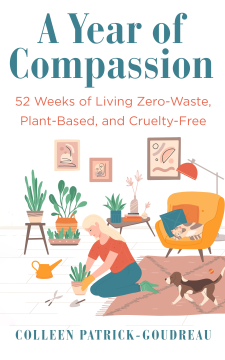
In this heartfelt conversation, author Colleen Patrick-Goudreau joins Jasmin and Mariann to discuss her eighth book, A Year of Compassion: 52 Weeks of Living Zero Waste, Plant-Based and Cruelty Free, exploring how compassion can be a guiding force during challenging times and offering practical ways to manifest it in everyday life.
This episode explores:
- How compassion is often misunderstood and how we can reclaim its true meaning in secular contexts
- The psychological barriers that prevent people from aligning their actions with their compassionate values
- Practical ways to make a difference, from rewilding our gardens to support native pollinators to embracing a zero-waste mindset
- The importance of starting where you are rather than doing nothing because you can’t do everything
- How Colleen’s personal journey, including her relationship with her mother, shaped her compassionate worldview
ABOUT OUR GUEST
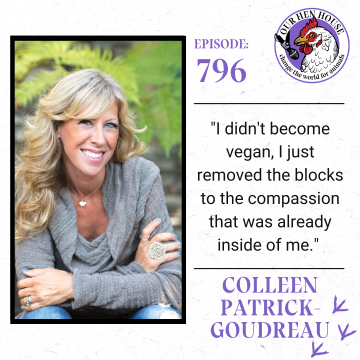
Colleen Patrick-Goudreau is a recognized expert and thought leader on the culinary, social, ethical, and practical aspects of living compassionately, healthfully, and sustainably. She is an award-winning author of eight books — including the bestselling The Joy of Vegan Baking, The 30-Day Vegan Challenge, The Joyful Vegan, and her newest book, A Year of Compassion: 52 Weeks of Living Zero-Waste, Plant-Based, and Cruelty-Free. Colleen is also an acclaimed speaker, a regular contributor to National Public Radio, the host of all-inclusive luxury sustainable, vegan, animal-friendly trips around the world, and the Host/Producer of Food for Thought Podcast (one of the longest-running podcasts). She can be found at JoyfulVegan.com and on Substack at https://colleenpatrickgoudreau.substack.com.
RESOURCES
- Cultivated Pet Food Made From Mouse Cells Gets EU Approval
- Episode 680 with Shannon Falconer
- WORLD RECORD FOR VEGAN LIFTER AT EURO CHAMPIONSHIPS
- Senate Votes Down Measure Aimed At Blocking Public Land Sell-Off
- Midtown’s Clock of Nations returns downtown. Take a look inside the restoration
- International Beaver Day website
- Joyful Vegan website
- Colleen Patrick-Goudreau on Substack
- Colleen Patrick-Goudreau on Facebook
- Colleen on Instagram
- Colleen on Threads
- Colleen on TikTok
INTERVIEW TRANSCRIPT
[00:00:00] Jasmin Singer: Welcome to Our Hen House, Colleen.
[00:00:03] Colleen Patrick-Goudreau: Welcome to my house.
[00:00:05] Jasmin Singer: Yeah, I love that I'm seeing behind you.
Are you still in that adorable house in Oakland.
[00:00:09] Colleen Patrick-Goudreau: No, no, we're in a different house. We've been here for 13 years now.
[00:00:13] Jasmin Singer: Oh, wow.
[00:00:14] Mariann Sullivan: God, we're way outta date.
[00:00:16] Jasmin Singer: But where? Where is it?
[00:00:17] Colleen Patrick-Goudreau: It's in Oakland. It's
[00:00:18] Jasmin Singer: Oh, okay.
[00:00:19] Colleen Patrick-Goudreau: Different part. I actually just wrote an article yesterday for my Substack telling the story about an oak tree and resilience, and I kind of tell the story about this neighborhood and this house.
It's a really special house. It's a really special spot. We are a hundred feet up from the street, so we get to just have privacy and trees and nature. So yeah, you have to come see. It's very different than the old house.
[00:00:42] Jasmin Singer: I would love to.
[00:00:43] Mariann Sullivan: We'll all be there like I think we can get there by tomorrow morning.
[00:00:47] Jasmin Singer: Sure. But you must have very strong calf muscles because you must have those stairs that go all the way up. Right.
[00:00:54] Colleen Patrick-Goudreau: We have stairs and switchbacks.
[00:00:56] Jasmin Singer: Okay. Wow. That's so cool. I love that. I feel like one of my first trips to the Bay Area was when I realized how out of shape I was.
Because it's just like all hills and it's so beautiful. Well, listen, congratulations. Speaking of beautiful, your new book, A Year of Compassion, which I'm holding in front of me right now. 52 Weeks of Living Zero Waste, Plant-Based and Cruelty Free. It's really a lovely, lovely book and I have so many questions about it 'cause it feels very different from your other books.
And, what number book is this? You've written so many at this point.
[00:01:31] Colleen Patrick-Goudreau: This is number eight,
[00:01:33] Jasmin Singer: Wow. How are you feeling? Does your like, stomach hurt from the birthing process?
[00:01:39] Colleen Patrick-Goudreau: Yeah, exactly. I think I look pretty good for eight by bebés.
[00:01:43] Jasmin Singer: You look amazing. Like, wow. Eight babies.
[00:01:45] Colleen Patrick-Goudreau: Eight births. Yeah, I feel great. I'm so proud of this book. I love this book and it is a reflection of my own journey. I have things to learn and I'm growing and there are things that I'm always trying to do better. And this is a reflection of that and my hope is that it inspires others to get excited about so many different ways we can make a difference and have an impact.
[00:02:04] Jasmin Singer: You have been advocating for animals and for compassionate eating for so long. When did your podcast start? Like 1988 or something.
[00:02:14] Colleen Patrick-Goudreau: 2004.
[00:02:16] Jasmin Singer: That's bananas. That's totally bananas. And so cool. I mean, you are really iconic for so, so many people, including us. Tell us a little bit about how your message has shifted and also how it's maintained its through line as expressed in the new book.
[00:02:32] Colleen Patrick-Goudreau: Hmm. Thank you for that. That's a really good question. I think because I've always been really clear that compassion was the through line and the foundation. It's very easy to pivot to different manifestations of that. And so it's no different, right? I mean, I might be talking more about, you know, maybe wildlife, maybe sustainability, maybe, you know, zero waste, decluttering, like these kinds of things.
But it's all connected. It's all connected to the same principle, which is what I do impacts someone or something else, period, full step. And I wanna make that impact be as positive as possible. So it's just the natural progression.
How has it changed? I don't think it's changed. I think it's deepened. I think it just keeps widening the circle of compassion. And again, it just makes it really easy because it's always been really clear to me that if we understand that we are interconnected with each other, with every thing, every one, everybody in the universe, then we make decisions and we make choices that are gonna have the least, you know, negative impact.
So yeah, I'm really proud and I really, been wanting to write a book on compassion and I have more to say about compassion because I think it's a really misunderstood concept and I was really happy to get this in now, and I think it's a really important time for people to really kind of, you know, just understand what it means and understand how we can express it more.
[00:04:06] Mariann Sullivan: Yeah, I really wanna get into that, the definition of compassion and how important that word is to you. But I actually have a question I wanted to ask right up at the beginning, and it does allude to the fact that Like this is quite a moment to have a book come out.
Like the world feels very crazy. People are very, very anxious. Things just seem very fraught I think particularly in the US at the moment, but you know, all over the world I'm sure. And so can you just talk about how you feel this book meets this moment? And are you glad that it's coming out now or do you think it's unfortunate?
Like, how do you put these two things together and you know, I can see an argument for why this is a perfect moment for this book.
[00:04:49] Colleen Patrick-Goudreau: I mean when I wrote it, it was a perfect moment and it's a perfect moment now. I don't think there's ever a time when we don't need more compassion. You've heard me probably even say, you know, the problems we have in this world are not because we have so much compassion we don't know what to do with it.
The problems we have in this world are because we're not living according to our own values of compassion and kindness. And it is a call for living according to your own values. Not my values, but your values. Not yours, Mariann's, but...
our own Val.
[00:05:18] Mariann Sullivan: whatever. Yeah, everyone should live according to my values. I like that theme. Is that in the book?
[00:05:25] Colleen Patrick-Goudreau: Exactly.
[00:05:25] Jasmin Singer: A chapter devoted to that.
[00:05:27] Colleen Patrick-Goudreau: Exactly.
[00:05:28] Mariann Sullivan: I've always said, just put me in charge folks. Just put me in charge. You will like the way the world comes out. And you know, they just never do. I guess Trump said the same thing and they actually did it so.
[00:05:40] Jasmin Singer: Ah!
[00:05:41] Colleen Patrick-Goudreau: We didn't go very long before mentioning,
[00:05:43] Jasmin Singer: Yeah,
[00:05:44] Mariann Sullivan: That is, uh, it is kind of the reason for the fraught moment. I mean, I don't see how you ignore it right now,
[00:05:49] Colleen Patrick-Goudreau: Sure. I think you're right. You're
[00:05:50] Mariann Sullivan: But it is a moment to be talking about compassion,
[00:05:53] Jasmin Singer: Well, yeah, and I wanna understand a little bit more about what you mean, Colleen, when you say that compassion you think is sort of misunderstood, it's a word that obviously resonates with you, so how do you define it?
[00:06:06] Colleen Patrick-Goudreau: Let me go back to a little bit of what Mariann asked also about, you know, the timing now. And it's all connected, right? It's all related. So I remember having a marketing meeting. I mean, I've been writing about these same principles for years, and now it's all together in one place.
But I remember having a marketing meeting with the publishing team, the marketing team, I just remember them feeling so... this was what, four months ago, five months ago, feeling so just full of despair and hopelessness. And I come in, you know, with this excitement around this book, and by the end of the conversation with them, they all felt like they had pivoted toward.
Yes, this is the book we need because this is the book about hope, because this is the book that says, regardless of how you're feeling, or, you know, I mean, if you are feeling despair, which I think a lot of people are, and anxiety as you said, there's, I guess there's a part of me that always says, I just don't have time for that.
I just don't have time for it. And even, you know, kind of me making the joke about naming Trump, you know, I don't name him a lot because I don't wanna put energy or oxygen over to a place that I don't want to thrive. And so what I do is put all of the energy and oxygen into the things that I want to flourish.
And that is the story of I don't have time to be distressed. There's not enough hours in the day for me to focus on the things that I know are having a positive impact. So I don't say that to dismiss the anxiety that people feel. I say it to empower you, to look down at your feet and look around you and see all the possibilities and the opportunities to make a difference. So, as far as compassion, you know, it's kind of related to this, right? You know, the reason I say it's misunderstood is because whenever I write about compassion and especially having compassion for people we don't agree with, or for people we think aren't compassionate, I get more flack for that than anything else I ever say.
Anything I say, because the presumption is if you are asking to demonstrate compassion for someone who lacks compassion or is violent or is cruel, or is all the things, the implication is that you're condoning that behavior and it's such a mistake. And so what I often hear people say is, yeah, yeah, I'm compassionate, but I'm not compassionate for them.
They don't deserve my compassion. And that's the stuff that makes me go, oh, you really wonder why there's no why the why this world isn't as compassionate as we want it to be. Because literally withholding compassion. And so it doesn't matter who the recipient is, the question isn't are they compassionate and thus deserving of my compassion?
The question is, am I capable of demonstrating compassion for everyone regardless of who they are? That's what compassion is, and I think it's misunderstood for that reason, and I think it's misunderstood because I think it's not very secularized. I still think that it is a term, a concept that still really rests in religion and Eastern religion as well as western religion.
Both. I mean, if you just go search, you know, for books on compassion, you will find most of them are kind of steeped in spirituality and religion. And nothing wrong with that because we, you know, that's part of our human story, but I wanna kind of secularize it. I wanna bring it into the secular and normalize it in a way that I think we have a long way to go before that happens.
[00:09:44] Jasmin Singer: Hmm. I have to tell you, first of all, when I think of the word compassion as it relates to veganism and, you know, animal advocacy, I think of you when I think of it positively. Like I just think she's the only one who I feel like has been able to add it to her brand. And I'm sorry for using that word because it sounds too marketing, you know, jargony, but for lack of a better word, you have, Colleen Patrick-Goudreau = compassion. For so long, like for so long, that's been part of who you are not only in your work, but like in the way you show up in the world.
That as the exception, I have found that there are a few words, and I know you're a language maven. But, there are a few words that I feel like have completely lost their meaning in the main, for lack of a better word, here too, the mainstream and compassion has been one of them. I feel like it's like, um, or blessed, like hashtag blessed, hashtag compassion hashtag this like things that are just those words that chat GPT will tell you to like, add a hashtag to when you're posting your Instagram.
To me, if you look at the word, it's lost its meaning because it's so watered down, with you genuinely being an exception to that. So can you just talk a little bit about that and since you are a language maven, just talk about the importance of like tone and language, compassion, and other words as well, in how you frame your advocacy and how you've used those techniques to tell your story successfully? Like why are you the only exception I think of when I think of the word compassion being almost just meaningless.
[00:11:28] Colleen Patrick-Goudreau: Hmm. Mm Gosh. Well, thank you. I mean, I don't know, I guess we need to look a little harder 'cause I'm sure there are plenty of exceptions. I mean, you know, language is limiting. L language is difficult. Language is, it's finite. Like it's really hard. And, and even that word, it's used interchangeably I think with words like kindness, with altruism, sometimes with empathy or sympathy, maybe philanthropy, right?
And they all mean something very different. and when it comes down to like me talking about these topics, like it's not kindness, it's different than that. It's not altruism, it's different than that. I think it's an incredibly profound word. I think it's incredibly profound. And it's funny because in the introduction of the book, I say something like, if I could whittle down what compassion means to one word, and of course there is already the word, it's compassion.
So I said one other word. you know, it maybe connection is, is what I think I said this interconnectedness. I think interconnectedness is even better. I need to rewrite that sentence. Interconnectedness, right. because that's what it is, as I said early on, but it's also about action.
You know, that's the difference between having empathy for someone. That doesn't mean you take any action from that. And altruism is different because you can do something that's altruistic, that helps someone else, that doesn't necessarily have to be accompanied by compassion. Like it doesn't have to have like a lot of emotional weight to it, to actually, you know, write a check to an organization that you wanna support, right?
That's, you know, philanthropy, that's altruism. In the end it does ultimately help, but compassion is more profound because with the action also comes that connectedness and that empathy and compassion really mean the same thing in that you literally are feeling someone else's suffering. You're feeling someone else's pain and you wanna end it.
That's what the real difference is. So, yeah, I mean, that's what I think about. And I think the reason, I try to carry this into my, you know, my work, my life in every way. And the way I do that is because I actually believe that we are all compassionate, that we all gravitate toward that.
It just gets, you know, there's a lot of muck. There's a lot of muck that covers it up. I mean, it's why I've said, and, and I mean this, that I didn't become vegan. I didn't become vegan. I didn't become anything. Rather, I removed the blocks to the compassion that was inside of me. And I think that's really important.
This is why words are so hard, because it, it takes me, you know, a sentence to say what I really wanna say, which is vegan for me, is just the expression of removing all of the barriers, all of the blocks to the compassion that was already inside of me, that I believe is in everybody. And that's what it means for me to be vegan.
It really is. It is compassion.
[00:14:14] Jasmin Singer: Okay. That was beautiful. And something you said made me start to think about empathy, and I just wanna nerd out on words for just another second, if you'll indulge me. Can you just tell me in Colleen language and Colleen framing how empathy relates to compassion?
[00:14:33] Colleen Patrick-Goudreau: So empathy relates to compassion in that it's kind of the prerequisite. You need to feel the feelings that somebody else is feeling like that's kind of the prerequisite. And then feeling that, really resonating emotionally in that way, you are then compelled to want to end the suffering that you know they are feeling.
[00:14:53] Jasmin Singer: Okay. Thank you. I love that. I'm gonna re-listen to that part of the podcast a few
[00:14:58] Mariann Sullivan: I have an, I have another word I wanna unpack a little here. I mean, it's another word that people really associate with you for very obvious reasons. You've always used it and that's joyful. And I'm just wondering, that's not the word you're using for this book, which is fine 'cause you don't wanna name all of your books the same thing.
That would be weird. But you've always like helped people to understand that caring about animals, caring about the natural world is totally not a sacrifice. It's a really good way to live. It's like a route to happiness. So how would you say this book takes that message and extends it further?
[00:15:32] Colleen Patrick-Goudreau: Because it feels so good. I mean, if, if we feel distressed because we feel that we don't have power, then it is so incredibly joyful to claim our power. And this book is about claiming our power. It is about saying here, you know, and I purposely chose 52, you know, I chose the things very specifically. You know, which ones have the most impact.
Because I also, you know, there are a million things we can do out there to help and to make it a positive impact and to be joyful, but I wanted to kind of choose those that are gonna be the most impactful. Right. Um, so, so how can you not feel joyful that there are actually answers to our question? How can I help, what can I do?
Like, there are answers. So that just brings me a lot of joy and I feel empowered and I feel effective. And that's how can I not feel joyful when I have the ability to do something?
[00:16:32] Jasmin Singer: I don't want to paint me and Mariann as overly dour. Um,
[00:16:39] Mariann Sullivan: I, I'm fine if you paint me as overly dour.
[00:16:41] Jasmin Singer: I, I feel right
[00:16:43] Mariann Sullivan: proud of it,
[00:16:44] Jasmin Singer: that I feel like we're hardwired a little differently. Actually. funny little aside. And it might have been
[00:16:49] Mariann Sullivan: and I think it's.
[00:16:51] Jasmin Singer: Yes, you're right. I'm sorry. Doer, uh, the, you're like, Colleen Patrick-Goudreau is here. Say it correct. it might have been someone here in the flock, I'm not sure.
But I was recently interviewed by another podcast and a listener emailed me afterwards, and they were like, I had no idea that you also had these sort of grim perspectives, because you're always having to be the counter to Mariann who is like the most grim. So that being
[00:17:18] Mariann Sullivan: visited upon you the burden of cheerfulness.
[00:17:21] Jasmin Singer: Yes, no, it's true.
I am not like, you know, I do take SSRIs. I do, I exist like so many other people do in this difficult world. I'm incredibly privileged, all of the things, and I am very lucky and grateful to have come across animal rights so early in my journey so that it could become part of, you know, the fabric of my being.
That being said, I feel like we are hardwired differently, and I don't like that I say it that way because that makes it seem like that's just the way it is, and that I have no control over changing that. And of course I know that we can control our thoughts. I know that we have the ability to interact with the world differently.
Colleen, what are your suggestions for dealing with the grief that inevitably comes with knowing the truth about what is happening to animals? And I wanna say too, I know from following you for so long that you not only hold that, but you have had a lot of other shitty things happen, and yet you're still sitting here compassionate and joyful and, and like, how? How?
[00:18:34] Colleen Patrick-Goudreau: First of all, I wanna say that I, I'm not always joyful and I am. I get angry and I have all of the emotions that you have, that we all have. I orient. It's true. I, I hear what you're saying about the hard wiring and I do think there's personality. I mean, you have to take that into account. Obviously we, you know, we all have a different way of orienting, well, we all have a different kind of maybe default, you know, our default perspective.
Right. I guess what I would say is, I am oriented to that. I have always been oriented to joy, to solutions, but so are you. So you can still be oriented to solutions and maybe not feel the joy all the time, right? That's more cognitive. But, but I also really cultivate it. I really do practice it. And what that means is where, where I look, where I pay attention, you know, the practices that I do. So I orient to joy and to hope you know, very consciously. Now it's not an as much of an a lift for me that it might be for somebody else, but that lift gets easier as you cultivate.
And so if one is interested in cultivating the orientation toward hope, you can do that. It just requires the practice and the unending practice. You know, you don't get there and then you're like, okay, I'm done. That's done. And now I'm finished, and now I'm oriented that way. It's a constant cultivation.
So, for instance, one of the practices, and Dianne Waltner is here. I know she knows. I've talked about this a lot. She's a supporter and a follower. Good to see you. So one of the things I've talked about four years is what works for me is the loving kindness meditation. And I'm not a, I'm not someone who like just does meditation, sitting and breathing and kind of doing that kind of meditation.
The loving kindness meditation for me is incredibly powerful because, again, it's very active. You're doing something, you're kind of, picking who you want to be compassionate toward or right, kind of send compassion to. But it's, before you can start sending compassion to anybody else, you first start in the love and kindness meditation, sending it to yourself.
So it starts with, whatever mantra you wanna use, you know, may I be, well, may I be happy, may I be healthy, may I, you know, be joyful, right? Whatever. So you start there and then when you start switching it to, then you think of someone you already know and love because it's really easy to do that.
And you're kind of checking in with yourself. 'cause it's pretty easy to think of someone you love and think of them in front of you and go, may you be well, may you be healthy, may you be happy, may you find joy. So that feels pretty good, but you start with actually feeling it and then you're sending what you have to them.
Right. So you're sending, you have to cultivate what you have before you can start sending it out. And then you go to someone who's neutral, right? And kind of how does that feel? Does it feel good? Does it, do you, do you get those warm, squishy feelings as when you send it to the person you really love and then you send it to someone who you have conflict with, you have difficulty with, you might, not like, whatever.
and you can feel the difference, right? You can feel the difference. So again, this goes back to like, it, it's what I'm bringing into the world. It's not what they're doing, it's what I'm bringing into the world and how I'm seeing the world and seeing the situation. So I do that, and I do that every day.
And I actually really love it because I'm like, okay, who am I gonna pick today? Alright, who am I gonna pick? Like, both for the ones I love. And sometimes I'm like, I can't do that. I just did them yesterday, but I, I do 'em again. So that's one way that I cultivate compassion and joy and it seems to be working.
Right. another, and, and I'll do it like, you know, if I'm on, if I'm in a public place, I'll just look at someone to kind of send them compassion. You know, just kind of look at them while I'm standing there. May you be, well, may you be happy, may you be healthy. Right? It's just kind of cultivating it and, and orienting to it.
And there was other practical things, like I don't stare at the things that are so bleak and depressing that would just make me actually feel despair rather than motivated. Right. I wanna be motivated, so it doesn't mean I don't look, it just means I don't stare. The other thing is I'm very clear about what's mine and what's not.
You know, I, I know how I voted and I know that there are things that are happening because elections have consequences and I hate that they're happening you know, federal mandates that I can't control. Right. But what I do know is that. there are things I can control right here in my own backyard.
I also do, I know this is gonna sound, I mean, maybe my answer is too long and I can take a pause, but I shared this not that long ago. I shared this a couple times in my podcast as well. So one of the philosophies I follow is Stoicism. One of them is Taoism. And I, I love reading the Tao Te Ching and there's a passage in the Tao that says, do you think you can improve the world?
I don't think it can be done. The world is sacred. It can't be improved. If you tamper with it, you'll ruin it. If you treat it like an object, you'll lose it. And every time I would, you know, 'cause I met, I think of it, you know, I memorize it, I repeat it, I say it, I read it, and every time I would do it, I go, no, that doesn't apply.
I don't understand that. What do you mean I can't improve the world? I'm an activist. Like that's what I do. I don't understand it. And I struggled with it for years and years and years, and I finally got it after years of just refusing to believe that just didn't apply to me. And what it means to me, at least is how I interpret it, is that the world is imperfect by nature.
It just is imperfect. And it's one of the things Marcus Aurelius writes in his, journal meditations, is he says, you know, asking questions like, why is the world violent? Why is there cruelty? Why are people evil? Whatever. It's like asking why a fig tree produces figs. It just is. This is just what it looks like.
And so when you orient to. It's imperfect, it's not gonna ever be perfect. You can relax a little and go, all right, then what? What's my job here? What's my role here? To just keep making this world as as good a place as I can, even though it's never gonna be perfect. So I find a lot of comfort in the imperfection of this world, and I just do my part to do what's right.
[00:24:59] Jasmin Singer: Well, that's, uh, it's inspiring to me to hear that. Thank you. It reminds me, and this is very personal, but it reminds me of, uh, you know, being in an Al-Anon meeting, you know, on the Upper West Side, like maybe 10 years ago or something, and someone was like, what you're saying sounds a lot like the Serenity Prayer.
Knowing what you have control over, knowing what you don't, uh, and knowing what your role is in that. I remember hearing someone talking about how they had bought a dog and had to return the dog, and they were saying it in such a way that was like, very, sort of self pitying.
Which is a very judgmental term, but whatever. And everyone was kind of giving them that. And I was sitting there like irate and going over the Serenity prayer and then being like, but I'm an activist, but I'm in a 12 step program, but I'm an activist, but I'm in, and it was like just this like collision that I, I, I still struggle to understand.
\ But I do want to talk about a page in your book that was very moving to me, and it is related, I think, to the story I just told. Because when I'm really struggling in the world, the person I think of the most is the person who is the most important person in my life was my grandma, who's just, you know, she's been gone for 12 years.
Love. I mean, just whenever I'm struggling, I just think like channel her and not in a, I'm an atheist, so it's not in a like witchy way. And it's not in a religious way. It's more like who she is and what her legacy was and, and what she taught me and that. I really loved your dedication to mom. You started it. Like, it brought tears to my eyes. It still is. I had the chance to meet your mom and she was like, first of all, she looked like Elaine Stretch and she, but she didn't have the same personality as Elaine Stretch at all.
[00:26:57] Mariann Sullivan: She have the same voice?
[00:26:59] Jasmin Singer: that would be great. But she was wonderful and I mean, I only met her for one day and I wanna know how she started it. 'cause you said, to mom, you started it. So what did your mom instill in you that helped to lead to the perspective that you just so beautifully expressed?
[00:27:18] Colleen Patrick-Goudreau: Thank you for that. Jasmin. You know, she died in 2020 and one of the things I, because I, when she was, she was in a nursing home and she was in a nursing home when she died, and it was during Covid and I couldn't go. And so she died alone in a nursing home, with someone with her, but it was really, it was really hard.
And I used to have video calls with her even prior to Covid because I'm in California, she's in New Jersey. And I would visit her every few months in person, but I would have video calls with her that one of the attendants there helped me set up. They had never done video calls with anybody before, so that we were doing weekly like Zoom calls and it was wonderful.
And I had it on my calendar for 1:15 on Friday. It was every Friday. So just before we started, the calendar popped up. 'cause I've never removed it. I've never removed the calendar, um, reminder. So, you know, it's really interesting, this goes a bit to what we're saying about how we orient that I am who I am because of my... everything. My mother, my father, all of it for better or for worse. And so, you know, everything that my mother, whoever she was and all the conflict we had for many, many years continued to shape me for better or for worse. Whether she was directly saying, you should be compassionate. I mean like that wasn't like the lesson, right?
My mother didn't raise me, just saying, you should be compassionate. But in all the ways she was who she was, I was reacting to that and I was modeling it, and I was rebelling against it. And I am who I am because of that, because of the things I didn't wanna be that she was, and because of the things I wanted to be that she was.
So in all those ways. So in the way that she started it, like because of her, I am who I am. Not just because she birthed me, but because she shaped me and she supported me. I was that kid who, my mother, my father, my sister were not the ones who would cry if they saw a, you know, a stray dog or a bird who fell on the ground.
I was that person in the family, but my mother supported it to the best of her ability. She wasn't that supportive when I became vegetarian. She had her own re, you know, defensive reaction like so many of our family members do. But the very physical thing, I mean, I remember when we adopted our dog at the time, she was a little puppy and.
I feel like I've told you this story before. My mother put her in like, you know, a box for her first few nights because she was little and wanted to keep her, you know, safe and confined. But it was like a refrigerator sized box. Like it was like massive. So, so I remember in the middle of the night she was whimpering and crying and I was just beside myself and I was crying and I woke my mother up and my mother, you know, got up with me and we took her out of the box and we sat with her until I fell asleep.
And she fell asleep. I will never, I have never forgotten that. And you know, she was, the reason I kept fighting to be more compassionate with someone who really challenged my ability to be compassionate. And that was my mom. We had a really, really rough time for many years, but because of the fact that we kept coming back to each other and I would measure my self, I don't wanna say worth, by how I interacted with her, whenever we would interact when it was really hard. And so I think I am more compassionate because of the struggles we had, as well as because she was supportive of my compassion.
So that's a very long answer, but.
[00:31:05] Jasmin Singer: No, it's beautiful.
[00:31:07] Mariann Sullivan: It's really important to, to unpack those stories 'cause while we all have different stories, they all ring some of the same bells, I think, especially mothers and daughters.
This is kind of a more general question, but it relates to the story you just told because it's, the fact is, is that many, I mean, you were the person in your family who cared about animals, but there are a lot of people who care about animals.
There really are. People, you know, I mean, we all know people who won't even look at a, a video 'cause it upsets them so much. And more and more people actually know what's happening to animals. It's really not a secret anymore. So what's your theory as to why people continue to eat animals and, and kind of vis-a-vis that, like how does that relate to your theory of change?
Reaching I mean, they're there. It's not everybody. There are the psychopaths out there, there are the people who, who just, you know, their lives are too complicated to even think about this. But it really is not unusual for people to care. But it's very unusual for people to stop eating them.
[00:32:10] Colleen Patrick-Goudreau: Yeah, so I do talk about those details in The Joyful Vegan, the book before this one, that was a victim of Covid. It came out in 2019 and everything got canceled after that. And I wish every vegan would read this book because it answers that question, or at least it's my answer to that question. And, you know, I talk about in the, in introduction of that book, the willful blindness that we choose.
And it is a choice. We choose it, but it's built from all of the structures in our lives as we're developing. And you know, that example of me loving my dog, I was being fed and my mother supporting me. I was also eating animals. She was feeding me animals, right? And so it's this literally the cognitive dissonance that says, I love animals and I don't wanna hurt them.
I know if I eat them, I'm hurting them. We have to reconcile that somehow, and the way most of us reconcile it is through willful blindness and telling ourselves the stories we need to tell ourselves so that we can still believe that we're good people and still not change so much that it's gonna be too inconvenient.
And not just inconvenient, but completely against the status quo, completely against the cultural norms that we might be raised in, the religious norms we might be raised in, the personal values that we've been, I mean, there's so many things that are like literally building up around that compassion, right?
That really innate, really intense compassion that I do think we have and that, that I agree with you that, you know, barring some psychopaths, most people have this compassion. And so what happens is we start to build up all of this plaque around that compassion so that we can keep doing what we're doing, but still believe we're good.
And that's why we have to say things like, you know, the animals were made for us, or they don't feel the same pain as we do, or what have you. We have to believe those things because otherwise the whole story would fall apart. And so literally, when you're trying to reconcile this cognitive dissonance, the only two choices we have are to change our behavior or to change our thinking about our behavior.
So most of us change our thinking about our behavior because it's easier and because, and the change that you talked about. You know, I really do believe that most people who, like you said, who don't look because it's, it's too painful. It's because they care. I mean, that actually is a demonstration that they are compassionate, right?
That's an indication. But I think the reason people stop short of actually making the change is not because they're afraid of being vegan, it's because they don't know what it's gonna look like on the other side of that change. And it's the change that I think really scares the bejesus out of people because we are people who wanna go along with the status quo.
We wanna go along with, you know, who we've always been. You know, we're known quantities. My interactions with my family, their known quantities, the holidays, all the things, the meals, the favorite foods. You start to go, well, what if I make that change? You start to go, I have no idea how that's gonna change my life, my relationships, and I don't even wanna, you know, I don't wanna go there.
So that's, that's what I think, which also means that, you know, when we're talking to people who seem like they're resisting, listen to what they're really saying, they're most likely, you know, whatever excuses they're making, they're not avoiding the change because they're evil or because they don't care.
They're avoiding it because they're afraid. There's something that is really fearful for them. And I think if we can tap into that as advocates when we're having conversations with people, I think we could get to the bottom of this stuff a lot faster than if we try and tell them all the things to counter all of their, you know, excuses or what have you.
I think we should really just,
[00:35:43] Mariann Sullivan: I, I agree. It's not an information problem really. I mean. it does always perplex me because even though I would like to think that vegans, you know, the reason we became vegan or trying to stop exploiting animals in our lives, I mean, going vegan is just kind of shorthand for a longer concept.
I mean, I'd love to think it's because we're better people, but we all kind of know that there are many, many very, very fine people who don't seem to get it, you know, do wonderful things. And it, it does continue to mystify me a bit. I mean, I wonder why, like, why are you vegan and another wonderful person is not?
[00:36:20] Colleen Patrick-Goudreau: I think a lot of it mean when people come to me and say, thank you so much, you know, I'm vegan because of you, or your podcast, or whatever, and I said, my work is only as good as the people who are open to it. So when we shut ourselves off from, you know, the information, but also just, I think we're really shutting ourselves off more than from the information, but from our own hearts.
Right? That's why people literally have to go, don't show me. I don't wanna look like they're cutting themselves off literally from Right. And all the excuses we have to tell ourselves are literally cutting ourselves off from this fierce compassion that we have. So I agree. Like I know that, we want people to manifest their compassion.
But I think we just really underestimate how socially wired we are. How few people wanna be the one who's standing out. You know, we, again, personality wise, we, and, and I do think there's more work needs to be done on kind of how personality traits do play a role in these changes, these transformations.
So a lot of us have no problem with that. I grew up, you know, we grew up, I I had no problem being the outlier.
[00:37:27] Mariann Sullivan: Yeah, I agree. I think that's an important factor.
[00:37:30] Colleen Patrick-Goudreau: Yeah.
[00:37:31] Jasmin Singer: You know, it's funny, I kind of forgot all about this for some reason, but you just said you grew up, you said New Jersey, and I was like, oh, right. We're both from Edison, New Jersey. I forgot. We were from like the same like exact neighborhood. I mean briefly and I think we didn't overlap because you moved when you were really, really little.
Right?
[00:37:50] Colleen Patrick-Goudreau: I was there from two to 10.
[00:37:52] Jasmin Singer: Okay. And then I was in another part of Edison and then moved to North Edison, which is where you were. Probably, I moved there in like 87 or something.
[00:38:02] Colleen Patrick-Goudreau: Right. I would've moved. We, no, I would've moved. I would've left by 80.
[00:38:06] Jasmin Singer: Right. So we, we didn't
[00:38:08] Mariann Sullivan: Um, ladies, the rest of us are here
[00:38:10] Jasmin Singer: No, no, no, no, no, no. This is important information for everyone. Um, 'cause I just, I mean, it's Edison, New Jersey. It's so random that Colleen and I are both from there. So is Susan Sarandon. Okay, I'll move on.
How do you feel about organized religion, Colleen? Like, do you think it's time that it should step up to the plate regarding animals or the environment or is it just like, am I thinking about this wrong?
Like, is it just a different universe of thought?
[00:38:38] Colleen Patrick-Goudreau: Yeah, I think, it comes down to, I mean, when you ask that question, you know, is it the leadership in the organized religions or is it the, you know, constituents? And in the end we are each all responsible for our own decisions. I do think, you know, I'm, look, individuals who are in positions of power, as we know, have great impact and influence.
So, you know, especially when it comes to, I'm thinking, you know, Roman Catholicism for instance, but Pope Francis, who's in there right now, I mean, he chose that name because of his admiration for St. Francis, who I literally have, I literally have, this print someone gave to me many, many years ago.
'cause it has St. Francis who I love, has looking out over Umbria in Italy, which I love. So I have this on my desk because, yeah, I've always been drawn to him. I mean, I grew up Catholic, but, I'm encouraged by that. I'm encouraged by, you know, what, what he has said and what he's done, but there's just limitations and we have to keep our own expectations in check.
When we think about these massive, massive centuries old structures that have their own agenda, it's just different than our agenda. And so I don't have any expectations of anyone in leadership, for instance, but I do, I think the opportunity, because so many millions of people are Catholic or Christian, I should just say Christian, and other, you know, religions as well.
So many millions of people are, and the message in most of these religions are compassion. It's like the basic message for most of them. So the opportunity to connect with people on that principle. It's huge. Like we have so much opportunity to do that because that's something they already believe.
[00:40:21] Jasmin Singer: I grew up as a reformed Jew. And it's funny 'cause I went on past my bat mitzvah to like rabbi study and that's where I learned how to think critically. And that's where I think the roots of what later became my animal activism started because we would, have very complex discussions about, you know, euthanasia for humans, things like that.
And, so I, I often look back at that fondly, very fondly. I'm giving a talk on Sunday at the Unitarian Universalist Church here, and the reverend who wrote to me said, by the way, a lot of our congregation is vegan. Uh, you know, there's also a lot who won't be. So I don't feel like I'm just gonna be preaching to the choir.
But, you know, that's nice. It's nice that there are these places for connection. It's nice that there are these places for kind of exploring our ethical beliefs and how to reach them. It's nice that there are communities, both religious and non-religious, that are already kind of thinking the same way we are.
It's nice to have opportunities to reach others. And on the flip side, these are also places where we, I can check my ego at the door, hopefully come in with some humility and learn about new issues too. I mean, that to me is an important part of everything we're talking about. Like, it's not like we all found the light and have become these perfect people.
What is your relationship with humility and openness to growing?
[00:41:47] Colleen Patrick-Goudreau: Yeah. You know, do you know that I started, my activism really was started, in the Unitarian Universalist Church.
[00:41:53] Jasmin Singer: Oh, I didn't know.
[00:41:55] Colleen Patrick-Goudreau: Yeah. So when we moved here to Oakland, to California in 1998, I was looking for a community and I was not vegan yet. I was vegetarian and I was an animal advocate and I was looking for community.
And so I found the Unitarian Universalist Church in Oakland. The ministers at the time were very oriented toward, the whole church is oriented towards justice, so that was obviously appealing. But it was, they're, they were oriented to music and poetry, and that was something that really appealed to David and I.
So that's where I started and I became vegan while I was at that church. And that's where I started, that's where I started tabling during coffee hour. That's where I started being a youth leader. And so I was taking the kids up to Farm Sanctuary. That's where I started teaching the cooking classes.
That's where during the summers where, the services were lay led. So the ministers would go on sabbatical and they would invite, you know, the congregation, anybody who wanted to kind of go through the process to actually lead a service. And I led a service on animals and compassion. And that would've been in like 2000.
And so it was really wonderful because it really is a captive audience and they already have the principles of caring about justice and caring about, you know, compassion. So, I have very fond memories of that, like the origins of my activism, which a lot of people don't know.
I didn't stay with the church. There were reasons I didn't, but yeah, it was, it was really wonderful. So being able to reach people, especially in these, yeah, I think in, in any kind of religious setting, I think is a real, I think it's not utilized enough. I think we need to tap into that more.
[00:43:34] Mariann Sullivan: Know, in addition to the principles that you learn in, in religions or at least some religions. I grew up Catholic as well and there was, you know, there were some pluses and minuses
[00:43:44] Colleen Patrick-Goudreau: We didn't have the critical thinking as much that the Jews had.
[00:43:47] Mariann Sullivan: Um,
[00:43:48] Jasmin Singer: Reform
[00:43:48] Mariann Sullivan: a lot of it's about the story. I mean, this, you know, all religions have the story, the origin story or the themes, the, the stories of the Saints in Catholicism. So a story and a series of stories, and I feel like none of the stories work anymore. Do you think is one of your goals in the book to kind of help people find a new story about what life on Earth is about?
[00:44:10] Colleen Patrick-Goudreau: Hmm. No, I don't think a news story needs to be told. I would love them to find a story that is authentic for them. I think that if we, if more people kind of really examined what they care about, they would be able to craft a story that I think would lead them in the direction that we're talking about, which is to uncover that that muck and uncover that compa, remove the muck and uncover that that compassion.
And I do think the stories resonate. I mean there, you know, depending on what you believe and, you know, whatever, wherever, however you were raised in whatever religion you're drawn to or stories you're drawn to. I mean, that's what I loved about growing up Catholic. When I went through my own, I really did go through my own kind of recovery around, you know, Catholicism.
'cause I had my own experiences there. I mean, I went to Catholic school, like it was, you know, my father was like best friends with the nuns. Like, that just is annoying, right? But my mother was Protestant and so I had a lot of questions that weren't being answered in the Catholic church. And, when I was kind of, I remember consciously unpacking, I had a desire to not feel resentful about my upbringing.
Like I didn't want to look back and be judgmental. I wanted to really find things that I appreciated because again, it shaped me, right? How can I hate the thing that was shaping me? So, I remember one of the things I identified, I love the smell of incense. I love still walking into a Catholic church and smelling the incense.
[00:45:42] Mariann Sullivan: my God. I love the smell of that. And there's no other incense that smells like it.
[00:45:44] Colleen Patrick-Goudreau: No,
[00:45:45] Jasmin Singer: I
[00:45:46] Colleen Patrick-Goudreau: no. I love the smell of incense. And one of the things I loved were the stories. I still, it's one of the things I love about Easter time. I mean, I just remember you'd go through, for those who don't know, I mean the stations of the cross, that's basically the story of Jesus' life and someone who's just always drawn to narrative.
I, it really resonated with me. And so it still, it still does. So I think there's stories we can take from that to craft our story, but we just have to, you know, kind of have enough self-awareness and desire to do it.
[00:46:19] Jasmin Singer: Mm, you went to the, Catholic school that had the good carnivals on McKinley Avenue, didn't you?
[00:46:26] Colleen Patrick-Goudreau: Oh my God, I can't believe you. I, we did have carnivals.
[00:46:29] Jasmin Singer: Yeah. They were really good carnivals. I know. I'm sorry. It's fascinating though. Okay, Colleen. I think it's really funny that we haven't really talked too much about what's in the book, but I also think this is sort of to some extent, like it's at least the ethos behind the book and so I wanna tell everyone that they need to get A Year of Compassion, 52 Weeks of Living Zero Waste, Plant-based and Cruelty Free because I've learned a lot in it, and I think I know a lot about this stuff. So it's, it's for everyone. I think it's also a really great gift. I wanna just touch on the environment for a moment, because that's certainly something that has shifted in the cultural zeitgeist in the time that we've both been on the air, you know, in the time that you.
Certainly since the year 2000 when you did that workshop at the UU church, there's so much controversy in the zeitgeist, especially around the environmental and climate crises as to whether individual action is useful or is called for in the face of these enormous global problems when each person's individual contribution is so minute, right, compared to the, the whole.
So I assume you say aloud no in a compassionate way to that. Tell me about that and how it relates to A Year of Compassion.
[00:47:47] Colleen Patrick-Goudreau: Yeah, let me give, I mean, let me give you one example that if it's the only takeaway that people have from this conversation, that would be fantastic. If you, you, not you, but if one does not think we don't have an impact and can't make a difference, you know, tell that to the pollinators.
I mean, literally we can all put in our gardens, on our balconies, in our yards, wherever we are, work with local, you know, parks to plant native pollinating flowers, and you will see the difference because those bees, those butterflies, those beetles, those flies, those wasps, those bats, they will find those flowers and they will pollinate them.
They will pollinate, right? So, so that is one example. Like we do have a crisis around the loss of habitat, pesticides, and herbicides, you know, worldwide. And that's why we're seeing a decline in bee populations, especially the native bees because, you know, the answer is not honey, for not the reason that we would say. But they, honeybees, are not native to the United States.
You know, they're, they're domesticated animal, they're literally considered livestock and they're not the problem. They, they have plenty.
[00:49:08] Jasmin Singer: This is so weird. We literally just talked about this, I think on the podcast that came out today. Like so many people don't realize it. It's so funny.
[00:49:15] Colleen Patrick-Goudreau: Oh, I love that. I'm so glad you're talking about that. Yeah, it's a real problem. And so the, the native bees are being pushed out because they're losing their habitat because we're planting ornamental flowers. We're not planting the native flowers that these animals co-evolved with.
And because all, you know, because honeybees are basically generalist pollinators, so they can go to any flower anywhere, anytime, and they're getting all of the good stuff and the native bees are being pushed out. We cannot sustain, it won't sustain that way. We have to plant the flowers that the native bees want to pollinate. And so that is something we could do all of us, if everybody, wherever they lived, planted, you know, whatever, everyone can plant golden rod, everyone can plant, you know, something. 'cause golden rod is mostly, native. We're really everywhere. So yeah. So to me, like that's just a perfect example because you'll actually also not just have the trust that the impact you made was positive.
You will see the impact, you will see the bees, you will see the flowers, you will see them grow. So that's just one example of, I just, I think we underestimate that power we have. And I know that there's, it doesn't mean it's, not doing the things that are all systemic and also the legislation and all of the things that we also need on the larger scale.
But if we only do that, then we're really missing all the opportunities we can do on our own individual scale. So if all of us did those individual things that are in the book. Oh my God. We would get to the solutions so much faster.
[00:50:39] Jasmin Singer: Hmm. Mm-hmm. I love that. Uh, rewilding is one of the things that I mean, I don't wanna speak for you, Mariann, but I think Rewilding is like, kind of what gives us the most hope, because it's so radically not human-centric. Like even if we are all destroyed in one swell swoop or one cell swoop, as I like to say, then there will be rats and roaches and, butterflies for sure and little birds. I mean, and just to think that this thing that you're planting is going to far surpass our survival, and yet it's going to continue to help.
[00:51:14] Mariann Sullivan: And with Rewilding, like to some extent, well, you have to, you don't even have to plant things. You just have to kind of leave them alone and they will come. I mean, you do have to weed out some of the, the worst of the non, especially in North America, I don't think so much in Europe because you know, we're a colonized continent, so there are more invasive things that probably have to be yanked out.
But most of all, like nature will do a lot of the work for you.
[00:51:41] Colleen Patrick-Goudreau: It is so true. You know, I'm really, it's funny you're even saying this 'cause it's really the focus of my attention right now is Rewilding and literally it, it's so funny you're saying this 'cause I just planted the seed with my listeners in the podcast that went live today on.
[00:51:53] Jasmin Singer: So to speak, huh?
[00:51:55] Colleen Patrick-Goudreau: Exactly, no pun intended.
And it is about, I'm focused so completely on Rewilding right now, and, and literally I'm talking about how I'm, this is a whole restoration project here at, at the house we're in. And you know, I have been spending hours and hours and hours and hours every day pulling by the root, all of the non-native invasives, most of the ones we would call weeds.
But what's been really fun is identifying, using Picture This as my favorite app for this- identifying them. So I now know the names of the ones that are invasive and that are non-native. And I know the ones that I would've pulled in the past 'cause they looked like weeds. And I know the ones that are actually native and that actually flower.
And so I've left those and now that spring is here, I am seeing, I'm, I'm, I find great satisfaction in pulling all of the non-natives. I find so much satisfaction.
[00:52:46] Mariann Sullivan: Colleen Compassion.
[00:52:48] Colleen Patrick-Goudreau: it. I love kill. I'm gonna kill some English ivy today
[00:52:51] Jasmin Singer: Oh shit.
[00:52:52] Colleen Patrick-Goudreau: and I'm gonna
[00:52:53] Mariann Sullivan: I, I, I've got, I've got a, a lot of English ivy as well, but isn't there so much pleasure in, well, I, maybe this is probably not true of you, you've probably always been good at this, but I didn't think I would learn which ones were which. And as soon as you learn them, like the, you know, the plant that you wanna cultivate or even the non-native that you don't like, like all of a sudden I recognize them all immediately.
It, it's like I almost think that we have an inbuilt talent for recognizing plants because for like a million years, our survival depended on recognizing what we could eat and what we couldn't. And it just, I, I never thought I would be able to do that. They all just look like green leaves to me and now I can tell them apart.
[00:53:32] Colleen Patrick-Goudreau: I love it. We have to talk more Maryanne. That's so, I love it. Yep. I agree.
[00:53:37] Mariann Sullivan: have different ones though, 'cause we're in very different parts of the country.
[00:53:41] Colleen Patrick-Goudreau: sure. For sure. I love it. I love it. Yeah, so I'm excited by that. And that's something everybody can do. And you know, I'm aware that not everybody has property or land or garden or whatever, but just if you have any kind of outdoor space. But there's also friends of local parks all over the place, like I am really, really encouraging people to look down at their feet. Like, look down, write, write to the legislators, do your federal thing.
But there's only so much you're gonna be able to impact at that level. Look down at your feet, look around you and look what you can do right in your own backyard.
[00:54:12] Jasmin Singer: Hmm. I love that. We have to close up soon, but I wanna touch on a year of compassion first because, well, you have, I feel like you have been talking a lot about the book since, I mean, would you say, or do you feel like we've just taken you on multiple journeys that have nothing to do with, because this is, this is like a, a manifestation of where you currently are right now, and I think it's really encouraging people to tap into their own compassion in a new way or in a broader way.
Would you agree with that? Am I stretching here?
[00:54:42] Colleen Patrick-Goudreau: No, I think that's exactly the hope, and I know that there's gonna be some things that are familiar to you already, so I know that someone who already feels like you're doing all the things, I can promise you there's probably something in that book that is different than the way you've thought of it before and,
[00:54:54] Jasmin Singer: I completely agree. I mean, I had an apple before. This is such a vegan sentence that I'm about to say. I had an apple before and I was hurrying. I was running and I was like, I don't remember if I'm supposed to compost the core, my wife will be mad because we'll get an apple tree. And so I was like, what do I do with it?
I have to leave and I'm sitting there with the core. Ah. And so I threw it out and for like the next two, three hours, I was like, I shouldn't have thrown out the.
[00:55:19] Mariann Sullivan: My God, you threw it out when the worst that happened is you would've gotten an tree.
[00:55:25] Jasmin Singer: that she, listen, I am willing to bet you that she took it out of the garbage and put it in the compost. I'm willing to bet a billion dollars. So, so yeah, I get, you know, silly example. But I do think that there's always something new and you must have learned new things while researching this and kind of putting all of your thoughts in order.
So tell us just a little bit about some of the advice that you have in the book. And a lot of it is to correct misconceptions, right?
[00:55:52] Colleen Patrick-Goudreau: Well, that example you gave, you know, I try to whittle this stuff down so that, so that the reason you're making the decision you're making is for a larger, you know, for a deeper and larger cause, right? So the whole Apple idea is, one of the things I talk about is waste. You know, that waste is on like that, that apple core only becomes waste until we stop taking responsibility for it.
That that's what for me, zero waste is about also a shortcut for value and use and responsibility. So it's not about becoming some like, you know, minimalist in this, you know, consumer world. It is about saying like, what I bring into my life, can I take responsibility for that? Will I use it? Will I value it?
Is there a warranty on it so that I can actually value it? And that the company values it enough to say that we trust it and that we'll replace it if, or fix it if you know something goes wrong. How can I discard it? If I bring this into my life, can I responsibly discard this product? Right? So waste is only waste when we stopped taking responsibility for a thing. I love that concept. That was something that I learned when I was going on my zero waste journey back in 2018. So I like, this is all like what you see in there. It's really how I aspire to live my life. I get more excited about giving things away on Buy Nothing and Free Cycle.
We just continue, David and I just continue to go that's sitting there. We don't need it. We don't use it. Someone else can value it. Let's get into someone else's hands. It is so empowering to do that. It's so satisfying to do that. I just called a lot of my books recently and I didn't have, I, I could have brought them to the library, but I put 'em on buy nothing.
I didn't have the bandwidth to separate them out. And I'm like, winner takes all. I'm not separating this post. Well, a woman picked them all up. There were boxes and boxes and she has separated them out into categories and now she's giving them away, very consciously on Buy nothing.
So yeah, there's just so many things that are exciting and um, fun. And you'll be like me, you'll just not have time to get sad 'cause you just have to go, you know, discard your apple properly.
[00:57:48] Jasmin Singer: Yeah, I mean, I'm obsessed with the Buy Nothing group here, by the way, completely, both with the giving and the receiving. It's just a wonderful, wonderful tool. I know it's all over the United States. I don't if some of our international Flock members could tell us if it's international or not, but it's amazing.
I can't recommend it enough. Colleen, what are the biggest, just sort of as we start to close here, what are the biggest misconceptions that people have that get in their way in living their lives in accordance with their beliefs?
[00:58:19] Colleen Patrick-Goudreau: Well, I mean, when you ask that, the first thing that comes to mind is I've said before for, you know, decades, that most people do nothing when they think they have to do everything. And so the idea that someone says, I would stop eating beef, but I really love chicken. And I ask, or What are you eating now?
And they said everything. And my answer is, why don't you just at least stop eating beef, you know, I'm not advocating eating the chicken, but the idea that we do nothing when we could do something doesn't make any sense. It's self defeatist and it's just nonsensical. So start where you are.
Just do something, literally anything. Anything you do that's different than what you were doing. Anything that you say you can do, start there. And you know, one of the chapters in the book is eat less meat. I mean, the best thing we can do is to stop eating animals and animal products altogether, right?
But we know that not everyone is going to do that. And so at least start with somewhere, something, some product, whatever. Another chapter in the book is Take a 30 day Vegan Challenge, right? So I'm trying to meet people where they're at, but that's what I would say to anybody is just don't do nothing because you can't do everything.
Do something, anything.
[00:59:29] Jasmin Singer: I love it. I love that so much. The book is A Year of Compassion, 52 Weeks of Living Zero Waste, Plant-Based and Cruelty Free. I would definitely get more than one copy if you're listening to this right now and you're going to order it because this is a really great gift. And you know, we've got Mother's Day coming up.
I think this would be a lovely gift for Mother's Day or just like, hold it in your car until someone, you know, needs a little bit of inspo. Colleen, tell our listeners, and I'm sure they already know this, but tell our listeners how they can find you online, support your efforts, get this book, all of the things.
[01:00:04] Colleen Patrick-Goudreau: Thanks, Jasmin. Yeah, I mean, my website is joyfulvegan.com and there's links to everything from there. I really, really wanna encourage everyone to go subscribe to my Substack. It's where I'm putting a ton of energy and writing. It's been a really lovely experience to find a really good platform for my writing.
And so you can find from there, the menu has my books. Listed at like the menu item is books and it has the link, it has links to all the different ways you can get the book so people can get signed copies as well. I'm working with a local bookstore, so that they can, um, fulfill the books. You can get them from wherever, you know, wherever you want.
And please review the book. That really does make a difference. It really is helpful. Even if you leave a review at a place that you don't wanna shop at, just still leave the review there because other people are shopping there.
[01:00:47] Jasmin Singer: I totally agree. I personally don't use Amazon, but I, as an author, I can say the Amazon reviews are really important, so I could not agree more. I hope you'll stick on for a few minutes for a q and a with our flock. 'cause you're live and I know they're really excited. Colleen Patrick-Goudreau, you're such a joy, it's a perfect word to describe you. And I can't tell you how much I've enjoyed this chat and how grateful I am, how grateful we all are, not just those of us here in this digital room right now, but like, you know all the people who care about animals and who wanna make the world a better place and who are on our own journey of self-awareness.
You have been such a bright light for so many of us. So thank you for doing the work you do. We, we love
[01:01:28] Mariann Sullivan: Thank you, Colleen.
[01:01:29] Colleen Patrick-Goudreau: Thank you. Thank you. Ditto. Right back at you.
_____________________________________________

Thank you for listening to the Our Hen House podcast! If you enjoy our podcasts, believe in our mission to effectively mainstream the movement to end the exploitation of animals, find community and solace in our shows and resources, and would like to show your support for vegan indie media, please make a donation today. Our Hen House is a 501(c)(3) nonprofit organization, so it’s tax-deductible. Thank you for helping us create quality content!
Subscribe to our show on Apple Podcasts or your favorite podcatcher, and don’t forget to leave a 5-star review!
Check out Our Hen House’s other podcasts: The Animal Law Podcast, The Teaching Jasmin How to Cook Vegan Podcast, and the Antiracism in Animal Advocacy Audio Series.
Follow us on social media! You can find Our Hen House on Facebook, Instagram, TikTok, Threads, or Bluesky.
The Our Hen House theme song is written and performed by Michael Harren.