Our Hen House
Our Hen House
  • Home
  • Podcasts
    • Our Hen House Podcast
    • Animal Law Podcast
    • Animal Policy Alliance Podcast Series
    • Scarlet Spark Leadership Corner
    • Flock Bonus Content
    • Antiracism Audio Series
    • Limited Series: Teaching Jasmin How to Cook Vegan
  • About
    • About Our Hen House
    • Inside the Coop – Bios
    • Join the Flock
    • Suggest a Guest
    • Press Coverage
    • Policies
    • Contact
    • Flock Friends Account
      • Flock Friends Chat
      • Flock Exclusive Content
      • Flock Bonus Feed
  • Learn More
    • Videos
    • Blog
      • Book Reviews
    • Hen Press
    • Why Animal Rights?
      • Animal Testing and Research
      • Clothing
      • Companion Animals
      • Dairy
      • Eggs
      • Entertainment
      • Fishes
      • Meat
      • Veganism
      • Wildlife
      • What to do?
  • Donate
Newsletter — DailyNewsletter — WeeklyOur Hen House Weekly PodcastPodcasts
by Mariann June 3, 2025
Subscribe 🎧
  • Apple PodcastsApple Podcasts
  • RSSRSS
  • Amazon MusicAmazon Music
  • SpotifySpotify
  • YouTubeYouTube
  • PocketCastsPocketCasts
  • CastBoxCastBox
  • Player.fmPlayer.fm
  • TuneInTuneIn
  • AudibleAudible
  • App not listed? Try this RSS linkApp not listed? Try this RSS link
— Share —
21 FacebookTwitterLinkedInEmailCopy Link

Bird Flu Bonanza and Beef in the Classroom | Rising Anxieties

by Mariann June 3, 2025
by Mariann
https://media.blubrry.com/ourhenhouse/dts.podtrac.com/redirect.mp3/media.blubrry.com/ohhsignature/files.ourhenhouse.org/podcastepisode811.mp3

Podcast: Play in new window

25.3K


This week on Rising Anxieties, Mariann Sullivan dives beak-first into the taxpayer-funded fever dream that is the animal agriculture industry’s response to bird flu. From senators begging for vaccine handouts to pork producers suddenly discovering biosecurity (better late than never!), it’s a masterclass in how industrial farming turns every crisis into a government funding opportunity. Meanwhile, the beef industry is busy grooming kindergartners with climate “science” that conveniently forgets to mention we could just, you know, eat fewer cows. All this while Oklahoma taxpayers fork over $250 million for a veterinary teaching hospital that’s totally about “feeding the world” and definitely not about propping up factory farming.

This Week’s Anxieties:

  • Bird Flu Bailout Brigade: Senators are urging the USDA to develop an emergency vaccine plan for cattle affected by HPAI (bird flu), because apparently the multi-billion dollar industry can’t develop their own contingency plans.
  • Pork Panic: After years of bird flu circulating, the pork industry has finally noticed it might affect their bottom line and is suddenly embracing “One Health” principles and “stringent protocols” that will surely save us all.
  • Vaccine Vanishing Act: HHS has pulled $766 million in funding for Moderna’s human bird flu vaccine development, with the new administration claiming mRNA technology “remains under-tested” despite widespread use.
  • Beef’s Classroom Conquest: The beef industry is distributing free educational materials to schools that frame beef production as “environmentally sound” and “nutritionally essential” while carefully avoiding the suggestion that eating less meat might help the climate.
  • Oklahoma’s Veterinary Venture: Oklahoma State University received a whopping $250 million in state funding for a new veterinary teaching hospital, framed as supporting “the food supply of Oklahoma” rather than subsidizing the animal agriculture industry.

INTERVIEW TRANSCRIPT

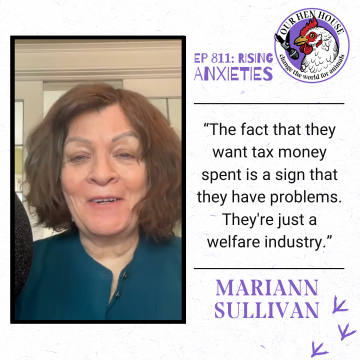
[00:00:06] Mariann Sullivan: Anxieties are rising. You know, an, an awful lot of my rising anxieties articles this week and I guess every week is, is about our tax money at work and, and you know, it makes my anxieties rise probably more than theirs do. But the fact that they want tax money spent is a sign that you know they have problems and that they're completely dependent on it.

Show More Transcript

Just a welfare industry. Welfare industry. Anyway, my first article today is from Ag Daily, Senators Urge USDA to Prepare HPAI Vaccine Plan for Cattle. A lot of what's going on right now continues to be bird flu, which, you know, we call bird flu, but let's face it, everybody's got it. This is about cows.

They're getting increasingly worried. US Senators Mike Rounds and Martin Heinrich sent a letter to the Secretary of Agriculture, Brooke Rollins. You know, if I sent a letter, it might not get read, but I bet their's will. Urging her to develop an emergency plan to vaccinate cattle against highly pathogenic avian influenza.

It's not like the industry would develop such a plan. No, no, of course. It's the government that has to do that. Nationwide, the virus has affected, what do they mean by affected, over 166 billion birds across 50 states and Puerto Rico, and in 671 countries. Affected, that means it's killed them.

That's a fairly big effect. Also, of course, now it's pretty widespread in dairy cattle herds, and over 1000 detections have occurred in 17 states. This doesn't mean that the cows die, as the article points out, although cattle are able to recover from HPAI, producers want to be prepared for additional spread that may occur.

Yeah. They wanna be prepared to not lose more money than they absolutely have to. And what they want the government to do is to stockpile vaccine doses for HPAI. Just as it does for other potential diseases of concern. You know, they're not saying we need it yet, but they want it in their tool bag, shall we say, of ways to avoid losing money to bird flu in cows. As of November 2024, the article points out, more than 30 mammal species have been infected with HPAI, and that number is expected to grow. Of course, one of the animal species that has been infected are humans. Though, of course we do not have human to human transmission as far as we know yet.

The sustained circulation of H5N1 in cattle increases the risk of the virus adapting more easily to mammals. So, you know, they're doing it to save us, not to save money. All right.

More on HPAI. The pork industry, the pork industry is just starting to get worried. This is from Feedstuffs, and it's actually about a podcast episode, which I admit I love you all very much, but I don't love you enough to actually listen to this podcast episode. But I'll tell you about the article, talking about the podcast episode. One Health Approach. They love that term One Health. Pork industry prepares for H5N1, and this is a podcast from the, these folks from the National Pork Board and they quote, reveal how the industry is developing a comprehensive H5N1 response plan through unprecedented collaboration.

The little article describing the episode starts off by saying, the specter of H5N1 virus hangs over US agriculture, but the pork industry isn't waiting to take action. Like, seriously, like it's been going on for a while, guys, uh, like years. Uh, so maybe you're not waiting anymore.

Alright. So what happened is that there was a detection in pigs. This was on a small Oregon homestead farm. So, you know, not a typical facility, but it's in pigs now, so they're worried. And so they're mobilizing to prepare for potential spread. And this is through a collaborative science-driven approach.

Aren't you glad that science is at the heart of this industry? This is all about the One Health philosophy. They love to use that term. It's a framework recognizing the inseparable connections between human health, animal health, and environmental conditions. The pork industry, what a joke these people are.

They're suggesting that everybody should listen to this episode, and you're welcome to if you want. But specifically for producers who are the most likely to care what the pork industry people say. It means evaluating biosecurity measures with fresh eyes. Yeah, 'cause the biosecurity in pork facilities is just great. Repairing bird netting, addressing structural vulnerabilities, and carefully managing movements between facilities.

Yeah. If it starts spreading in pigs, the pigs are screwed. We're screwed. They're screwed. Everybody's screwed. Already with the, even with the swine industry's already stringent protocols. Yeah, right. Like, do they believe this stuff? I don't know. Experts emphasize that pathogens evolve rapidly, necessitating continuous learning and adaptation.

Oy, alright. Another article. So we've, we've heard about pigs. The industry is on the move. They want money to do this. They're, they're preparing. Now we get to humans. This is from meat and poultry. HHS Pulls Funding on Bird Flu Vaccine for Humans.

So, like the hell with us, this is of course, you know that, I mean, the meat industry is not thrilled about this, I don't think. They're just reporting on it. And this is just about, you know, the RFK Junior policies going into effect. So Health and Human Services told Moderna, which was developing this vaccine, that the agency is terminating their $766 million contract for the development of the bird flu vaccine for humans.

Now, my understanding, which is very limited, I can assure you, is that they wouldn't be able to actually develop this vaccine at this point 'cause the actual strain doesn't exist that they're trying to fight. This strain that would be able to transmit from human to human. But they can do a lot of work ahead of time to get ready to identify that strain and then get the vaccine ready to go.

That's my understanding of what I've been told. According to this article, the HHS has said that the mRNA technology, which is of course, you know, the technology that produced the COVID vaccines, remains under-tested. It seems like I, well, I'm not gonna get into this whole conflict, but a whole lot of people took it.

I don't know. Most of us are still alive, and we are not going to spend taxpayer dollars repeating the mistakes of the last administration, which concealed legitimate safety concerns from the public. Apparently we're not gonna do it at all. Um, there are some other avian flu contracts according to HHS, under this program.

The program is called the National Pre Pandemic Influenza Vaccine Stockpile Pre Pandemic. That sounds, that sounds optimistic. But, uh, the administration is shifting funding priorities. And this particular Moderna, um, proposed vaccine, which they're still gonna try to develop. They're just now they have $766 million less than they did before.

It, it has already been evaluated in approximately 300 healthy individuals, 18 years or older. So I guess, like maybe it does exist, uh, maybe all my information is wrong, like, I'm sorry . But maybe there's ways of testing it before it's finalized. I don't know. The clinical study monitored a two dose regimen of the investigational vaccine, and it demonstrated a quote, rapid, potent, and durable immune response, said Moderna, but you know, we're not gonna have it.

Like if Moderna is telling the truth, we just lost out on something big. But I'm not gonna get into vaccines. Not, you know, not that I think that there's a lot of questions about them out there, but we have enough things to talk about, I think, and one of them is the climate. We always have that to talk about.

This is an article from Sentient, and it is by Gabriela Sotello. How the Beef Industry is Quietly Rewriting Climate Science for Kids. Isn't that reassuring? Students do learn about methane, so they're not, you know, they, it, the article is interesting in that it's clear that they're no longer just trying to shut up about it.

They're no longer trying to pretend that the cattle industry is not a contributor. They're trying to change the narrative around that and make themselves sound more serious. Students do learn about methane, but not about eating less meat. So that's their current plan now.

And this is a program. They put out these materials, and they're available to schools for free. Some schools take come and some don't. Uh, according to this article, which makes sense, it's more likely that schools in states where there is a significant beef industry are going to adopt these free materials and use them, teach students what the beef industry thinks they should do with their lives.

So the article starts out, in order to reduce climate pollution, we have to talk about food. Food production accounts for roughly a third of global greenhouse gas emissions and meat, particularly beef is the biggest contributor to that share. Cattle produce vast amounts of methane and raising them demands enormous quantities of land, water, and feed.

So, as I said, they're not totally in denial about this, and they're just trying to change their message. And according to Jennifer Jaquette uh, who, you know, I see all over the place. She's doing amazing work. She's at the University of Miami. Um, the meat industry has been intervening in childhood education since the 1990s around the issue of climate change, which I was totally unaware of.

And they've continued their outreach efforts, they're trying to go younger. Reach younger and more, according to this article, more impressionable audiences, and I guess younger kids are more impressionable. So, they have this beef curriculum curated for classrooms that start at kindergarten.

Nice. Kindergarten. One of the central goals of the educational program, according to the American Farm Bureau Foundation, is to provide educators across the country with quote materials that teach science through the lens of beef production. That would seem like a lens that we do not wanna be looking through if we wanna actually find out the truth about anything.

Like, it's like looking through the lens of a kaleidoscope, maybe not what you wanna look through. They frame beef production as environmentally sound. Nutritionally essential. And that is an important factor because not only essential, but they just don't, they focus on, on doing things that you can modify the amount of methane that is produced by cows or, or do something about it, but never that you could eliminate it.

Geez, how would, how would you ever do that? I can't think of a way. Alright. Um, for high school students, one activity focuses on methane emissions from cattle. The materials make absolutely no mention of what this article calls a critical solution- cutting back on how much beef we eat.

One passage reads, it is not possible to eliminate methane production from ruminants, short of eliminating the rumen. Well, how about eliminating ruminant production? Then you don't have any rumens. They sound like climate advocates are suggesting we should cut out part of the cow.

Uh, just cut out the industry, okay?

Students are also guided towards solutions that preserve the status quo, breeding more efficient cows, tweaking feed additives, relying on carbon offsets, which are ridiculous. In elementary school, students are introduced to cattle grazing systems. Middle schoolers examine the carbon footprint of beef, but the emphasis isn't on how much of a massive emissions outlier beef is as compared to other foods.

It's on how improved genetics can reduce those emissions per pound of meat. Like this is so sly. It really is because the fact that they are just completely moving away from denial and silence and actually trying to manipulate the information. It just fits with everything that we've been seeing in the articles that are meant for adults.

Now they're just doing it for kids. So, if you're in a state, um, where there's a lot of beef production, you might wanna look out for these materials showing up in your, your kids' school. Alright, finally, just on this theme of your tax money at work, this is only your tax money if you happen to live in Oklahoma, but I'm sure it's true in an lot of other states too. Oklahoma State receives $250 million funding to build veterinary teaching hospital.

You know, it sounds benign, right? Like, you know, we want doctors, we want them to take care of animals, but of course most of these doctors are going to be working in the industry. Not all of them. I mean, it's also for small animal vets, but we're talking about Oklahoma, and all of the conversation around it in this article is about large animal, which is, you know, large animals.

It's not all about large animals, is it? Like that's what usually what they call vets for the industry. But what about chicken? Well, they probably don't even get veterinary care, I don't know. Oklahoma State University has received a historic $250 million state funding appropriation to support the construction of a new state-of-the-art veterinary teaching hospital.

This is a quote from this guy from OSU, Jim Hess, quote, governor Stitt and the members of the Oklahoma legislature are to be congratulated for their contribution and transformational dedication to our College of Veterinary Medicine, the food supply of Oklahoma, and the agricultural economy of our state.

So we know what kind of vets they're looking for. Apparently it it's going to, um, equip graduates to meet the evolving needs of Oklahoma's vital animal industries. Well, why can't the vital animal industries then pay for it? This is my constant question. I know, I know. You don't have an answer.

Here's a quote from this doctor from OSU. It's program changing not only for our students and faculty and staff, but also for animal owners across the state. Well then why don't they pay for, sorry. Particularly our farmers and ranchers in rural areas that need the support to do what they do, feed and clothe the world.

I can assure you I'm not getting any of my food or any of my clothing from the rural areas of Oklahoma. That's it for this week's Rising anxieties.

Thank you so much for joining me on, Rising Anxieties I hope you'll tune in and I hope you'll subscribe. If you're not subscribed on YouTube, please do so, because it really helps us out.

If you're not subscribed to the podcast, please do that as well. Thanks so much for tuning in.

⇧ Close Transcript

_____________________________________________

Donate Now!

Thank you for listening to the Our Hen House podcast! If you enjoy our podcasts, believe in our mission to effectively mainstream the movement to end the exploitation of animals, find community and solace in our shows and resources, and would like to show your support for vegan indie media, please make a donation today. Our Hen House is a 501(c)(3) nonprofit organization, so it’s tax-deductible. Thank you for helping us create quality content!

Subscribe to our show on Apple Podcasts, YouTube, or your favorite podcatcher, and don’t forget to leave a 5-star review!

Check out Our Hen House’s other podcasts: The Animal Law Podcast, The Teaching Jasmin How to Cook Vegan Podcast, and the Antiracism in Animal Advocacy Audio Series.

Follow us on social media! You can find Our Hen House on LinkedIn, Facebook, Instagram, TikTok, Threads, or Bluesky.

The Our Hen House theme song is written and performed by Michael Harren.

21 FacebookTwitterLinkedInEmailCopy Link
previous post
A Wave of Change: Banning Octopus Factory Farming with Amanda Fox, Brenna Anderst & Allie Taylor
next post
The Hen Report: “The Disneyland of Packing Plants” | Cultivated Salmon, Vegan Menopause, Activist Arrests

You may also like

Is a Vegan World Part of Your “Aspirational Future”? Call for Papers!

Episode 101: “Knowing is not enough, we must apply. Willing is not...

The Long Road to Legal Personhood for Nonhuman Animals

Episode 24: “Think occasionally…”

In the Room Where it Happens: How Robert Grillo Confronts Animal Agriculture’s...

Animal Stories in Film: Inherently Exploitative? Potentially Eye-Opening?

Episode 108: “Caring for myself is not self-indulgence. It is self-preservation, and...

Episode 360: Ari Solomon of Mercy for Animals, and Brianna Krejchi of...

A Cat Rescuer You Need to Hear From with Sterling “TrapKing” Davis

Rose Patterson on Rescuing Beagles, Disrupting the Grand National, and Building Animal...

Search Episodes

Subscribe to our Shows

Apple PodcastsYouTubeSpotifyPocketCastsAmazon MusicAudible
More
  • Apple PodcastsApple Podcasts
  • RSSRSS
  • SpotifySpotify
  • YouTubeYouTube
  • Amazon MusicAmazon Music
  • PocketCastsPocketCasts
  • CastBoxCastBox
  • Player.fmPlayer.fm
  • TuneInTuneIn
  • AudibleAudible
  • PodbeanPodbean
  • App not listed? Try this RSS linkApp not listed? Try this RSS link
Apple PodcastsYouTubeSpotifyPocketCastsAmazon MusicAudible
More
  • RSSRSS
  • Apple PodcastsApple Podcasts
  • YouTubeYouTube
  • SpotifySpotify
  • Amazon MusicAmazon Music
  • CastBoxCastBox
  • Player.fmPlayer.fm
  • TuneInTuneIn
  • PocketCastsPocketCasts
  • AudibleAudible
  • PodbeanPodbean
  • App not listed? Try this RSS linkApp not listed? Try this RSS link

Subscribe to OHH Emails

We don’t spam or share your email with others. Privacy policy.

Please Check Your Email to Confirm Your Subscription!

Instagram

Join us On Facebook

Join us On Facebook

Keep in touch

Facebook Instagram Youtube Tiktok
  • Facebook
  • Instagram
  • Youtube
  • Tiktok
  • Bluesky

©2023 - Our Hen House - All Rights Reserved


Back To Top
Our Hen House
  • Home
  • Podcasts
    • Our Hen House Podcast
    • Animal Law Podcast
    • Animal Policy Alliance Podcast Series
    • Scarlet Spark Leadership Corner
    • Flock Bonus Content
    • Antiracism Audio Series
    • Limited Series: Teaching Jasmin How to Cook Vegan
  • About
    • About Our Hen House
    • Inside the Coop – Bios
    • Join the Flock
    • Suggest a Guest
    • Press Coverage
    • Policies
    • Contact
    • Flock Friends Account
      • Flock Friends Chat
      • Flock Exclusive Content
      • Flock Bonus Feed
  • Learn More
    • Videos
    • Blog
      • Book Reviews
    • Hen Press
    • Why Animal Rights?
      • Animal Testing and Research
      • Clothing
      • Companion Animals
      • Dairy
      • Eggs
      • Entertainment
      • Fishes
      • Meat
      • Veganism
      • Wildlife
      • What to do?
  • Donate
Our Hen House
Search Podcasts
  • Home
  • Podcasts
    • Our Hen House Podcast
    • Animal Law Podcast
    • Animal Policy Alliance Podcast Series
    • Scarlet Spark Leadership Corner
    • Flock Bonus Content
    • Antiracism Audio Series
    • Limited Series: Teaching Jasmin How to Cook Vegan
  • About
    • About Our Hen House
    • Inside the Coop – Bios
    • Join the Flock
    • Suggest a Guest
    • Press Coverage
    • Policies
    • Contact
    • Flock Friends Account
      • Flock Friends Chat
      • Flock Exclusive Content
      • Flock Bonus Feed
  • Learn More
    • Videos
    • Blog
      • Book Reviews
    • Hen Press
    • Why Animal Rights?
      • Animal Testing and Research
      • Clothing
      • Companion Animals
      • Dairy
      • Eggs
      • Entertainment
      • Fishes
      • Meat
      • Veganism
      • Wildlife
      • What to do?
  • Donate

Subscribe

OHH Logo
Apple PodcastsYouTubeSpotifyAmazon Music
More
  • Apple PodcastsApple Podcasts
  • RSSRSS
  • SpotifySpotify
  • YouTubeYouTube
  • Amazon MusicAmazon Music
  • PocketCastsPocketCasts
  • CastBoxCastBox
  • Player.fmPlayer.fm
  • TuneInTuneIn
  • AudibleAudible
  • PodbeanPodbean
  • App not listed? Try this RSS linkApp not listed? Try this RSS link
Animal Law
Apple PodcastsYouTubeSpotifyAmazon Music
More
  • RSSRSS
  • Apple PodcastsApple Podcasts
  • YouTubeYouTube
  • SpotifySpotify
  • Amazon MusicAmazon Music
  • CastBoxCastBox
  • Player.fmPlayer.fm
  • TuneInTuneIn
  • PocketCastsPocketCasts
  • AudibleAudible
  • PodbeanPodbean
  • App not listed? Try this RSS linkApp not listed? Try this RSS link

OHH NEWSLETTER

We don’t spam or share your email with others. Privacy policy.

Please Check Your Email to Confirm Your Subscription!

 
Sign In

Keep me signed in until I sign out

Forgot your password?

Password Recovery

A new password will be emailed to you.

Have received a new password? Login here