
 Apple Podcasts
 RSS
 Amazon Music
 Spotify
 YouTube
 PocketCasts
 CastBox
 Player.fm
 TuneIn
 Audible
 App not listed? Try this RSS link
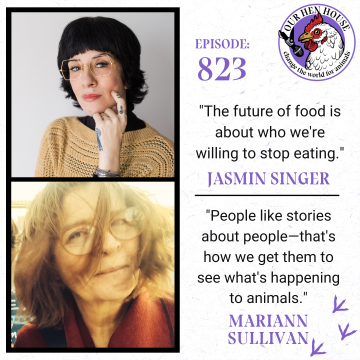
In this spirited episode, Jasmin introduces her newest family member—a senior Chihuahua named June—while Mariann delivers both encouraging and concerning news from the animal rights world. The duo dives into Kenny Torrella’s thought-provoking Vox article about the surprising effectiveness of showing people the reality of factory farming through well-made documentaries like Dominion, challenging current conventional wisdom about animal advocacy strategies. They celebrate Mexico’s landmark ban on marine mammals in captivity and discuss Switzerland’s new meat labeling requirements, while examining the evolving landscape of cultivated meat technology and public lands protection.
Episode Highlights:
- Dominion’s Impact: New research suggests that showing people high-quality footage of factory farming conditions can reduce meat consumption by 12.2%
- Mexico Makes History: Unanimous vote bans marine mammals in captivity, affecting approximately 350 dolphins
- Public Lands Protected: Provision to sell public lands removed from controversial legislation
- Switzerland’s New Labels: The country now requires labeling of meat products from animals subjected to certain painful procedures without anesthesia
- Cultivated Meat Progress: Advancements in pig fat cell production could transform the market
- Animal Welfare Act Weakened: Supreme Court decision further limits enforcement capabilities
- Open Rescue and Necessity: Discussion of Mariann’s law review article examining legal defenses for animal rescuers
RESOURCES
-
-
- Can New York keep sewage sludge out of our food system?
- Environmental Connections on WXXI
- Sen. Mike Lee removes public lands provision from Trump’s “big, beautiful bill”
- Mexico bans use of captive marine mammals for entertainment
- Pig Fat Cell Production Could Transform Lab-Grown Meat
- Labs Once Fined Pennies, Now Not Fined At All
- Is it even possible to convince people to stop eating meat?
- From July 1, food labels in Switzerland will have to disclose whether products of animal origin involve painful practices. The Swiss federal government has approved a series of ordinances requiring the labelling of meat, eggs and foie gras.
- The Real Cost of Eggs
- Desperate Times and Desperate Measures: When Is Rescuing Animals “Necessary?”
-
INTERVIEW TRANSCRIPT
[00:00:06] Jasmin Singer: Welcome to the Hen Report. This is Jasmin Singer.
[00:00:09] Mariann Sullivan: This is Mariann Sullivan.
[00:00:11] Jasmin Singer: And the Hen report is part of Our Hen House, and we're so glad you're here. We have four podcasts, is that right? Four? Four podcasts?
[00:00:18] Mariann Sullivan: Sort of four, think we could call it four.
[00:00:22] Jasmin Singer: Okay. We have four podcasts now. Rising Anxieties comes out on Tuesdays. The Hen Report, this, Thursdays, the long form interview on most Fridays and the Animal Law Podcast on the last Friday of the month.
And we are on YouTube now. So, feel free to subscribe and like it and like this
[00:00:40] Mariann Sullivan: Don't just feel free, feel obligated.
[00:00:42] Jasmin Singer: Feel.
[00:00:44] Mariann Sullivan: Feel like it's really, really important or something bad could happen to you.
[00:00:48] Jasmin Singer: Oh my God. Uh,
[00:00:50] Mariann Sullivan: Desperate times.
[00:00:51] Jasmin Singer: I'm a little scared of you today. I have to say, just like.
[00:00:55] Mariann Sullivan: Why!?
[00:00:56] Jasmin Singer: That was scary. And you were giving off like some scary vibes. You know, people say you're scary sometimes, right?
[00:01:02] Mariann Sullivan: relative, I'm in a relatively good mood, mostly because I really like this article by Kenny Torrella that we're gonna be talking about.
I really like it a lot.
[00:01:11] Jasmin Singer: Cool. Yeah.
[00:01:12] Mariann Sullivan: too.
[00:01:14] Jasmin Singer: You as in the listener.
[00:01:16] Mariann Sullivan: Well, yeah.
[00:01:17] Jasmin Singer: Okay. 'cause I was like, I, I did like it
[00:01:20] Mariann Sullivan: You
[00:01:21] Jasmin Singer: Yeah. and you,
[00:01:23] Mariann Sullivan: though.
[00:01:23] Jasmin Singer: alright.
[00:01:24] Mariann Sullivan: gesture on YouTube, I mean, in the first place, if you're listening on the podcast, I was gesturing. And even if you're listening on YouTube, you know how people gesture to things and it's usually the wrong way or something. Or turn to each other.
And on your screen, they're on
[00:01:37] Jasmin Singer: Yeah.
[00:01:38] Mariann Sullivan: Yeah.
[00:01:39] Jasmin Singer: So, uh,
[00:01:40] Mariann Sullivan: avoid that.
[00:01:41] Jasmin Singer: I want to tell something
[00:01:45] Mariann Sullivan: big, big news.
[00:01:46] Jasmin Singer: Yeah. Moore and I thought we should get a dog because we only had four and we only had two cats. And we thought, why not get a fifth dog? Uh, we actually saw this like little old chihuahua. They say she's 12, but I think she's older.
[00:02:10] Mariann Sullivan: You saw her online.
[00:02:11] Jasmin Singer: Yeah. Yeah. But like it.
[00:02:12] Mariann Sullivan: You know Jasmin, if you look for little old Chihuahuas online, you will see them.
[00:02:17] Jasmin Singer: They do. That is how it works. They do appear when you search
[00:02:22] Mariann Sullivan: for
[00:02:22] Jasmin Singer: for them. I'm trying to use, you know what, I'm trying to use the passive voice here on purpose, so like, let me. Uh, but anyway, I, I have the Chihuahua disease. I just love chihuahuas and I love adopting old, old dogs. I mean, it just, it honestly brings me so much.
[00:02:42] Mariann Sullivan: I am not objecting. I was just making fun of you.
[00:02:43] Jasmin Singer: No, I know. It brings me so much joy. And so we, we got this little, she's on my lap right now, but I don't know if I can show her. Well, I guess I can move the camera.
[00:02:54] Mariann Sullivan: You don't have to move her. Aw.
[00:02:57] Jasmin Singer: She's right there.
[00:02:58] Mariann Sullivan: see.
[00:02:58] Jasmin Singer: Yeah, Well, I don't wanna like, I don't wanna, you know,
[00:03:02] Mariann Sullivan: Yeah,
[00:03:03] Jasmin Singer: futs with her.
[00:03:04] Mariann Sullivan: Maybe she'll wake up.
[00:03:05] Jasmin Singer: No. Uh, I didn't put on do not disturb on my phone, and I just looked down at my phone and I I had a, I have a text from
[00:03:14] Mariann Sullivan: do
[00:03:14] Jasmin Singer: like an animal, rescuer neighbor who just said, I just dropped off a bag of clothes you might want and put it on your front porch.
That's because the Buy Nothing group is amazing. Like I am obsessed with it and, and this person who is very much in the animal rescue world is also in the Buy Nothing group, and it's just so supportive and lovely. Anyway, back to June. So her name is June, and it might be July now, but it is the, season of June.
And June is in fact busting out all over. Uh, what? Too many mixed.
[00:03:48] Mariann Sullivan: I don't know, they, they, it doesn't like her name is June. It's a beautiful name.
[00:03:53] Jasmin Singer: Was my, one of my grandmother's,
[00:03:54] Mariann Sullivan: a whole lot of like references
[00:03:57] Jasmin Singer: name, we name our animals after our ancestors. And it was one of my grandma's, uh, names.
[00:04:03] Mariann Sullivan: There you go.
[00:04:04] Jasmin Singer: Yeah. And I love her. She is a darling. And it's only at the time of this recording, it's only the second day we've had her.
[00:04:12] Mariann Sullivan: Fresh and alive and gay and young. June is a love song, sweetly sung.
[00:04:16] Jasmin Singer: It fits her really well. She is all about her new vegan lifestyle, by the way. She like, she's got the vegan clothes. She's got the vegan kibble. She loves it.
[00:04:26] Mariann Sullivan: She's really excited about it.
[00:04:28] Jasmin Singer: Super.
[00:04:29] Mariann Sullivan: to like get out of the trap of abusing
[00:04:32] Jasmin Singer: Yeah, no, she's wanted to live in alignment with her ethical beliefs. Uh, so welcome to the family June. We love you. Um. I was starting to watch the other day because I need to spend a lot of time with June on my lap because that is where she wants to be.
[00:04:49] Mariann Sullivan: I'm gonna sit back too, so I don't look so gigantic.
[00:04:52] Jasmin Singer: Okay. But your, your sound gets a little worse when you do that. Okay.
[00:04:56] Mariann Sullivan: right. Sorry.
[00:04:59] Jasmin Singer: I started to watch the Shark Whisperer, which Is I think it's on Netflix, and it is it reminds me a little of The Octopus Teacher. And my guess is it got pitched around the time that The Octopus Teacher came out.
[00:05:13] Mariann Sullivan: a big deal like that everybody's heard of? Because I am so detached from popular culture right now.
[00:05:19] Jasmin Singer: I don't think it's as big of a deal as The Octopus Teacher, but it like just started streaming and I started watching it and it's about this woman who feels like her life's calling is to spend time with sharks and advocate for them and show people that they're not the, like monsters that people make them out to be.
I don't know if you can hear scratching, but that's one of my dogs scratching my door and uh, it is open. So he, he could just walk in, but sorry about that noise. Anyway, uh, so Moore was like kind of annoyed by it because we only got a,
[00:05:53] Mariann Sullivan: Moore is your wife.
[00:05:55] Jasmin Singer: yeah, we got like halfway through and. And she was like, it's too much about the woman whose name, by the way, is Ocean.
Like her parents named her ocean. And, uh,
[00:06:07] Mariann Sullivan: That's John Robin's son's name, isn't it?
[00:06:10] Jasmin Singer: I don't know.
[00:06:11] Mariann Sullivan: I think so.
[00:06:13] Jasmin Singer: interesting. Okay, well rest in peace, uh, to John Robbins, not to his son. Hopefully knock on particle board. So anyway, she felt like the focus was too much on the person and not enough on the animal. And I was thinking about that and I,
about the movie?
yeah, and I think that happens a lot. I think that often and, and
[00:06:35] Mariann Sullivan: I think it's good. I mean, don't think it's good, but I think that that appeals to more people long as they still get the message vis-a-vis the animals. People like stories and people like stories about people.
[00:06:48] Jasmin Singer: It is really cool. This woman, like she can hold her breath for six and a half minutes, by the way. So she like, she feels like, I know, she feels like not going underwater with like all the breathy things. Uh, helps her seem more like an animal, like swimming around with them. And it's really fascinating.
Yeah, and like the,
[00:07:12] Mariann Sullivan: minutes.
[00:07:13] Jasmin Singer: she, she talked a little bit about how she trained herself to do that and how,
[00:07:17] Mariann Sullivan: I have heard you can train yourself, but wow, that
[00:07:20] Jasmin Singer: I know she said like when you're, when you start to think like, oh my God, I have to breathe now, you can actually tell yourself, no, y your body has more resources, like you can get through this. And, and it can. I'm not gonna try, I just wanted you to know that I'm not gonna attempt that.
[00:07:38] Mariann Sullivan: I hadn't really, it wasn't a big worry of mine.
[00:07:41] Jasmin Singer: Okay, good. Well, I haven't finished it yet, but I, think I'm going to, despite the fact that Moore isn't.
[00:07:47] Mariann Sullivan: I think we're seeing more and more books and movies about animals. I mean, not a lot, but I think there is a little bit of a trend there. And I really, really think that that could be powerful. And I like the approach of telling stories about people's relationship to animals. I, I think that works.
[00:08:08] Jasmin Singer: Uh, I have not been able to find my thermos for like a week, and I just saw it in my video screen in my background. Found my thermos. I agree with you. I think it works too. I mean, the end of, uh, Octopus Teacher annoyed me because it was like, it became a metaphor for how you could see the world differently.
I just, you know, we've talked about this,
[00:08:27] Mariann Sullivan: that's embarrassing. I, I never saw it.
[00:08:30] Jasmin Singer: The octopus teacher, I know that.
[00:08:32] Mariann Sullivan: I'm like the only person.
[00:08:32] Jasmin Singer: Why is that embarrassing? You wanna know something?
[00:08:34] Mariann Sullivan: it.
[00:08:35] Jasmin Singer: Can I tell you something? Embarra like truly embarrassing. that happened to me.
[00:08:38] Mariann Sullivan: I loved octopi, no octopuses. It's supposed to be octopuses and that I wish them no harm. I, I didn't
[00:08:46] Jasmin Singer: Sure,
[00:08:46] Mariann Sullivan: the
[00:08:47] Jasmin Singer: not? So this is embarrassing. I was hosting Environmental Connections the other day, that's my two times a month, uh, radio show on WXXI, which is the n, the NPR station here. And one of the episodes was about sewage sludge, which is basically everything we flush down the toilet, and how it is being spread onto farmland and ew so gross.
And, uh, one of my guests name was Murray and he was like a scientist at Cornell. And so when I was introducing him, I said, I said, Murray, I promised my wife that even though you have the same name as our poodle, I, I would not say that you're a good boy. And he had no,
[00:09:33] Mariann Sullivan: You said this to this man?
[00:09:34] Jasmin Singer: Yeah. And he just sat there. No, I had never met him before.
And he, he just sat there and I just then kept talking.
[00:09:46] Mariann Sullivan: Okay.
[00:09:48] Jasmin Singer: Yeah. That happened. But, okay. Wait. The coolest thing ever in the history of radio happened during that hour. I'm so excited about it. So. At one point, one of my guests, a scientist at the University of Rochester, and a hydrologist, is that how you say it? She specializes in hydrology. I said that.
Okay. Uh, she was saying that, yeah. Okay. She was saying that something about, um, like how this leaks into our food, and she said, so the next time you pick up milk or eggs, you know, who knows what's in it? And I was like, Okay, uh, I have a self-serving question. What about if someone doesn't eat animal products?
Is it as likely that it would be in it? And she said. It is not as likely that it would be in it.
[00:10:41] Mariann Sullivan: That's really interesting. I had no idea.
[00:10:44] Jasmin Singer: And I go,
[00:10:46] Mariann Sullivan: wanna,
[00:10:47] Jasmin Singer: yeah, no. I just said, huh. Fascinating. Because I just, I just stepped on a gold mine, you guys. Like, this is the new vegan campaign. There will not be human shit in your food. Well, she didn't say.
[00:11:04] Mariann Sullivan: clear too. My understanding, and you can correct me if I'm wrong, is that it's not just that it's human poop. I mean, human poop has been used as fertilizer. I mean, particularly in China called night soil and, and you know, it was probably at a time when most Chinese people were mostly vegetarian anyway. It's all of the, uh, it's, it's not just poop. It's, it's like all of these horrible, toxic substances that are also in the sewage sludge.
So it's, it's like a poop. Like stew of
[00:11:39] Jasmin Singer: It's, a, it's a poop stew of poison. Vicki, do not name today's episode A Poop Stew of Poison.
Uh, yeah. My, okay, so my other episode was an interview with Eileen Flanagan, who has a book coming out called Common Ground. And it's about like a coalition building within, you know, fractured communities, like, who are like oppositional communities. And, and one of the things she was talking about was how you could find common ground, like the same stake. S-T-A-K-E stake. And she said, like, for example, I might not be able to get people to care that much about Botswana, but I have a child and I wanna care about my child and I want people to care about the children in Botswana, like the common element there is that we're all parents or something. And then she went on to say something about how there was this huge drive that was ignited in her when she had her kid. And, and I let her finish and I said, just, I just wanna add that as a person who chose not to have children, and I used that word, chose, uh, you know, I get, and, and, and even some people who do have kids, I'm sure this is true for them.
I get that same sense of meaning from my animals and from wild animals and from nature and, and she for the rest of the show, like wove in animals into like her messaging.
[00:13:06] Mariann Sullivan: I mean for those of you who aren't familiar, 'cause we have talked about this many times, but Jasmin and I are both particularly annoyed by the, as
[00:13:15] Jasmin Singer: as a mother. Yeah. As.
[00:13:17] Mariann Sullivan: to why I care about anything. As if it is impossible to care about anything until you have a kid and. It particularly irks me when I find that an awful lot of people who use that wording and many people who, you know, just happen to have kids don't seem to care at all about the future of the planet or the world or, or the air or the climate, like they don't like. They're oblivious. I seem to care about the future of their kids so much more than they do. Anyway, I won't go on and on, but I'm not sure everybody knows how annoying you
[00:13:55] Jasmin Singer: Right, and and this.
[00:13:56] Mariann Sullivan: a parent or when I became a parent, like, you know, uh, it's possible to care about things.
I'm not discounting the fact that parenthood is, for some people, I mean for many people, and definitely not for all of them, you know, a mind altering experience to care that deeply about, and I mean, I, I understand it's a big deal, but, you know, move on.
[00:14:19] Jasmin Singer: Yeah. I mean, this is, oh, I see. Okay, I, see. It's not like an anti breeding statement that we're making here, by the way. This is just like when,
[00:14:29] Mariann Sullivan: I
[00:14:29] Jasmin Singer: when someone, I just wanna give a.
[00:14:30] Mariann Sullivan: one of those, but um, I'm not making
[00:14:32] Jasmin Singer: I wanna just say like from a more of a banal example would be, you know, you're watching the news and some kid was lost at the playground and they interviewed someone else, and she says, As a mother, I can't imagine how horrifying it would be. And like as a empathic person.
[00:14:50] Mariann Sullivan: As a
[00:14:50] Jasmin Singer: Neither can I, you know, so it's just like this added sort of, you know, thing. Alright, let's move, let's move on to some, you, you pulled out some news stories,
[00:15:02] Mariann Sullivan: No, I have some news stories and then there's, there's one article, the one I referred to earlier that I really wanna talk about. But I do wanna cover a few of these things 'cause we've talked about before, either here or on Rising Anxieties, I forget where, but about, you know, the, the Bill Trump's
[00:15:19] Jasmin Singer: okay.
[00:15:19] Mariann Sullivan: and at the moment that we're recording this.
It has passed both houses, but it hasn't yet been reconciled, in the house. It, you know, passed the Senate anyway. One of the things that we were most exercised about, though there are many, many things to be upset about here, but from an animal perspective in particular, was the sale of public lands.
[00:15:39] Jasmin Singer: Mm.
[00:15:40] Mariann Sullivan: uh, they took that out.
Um, Senator Mike Lee. This is from CBS News. Senator Mike Lee removes public lands provision from Trump's big beautiful bill, which is, I guess, are they still calling it that? I don't know.
[00:15:52] Jasmin Singer: Yeah.
[00:15:52] Mariann Sullivan: is, this was his reason. Um. Because of the strict constraints of the budget reconciliation process. I mean, this is Mike Lee, he's the one who introduced it.
Um, I was unable to secure clear enforceable safeguards to guarantee that these lands would be sold only to American families, not to China, not to BlackRock, and not to any foreign interests. I, I mean, there are a lot of American families who I do not want owning our public lands, I can assure you. You know, like a loathsome thing to say. But, uh,
[00:16:27] Jasmin Singer: Yeah.
[00:16:27] Mariann Sullivan: but really, really good news that they're not going to belong to American families. They're gonna belong to all American families and
[00:16:35] Jasmin Singer: Good.
[00:16:36] Mariann Sullivan: and all of us, and, and most importantly, all of the animals who live in them. Of course, I'm sure some of these public lands are being rented out for grazing, which is a whole other topic, but, but this is good.
This was good news
[00:16:48] Jasmin Singer: Public. Public lands are public for a reason.
[00:16:51] Mariann Sullivan: In Rising Anxieties this week, which came out the other day, I also talked about just the, the fact that these American families who, you know, own, who would would've wanted to own these public lands, which probably a lot of them are renting now, at very low rates, I might add.
Um. the other thing that's in this bill that's really benefiting them is the tax exemption, estate tax exemption for millions and millions of dollars so that they can pass these lands on, because they all grew up watching Dynasty and what was the Dallas, and they all think of themselves as having a dynasty out in the west and like, and, you know, they're pretty far. I swear those programs had an influence on, on these people, and this is what they wanna do. They don't want anybody else except their family to get hold of these lands. Anyway, I, I, I digress. Um, all
[00:17:41] Jasmin Singer: Well, no, it's you, it, and I know I, I wanna break the news 'cause I love this news. And because in, in honor of my new chihuahua, I feel like talking about Mexico. Mexico made history this week. It gave, Yeah. it gave a very, uh, powerful overdue nod to the sentience of other species. In a unanimous vote, it's Chamber of Deputies and Senate passed a sweeping ban on the use of marine mammals in captive entertainment.
So no, no more dolphin shows. No more performing sea lions, no more orcas.
[00:18:18] Mariann Sullivan: We should take a, a, a a look at, at, at this and, you know, do something similar here.
[00:18:23] Jasmin Singer: It's a landmark law. It's.
[00:18:26] Mariann Sullivan: article says that there are an estimated at 350 dolphins in captivity in Mexico currently, and they will have to be relocated to sea pens, um, which I guess is the best that they can do for them. And yeah, unanimous, uh, really, really great news. Uh, I love this story. There's not a lot to make us happy.
I don't know whether this makes you happy or not, but pig fat cell production could transform lab grown meat.
I think that makes us happy, though it's in Drovers, which is, you know, a meat industry publication, so I'm always wary of anything. They're not saying it's good. I doubt that they do think it's good. They're just reporting on it. This is by Jennifer Shike. This discovery represents a significant step forward for the global lab grown meat market, which is estimated to grow by between five and $30 billion by 2030. So,
[00:19:19] Jasmin Singer: Hmm.
[00:19:19] Mariann Sullivan: Maybe, uh, the Trump administration doesn't mean we're getting, uh, we're, we're getting this stuff, but the meat industry does. And apparently, I know this isn't going to excite you people unless for some reason, you're one of those ve vegans who has really missed the taste of pig fat.
[00:19:36] Jasmin Singer: Ew.
[00:19:36] Mariann Sullivan: But for those who really are in love with the taste of pig fat, apparently, you know, now they can make it. And, the cells that they have come up with to do this grow indefinitely so they don't have to keep taking 'em from more and more suffering pigs and.
[00:19:49] Jasmin Singer: And, but they do. Or they do originate. I know our audience is gonna be like, but where do they originate? They do still originate from animals and so many people do have some ethical questions around sourcing.
[00:19:59] Mariann Sullivan: has to eat this stuff.
[00:20:01] Jasmin Singer: Right, right. I.
[00:20:02] Mariann Sullivan: just a step in the right direction, but I
[00:20:05] Jasmin Singer: Hm.
[00:20:05] Mariann Sullivan: it could be seeing a step, a step in the wrong direction. Maybe some people do, I don't know. But anyway, um,
[00:20:10] Jasmin Singer: The promise is there. So I think this is, uh, I think this is good news. The future of food is about who we're willing to stop eating.
I think that this makes that clear.
[00:20:24] Mariann Sullivan: many people, and this isn't on an ethical basis, but there are still many people who just think that, cell based meat or whatever we're calling it, it ain't gonna happen. It's not like, it's not serious. There are
[00:20:36] Jasmin Singer: Hmm.
[00:20:37] Mariann Sullivan: books than we're, so, I don't know. You know, I don't know.
We, I can only tell you what I, what I see in the newspapers.
[00:20:44] Jasmin Singer: Just don't get mad at Mariann if you don't like this story. Don't,
[00:20:48] Mariann Sullivan: We've never gotten anybody who got mad at that.
[00:20:51] Jasmin Singer: well, there's,
[00:20:53] Mariann Sullivan: People. People, people understand that we are incredibly nuanced.
[00:20:58] Jasmin Singer: okay. Well, so.
[00:21:02] Mariann Sullivan: mad. Well, some people have gotten mad at me, but nobody, I mean, people don't write in from our, the, Our Hen House audience talking about saying, how dare you talk about this.
Nobody does that. Do you think I
[00:21:12] Jasmin Singer: Okay.
[00:21:13] Mariann Sullivan: it.
[00:21:14] Jasmin Singer: Yeah, there's a campaign now,
[00:21:15] Mariann Sullivan: let's talk about this next story.
[00:21:18] Jasmin Singer: Okay. Uh, This is about animals used in research and the, the an, the Animal Welfare Act. You're the lawyer, but it seems it's already a very weak law that doesn't cover the vast majority of animals used in labs like mice and rats and birds and fish are all excluded.
Uh, So tell us about the news with,
[00:21:42] Mariann Sullivan: It just got weaker. This isn't a good news story, this is a bad news story. Um, there is really only, they don't in do any enforcement of the Animal Welfare Act in labs. By, um, criminal prosecution. It's just fines. The fines are weak. The fines are always reduced drastically. It's really hard to get them, but they do exist for, you know, really egregious stuff.
But then there was this Supreme Court decision, which didn't have anything to do with animals or the Animal Welfare Act, but the court held that that federal agencies aren't allowed to impose civil penalties without a trial. There's nothing in the Animal Welfare Act that allows for trials. So that means now they can't even impose fines all they can do is find out, I guess, you know, you violated the law, please don't do it again.
That's like, that, uh, old, uh. Robin Williams line. What do the police officers in in the UK do when they don't carry guns? Say, Stop or I'll say stop again! That's pretty much where we are with enforcing the Animal Welfare Act.
[00:22:43] Jasmin Singer: Wow.
[00:22:44] Mariann Sullivan: you know, of course Congress could easily rectify this, but you know, Congress can't find its shoes in the morning, so that seems unlikely.
[00:22:53] Jasmin Singer: Well, uh, unfortunately,
[00:22:55] Mariann Sullivan: Alright, that's the news.
[00:22:56] Jasmin Singer: yeah.
[00:22:56] Mariann Sullivan: news. Some not so good
[00:22:58] Jasmin Singer: So not so good news.
But let's chat about this, this Vox story. 'cause I know that you're excited about it and, and I am too. I think this is really interesting fodder and of course, interesting fodder, generally speaking when it's on Vox is from Kenny Torella. Uh, so if you, if you're listening to this, chances are you have tried to persuade someone to eat fewer animal products or to give it up.
You know, it's hard work. Uh, you know, I, I don't know why it's hard work. It seems like everyone should go vegan once they figure out what's happening to animals. And there's like mounting evidence that animal agriculture is catastrophic for like everybody, for the animals, first and foremost, but also for the planet and the slaughterhouse workers and public health, certainly.
So there's a new study out of the University of Toronto that suggests that persuasion, and I mean real values-based gut level persuasion, might still have a powerful place. Do you wanna take it from here?
[00:24:03] Mariann Sullivan: I'm not even sure I would call it persuasion. It's basically somehow or other, get people to watch Dominion. I mean, that's what it's about. I mean, and it's specifically Dominion. They're not just talking about any factory farming footage. But this is really interesting. They showed people, and of course these people had to watch it because they were part of this experiment,
a 16 minute clip from Dominion, particularly about pigs. And the control group watched a video about mushrooms. And it actually seemed to have an effect. Before watching the video 90.1% of students chose meat in their meal. A a week after watching the video, 77.9% did a 12.2% decline. Of the people who had watched Dominion.
Demand for pork specifically fell more sharply. And isn't this what, what Our Hen House and what our listeners have believed all through the past, what, 10 years of the, the animal rights movement kind of floundering, trying to find the answer because showing people what happens, doesn't work. And this one of the points they make here is that I said specifically Dominion.
And you know, it's not actually only Dominion, it's that it's a really wellmade film. It's a very high quality film. Another thing that they point out, it's, it's totally unflinching. That's what I'm told, 'cause I've never made myself watch it. um, the narrator who is Rooney Mara, she speaks with a flat tone.
There's not a lot of drama. She she explains everything that's happening. And one of the things that particularly, was notable to me, there's no appeal. Nobody says eat less meat. Nobody says what you should do with this information. I think that that might be... the study is not good enough to divide down what, what it is about this particular interaction that made people respond.
You know, there are other flaws with the study as well, but I think not telling people what they should do with this information might be really good and not, not sugarcoating it.
[00:26:15] Jasmin Singer: I mean.
[00:26:16] Mariann Sullivan: The people need the facts.
[00:26:17] Jasmin Singer: You were talking about that, I was, I, I found myself wondering if it's in fact a little harder to advocate for animals right now to other people because of the current age and time we live in where people are very skeptical of what they're being told in general. Like people dunno where to look.
And so I think people tend to dig their heels in. And, and, you know, run away, or I guess you can't dig your heels in and run away at the same time. You'd have to take your heels off. They dig their heels and they slip the heels off. They run away, uh, once they're being confronted with something that could inspire a lifestyle change.
And so I agree that, I agree that, that not giving them a directive is important, is very important.
[00:27:12] Mariann Sullivan: Yeah, I mean, that's just a guess, but they, they decided to go with it and, you know, the, it was a young group, so it wasn't full age groups. That's fine. It skewed slightly female, so that's fine. I mean, if we can, if we can convince all young females not to eat meat, that would be fine. And they didn't actually track what people ate.
They took their reporting as truth, but there have been other studies that used a similar type of approach. Um, they had this voucher, uh, that where they could win a meal and whatever. And, and in that study they did track what, um, students ate. It was a totally different topic and, and it, it seemed to be accurate.
People did report accurately. And as this article says, all this suggests that persuading individuals to eat less meat, a goal that many in the animal advocacy movement have largely given up on, might not be as hopeless as previously thought. 'cause we haven't given up on it. That's still our favorite road of activism.
And I bet most of the people listening to us, 'cause why else would they listen to us, haven't given up on it. But it's true that, you know, everybody's like. Uh, it, it's more corporate campaigns don't go for individuals. Go for, um, you know, cage free campaigns. Try to make things better. Uh, what else do they talk about in here?
By 2015, the largest animal advocacy organizations were shifting their focus toward political and corporate campaigns to ban some of the most egregious factory farm practices, like tiny cages for pigs and egg laying hens. The idea was that instead of trying to influence one person at a time, which had proven so difficult, they'd instead change the food system.
And you know, obviously one by one like, there's way too many people, but at the same time, one by one is how people operate. And I've always, I've always believed in it.
This article doesn't actually also mention the influence of the effective altruism money, which, you know, really didn't take... a lot of the organizations have been able to grow and do much more and be more powerful because of the effective altruism money, which really is not necessarily donated by people who believe in quitting completely. They are interested in cutting out the worst of the suffering. And so, uh, also a lot of effort has gone into replicating the food.
Um. And you know that that was great for a while, and now it doesn't seem to be doing that well. They're all struggling. And getting the laws passed is that this, some states are now rolling back animal welfare laws that advocates had previously persuaded them to adopt. Um, many food companies that pledged to eliminate eggs from caged hens in their supply chain aren't following through.
That is not to say that these campaigns have not been successful. They have been, but I think the idea that so much of the movement really moved away from this talk 'em into it. Show. No, don't chalk 'em into it. That's the wrong thing to say. Show 'em what's happening.
[00:30:07] Jasmin Singer: Show them into it.
[00:30:08] Mariann Sullivan: come up with a way to get them to look
[00:30:11] Jasmin Singer: I, I really,
[00:30:12] Mariann Sullivan: will change.
[00:30:13] Jasmin Singer: I like, I like this story. As a, a lab grown pigs piggyback to the story about the cultivated meat. I didn't wanna say piggybacking because that's exploitative, but we were talking about cultivated meat pigs. But I just like this sort of multi-pronged approach that as, as a study like this is coming out, we, we start to see shifts.
And that story about the pig from before was... that was reported by, by Big Ag and not even like a vegan media group. So this to me, this is very hopeful. I, I wanted to tell you something real quick and I had to open my phone because I am listening to an audio book right now for a book. I'm in a book club and we choose a different genre every time.
And so it's ya right now. And someone suggested The Black Flamingo by Dean Atta. And, uh, so like, you know, we were all like, okay, like we didn't even really look into it and uh, like the kid in it, his mom is vegan, and so this thing keeps happening where she's like, it's not always good. Like, she's serving like a vegan meat.
And like the kids are like, ew, what is this? Like, it's not always good. However, it does not let, it does not let go of this message. And so there's this one person who comes in who's 17 and um, was like, I'm, I, am, I've gone vegan. I went vegan two weeks ago. And someone says, why? And she says, because I'm about to start college and I wanna start college as a better person than I was.
And so like, it, it feels almost like it's reflective of reality in terms of.
[00:31:53] Mariann Sullivan: that kind of messaging is good, but I really have come to believe, I really have, that the, and there's studies on this too. The most persuasive thing is getting people to watch what's happening. I. It's that
[00:32:07] Jasmin Singer: okay, so this
[00:32:09] Mariann Sullivan: Of seeing what's happening to the animals.
[00:32:11] Jasmin Singer: one point,
[00:32:12] Mariann Sullivan: people.
[00:32:13] Jasmin Singer: yeah.
[00:32:13] Mariann Sullivan: them.
[00:32:14] Jasmin Singer: Well, and at one point the, the main protagonist walks into the room and like a bunch of people are watching a movie and he says, what are you watching? And someone says the movie that made us all go vegan. Like it, it's just interesting. Like it really this Anyway, I So thank you for finding this.
[00:32:30] Mariann Sullivan: and the mentions like that, they set the scene to make it easier for people to make a change.
[00:32:36] Jasmin Singer: Yeah.
[00:32:36] Mariann Sullivan: footage. It's always been the footage. And as this article points out, the footage done well, not, you know, not grainy, uh, middle of the night footage that may influence how we feel and make us sick to our stomachs.
But you have to show people like real, a real movie. And fortunately we've got at least one.
Can I just read the end of this story? And I,
[00:32:57] Jasmin Singer: Yeah.
[00:32:58] Mariann Sullivan: of other things I wanna mention before we, um, finish, but, um, This story is so important to me. I think I just wanted to add like their conclusion.
The case for both dietary change and meat industry reforms can be made persuasively based on the Dominion study. It might only take 16 minutes of an unvarnished look into factory farms for it to break through to some people. In today's crowded attention environment, capturing those 16 minutes of people's time will be harder than ever, but Green, that's the person from the study, um, said it's still worth the effort.
Quote. I think that persuasion is a beautiful thing where we try to convince people using reason and argument and take them seriously as moral agents, he said, I do not wanna give up on this. Well, I agree with you. I don't wanna give up on it either. And
[00:33:42] Jasmin Singer: I love that.
[00:33:43] Mariann Sullivan: stories that I thought were interesting in the context of this study.
[00:33:46] Jasmin Singer: Mm-hmm.
[00:33:47] Mariann Sullivan: is crazy. I had not heard this.
[00:33:49] Jasmin Singer: The Switzerland
[00:33:50] Mariann Sullivan: and, and Switzerland.
[00:33:53] Jasmin Singer: Yeah.
[00:33:54] Mariann Sullivan: talk about it?
[00:33:55] Jasmin Singer: Well, I, as far as I understand, it's taking, you know, a- I don't know if you would call it notable, but very imperfect step toward transparency in the food system. So starting July,
[00:34:09] Mariann Sullivan: said.
[00:34:09] Jasmin Singer: July 1st, which happened already, all meat, eggs, milk, and foie gras sold in the country will have to be labeled if they come from animals subjected to painful practices, including castration, tail docking, dehorning, or force feeding without anesthesia. What?
[00:34:31] Mariann Sullivan: And cutting off of frog's legs without anesthesia.
[00:34:35] Jasmin Singer: I, I don't, I mean, these are obviously, these, these are business as usual, these types of procedures, and I, I don't have to tell our listeners that all of these things happen regularly. And, and I guess on the positive side, Switzerland's new rule forces the curtain to lift a little. Like a little.
[00:34:56] Mariann Sullivan: The, the pro, um, and then also force feeding. Um, and the force feeding was part of a, like a, a compromise because there was a really popular initiative aiming to ban foie gras imports completely. So this is what they did instead. So it's definitely not perfect because there's a million other horrible things that happen to animals on factory farms.
And does this imp imply that these are the only bad things, and the rest of it is like
[00:35:21] Jasmin Singer: That's what I was.
[00:35:22] Mariann Sullivan: of.
[00:35:23] Jasmin Singer: Well, that's what I, was gonna ask. Does this present any opportunities for law to step in and, and kind of,
[00:35:29] Mariann Sullivan: of Swiss law is somewhat limited,
[00:35:32] Jasmin Singer: I feel like, didn't we go to, didn't you give a talk? You gave a talk. We went to Switzerland,
[00:35:37] Mariann Sullivan: Yeah,
[00:35:37] Jasmin Singer: we went to Basel.
[00:35:38] Mariann Sullivan: understood all of their laws.
[00:35:41] Jasmin Singer: I guess what I'm saying is like, isn't
[00:35:43] Mariann Sullivan: an amazing sw I just interviewed Raffael Fasel, who is Swiss. Didn't interview him about this.
Let's get 'em back Uh, yeah, there might be some legal, um, implications. Uh, and, and you know, fact is, is that even if it implies to people that these are the only bad things, this is gonna be hard for the industry, they have to do these things. Well, I think they do use anesthetic, um, for castrating animals in Switzerland.
They're so civilized there. Anyway. Interesting.
[00:36:18] Jasmin Singer: I love Switzerland. Do you remember there? We, we went to, there's a lot of, uh, Turkish, a large Turkish community there and a lot of Turkish food, therefore. And there was a fully vegan Turkish restaurant that we went to.
[00:36:31] Mariann Sullivan: Yeah, it
[00:36:32] Jasmin Singer: Switzerland. Yeah, it was like super cool. Uh, alright, so do you wanna talk about this
[00:36:39] Mariann Sullivan: to mention, I don't have to spend a long time on it. I suggest you go see it. Is this, it's a poster from We Animals, which of course is, um,
[00:36:47] Jasmin Singer: Joanne MacArthur?
[00:36:50] Mariann Sullivan: uh, photography
[00:36:53] Jasmin Singer: Project Media. Media. Media platform. Yes.
[00:36:57] Mariann Sullivan: yeah. Based, based largely in photography. And they have put out an amazing, uh, investigation report on investigation called The Real Cost of Eggs, but Worldwide, I mean, they're really trying to go for worldwide influence here of the battery cage system, how bad it is. Um, dozens of countries were included and just showing how normal this is. Interestingly in this context, is there, this is not geared towards individuals. It is a corporate campaign and it is against the battery cage, not specifically against, keeping hens for laying eggs, at all. So they are taking the more modern approach. Uh, in this particular campaign, not in everything of using this information to try to sway, uh, corporates, corporate and governmental, um, possibly governmental entities, rather than going for individuals to go vegan and stop eating eggs.
Interesting because this is very, very powerful.
[00:37:58] Jasmin Singer: Yeah,
[00:37:59] Mariann Sullivan: Of course, of
[00:38:00] Jasmin Singer: yeah. Joanne MacArthur is brilliant. I got to see her briefly.
[00:38:04] Mariann Sullivan: best of the best.
[00:38:05] Jasmin Singer: I got to see her briefly at the AVA conference recently. Which was lovely. Uh, And
[00:38:11] Mariann Sullivan: campaign, it's it's a campaign that's in collaboration with the Open Wing Alliance, which is the global coalition established by the Humane League, that is trying to get it hens outta cages.
[00:38:22] Jasmin Singer: And I feel like the, this article, this, this sort of also,
[00:38:26] Mariann Sullivan: this. I have a mosquito bite.
[00:38:28] Jasmin Singer: oh, I'm sorry. That you do, uh, the. But yay for the mosquito. Uh, the,
[00:38:35] Mariann Sullivan: I fed him today.
[00:38:36] Jasmin Singer: yeah, that was good. Um, so
[00:38:40] Mariann Sullivan: it.
[00:38:40] Jasmin Singer: this does kind of, this does kind of relate also to
[00:38:44] Mariann Sullivan: That's what people think we're like.
[00:38:46] Jasmin Singer: Yeah, totally. And they're not entirely wrong. Uh.
[00:38:51] Mariann Sullivan: know. I, I do not offer my arm to mosquitoes for lunch. I don't, just not that good a person.
[00:38:58] Jasmin Singer: You're a horrible person, clearly.
[00:38:59] Mariann Sullivan: know
[00:39:00] Jasmin Singer: Uh so your your law review article, which is,
[00:39:05] Mariann Sullivan: That's right. I
[00:39:06] Jasmin Singer: which is out? Yeah, no, this, this is about like how when the law collides with the moral imperative to rescue suffering animals, whose side should we be on? And I think that's more or less the question that you took up in your very personal essay, uh, which was honoring the late and great Sherry Colb.
And it was called Desperate Times and Desperate Measures, When is Rescuing Animals Quote necessary? And I would say it's like, uh, from my perspective, it's as much a legal exploration as, as it is a love letter to Sherry. And Sherry was a towering figure in the, in, you know, vegan scholarship and criminal law.
and, her intellectual debates really helped shape your views.
[00:39:51] Mariann Sullivan: Well, the reason I wanted to mention it today in particular was because I think it really relates to this question of, you know, theories of change and, and the, the, the place of seeing what's happening to animals in the context of the many different theories of change, which I kind of, you know, summarize the, how I see them, you know, which is kind of what we talked about today. How they've moved away from, you know, just viewing animal cruelty.
And my thought in this, like, you know, talking about open rescue and it, the legality or, or lack thereof of it, um, had to do with- it's the process of exposing what is happening to animals. The thing that will change people is the process of exposing, getting, but you have to get them to see it. And one of the things that animal rescuers do, open rescuers is put their own lives on the line and their own freedom on the line.
Because people, this is taking us right back to what we were talking about at the beginning of this episode. People like stories about people.
[00:40:54] Jasmin Singer: Mm.
[00:40:55] Mariann Sullivan: and, by doing that and showing what's happening to the animals in the context of them doing these incredibly risky rescues in the middle of the night, they get people to see.
And that seems to be exactly in coordination with this, uh, theory, that, that if you get people to actually look at what's happening to animals, it actually does change them. The trick is getting them to see it, and I think open rescue, that, that, I think that is the main feature of open rescue is that it has come up with a way, not good enough because, you know, it's not like they're getting coverage all over the place, but, uh, that, gets some people to see, uh.
So I thought it really fit in here as, um, a discussion of a theory of change. And I also just wanted to mention that, you know, this is about how using the necessity defense at your trial, which basically says that you commit what would've been a crime in order to avoid a greater harm, um, than the crime the criminal law is, is there to create a violation for. And, and so I think it fits perfectly when, when animals are rescued to save their lives and, you know, as the result of what would've been a theft isn't a theft anymore because it was necessary. Anyway, Zoe Rosenberg, who will be up for trial on her rescue of four hens, um, soon was just, I think it was just today, denied the ability to use the necessity defense at her trial because the court, in what I think was just the most cynical and other California courts have done the same. It's the most cynical, ridiculous idea held that because when you rescue an animal, when you're acting to protect an animal, that is not a, a necessity under the necessity defense, which is ridiculous.
Of course it is. I mean, just like if you ran into a burning building to rescue a dog, of course you couldn't be prosecuted for trespass. Anyway, that's a lot of information, but it's also relevant. It's all coming together. Like I just feel a lot of things are coming together these days.
[00:42:55] Jasmin Singer: Yeah. I love the way you just brought that on home, and I think that's a great note to end on. Just a heads up though, we won't have an interview this Friday since it's the 4th of July, but we'll be back next week with, of course, Rising Anxieties and The Hen Report and a conversation with John Sanbonmatsu. Do you think I said that right?
Sa Matsu about his.
[00:43:16] Mariann Sullivan: would say that's right. We'll find
[00:43:18] Jasmin Singer: Uh, it's about his brand new book, the Omnivores Deception, which is a, a bold look at what we get wrong about meat and animals and ourselves. Uh, and so in the meantime, don't forget to join us if you're a Flock member for a very special bonus segment, which is a very moving reading from artist Darren Swazo that we just had to share.
He just wrote the most beautiful poem about animals. And if you like today's episode, please leave a review on Apple Podcast or a comment on YouTube. It helps new listeners find the show. And if you're able, please consider supporting our work at ourhenhouse.org/support. Huge thanks to Vicki Beechler and Jen Reilly for their help behind the scenes.
And as always, Our Hen House is your Hen house, so we'll talk to you next time.
_____________________________________________

Thank you for listening to the Our Hen House podcast! If you enjoy our podcasts, believe in our mission to effectively mainstream the movement to end the exploitation of animals, find community and solace in our shows and resources, and would like to show your support for vegan indie media, please make a donation today. Contributions of any amount will go towards our fundraising goal and are hugely appreciated. Our Hen House is a 501(c)(3) nonprofit organization, so it’s tax-deductible. Thank you for helping us create quality content!
Subscribe to our show on Apple Podcasts, YouTube, or your favorite podcatcher, and don’t forget to leave a 5-star review!
Check out Our Hen House’s other podcasts: The Animal Law Podcast, The Teaching Jasmin How to Cook Vegan Podcast, and the Antiracism in Animal Advocacy Audio Series.
Follow us on social media! You can find Our Hen House on Facebook, Instagram, TikTok, or Bluesky.
The Our Hen House theme song is written and performed by Michael Harren.