
 Apple Podcasts
 RSS
 Amazon Music
 Spotify
 YouTube
 PocketCasts
 CastBox
 Player.fm
 TuneIn
 Audible
 App not listed? Try this RSS link
In this delightfully chaotic episode of The Hen Report, Jasmin Singer and Mariann Sullivan stumble through podcast identity confusion before diving into pressing animal rights news and media recommendations. The pair balance serious discussions about animal welfare trade policies and methane production with lighthearted moments about Jasmin’s new senior dog adoption and her “Hens Before Mens” t-shirt that sparks unexpected veganism conversations.
This episode explores:
- How California’s misleading marketing of farm-generated methane as “environmentally friendly” is expanding nationwide, creating a dangerous climate policy loophole and a boon for dairy
- Thailand’s coconut industry finally taking steps to address the use of monkey labor following international pressure
- The UK’s struggle with animal welfare standards in international trade deals with Australia and the US
- Why population decline panic isn’t based in science but rather in controlling ideologies
- Mobile “green grocers on wheels” bringing fresh produce to food deserts in the UK
RESOURCES
-
-
- Netflix- Pangolin: Kulu’s Journey
- UK farmers outraged Australian beef is selling cheaper citing lower welfare standards
- UK farmers have ‘nothing more to give’ as they fear govt will compromise welfare in US-UK trade deal
- California misleadingly markets farm-generated methane as environmentally friendly—a falsehood now exported nationwide
- Thai coconut industry takes steps to ban monkey labour
- ‘It’s easier to buy a vape than an apple’: How greengrocers on wheels could change the UK
- There Are Many Threats to Humanity. A Low Birth Rate Isn’t One of Them.
- The Omnivore’s Deception
- World War Zoos
- We Are Eating The Earth
-
INTERVIEW TRANSCRIPT
[00:00:06] Jasmin Singer: Welcome to Our Hen...I forgot the name of our podcast. I was gonna say Our Hen Report. That doesn't work.
[00:00:14] Mariann Sullivan: No.
[00:00:15] Jasmin Singer: Welcome to Our Hen House. This is The Hen Report. We've only been doing this for going on 16 years, and I can't remember the name of our podcast.
[00:00:21] Mariann Sullivan: Well, we, we, we switched up the name kind of.
[00:00:25] Jasmin Singer: You know, it's funny because I think we recently talked about, not on the show, but just us, about how like it's easy to blame any kind of memory thing on whatever is going on in your life. Like you'll say it's a senior moment, and I was just about to say, it's probably perimenopause, but it's almost like a way for us to dismiss like inherently that we're just idiots, A and B,
[00:00:50] Mariann Sullivan: Well, that's a little harsh!
[00:00:51] Jasmin Singer: Ok that was harsh, but I
[00:00:54] Mariann Sullivan: People make mistakes. I mean, you know.
[00:00:56] Jasmin Singer: I'm, if I'm feeling emotional, I might be like, I have PMS, but so what if I have PMS?
It
[00:01:02] Mariann Sullivan: No, I totally, I totally agree with that one. It's like you're emotional the rest of the month too. Like, like, yeah, it's just, it's an excuse for, for what are just normal, normal human behavior. Though I'm not sure that forgetting the name of the show is normal human
[00:01:19] Jasmin Singer: the
[00:01:19] Mariann Sullivan: behavior.
[00:01:20] Jasmin Singer: It, it was like, it was like, what? You know, like combining Our Hen House and The Hen Report.
[00:01:26] Mariann Sullivan: Yeah. What, whatever, whatever, whatever.
[00:01:28] Jasmin Singer: it's it's like if I'm calling Murray over my dog and Moore is there, I've, I have been like, Moore-y, whoops.
[00:01:36] Mariann Sullivan: Yeah, no, I, I can understand confusing those, but you know, there are probably people who are listening are like, are like a little concerned about us, so let's move on.
[00:01:44] Jasmin Singer: I think that that's, you know, a valid concern.
[00:01:47] Mariann Sullivan: I do too.
[00:01:48] Jasmin Singer: Rising. This is the Our Hen House podcast. We, we
[00:01:51] Mariann Sullivan: No, this is The Hen Report.
[00:01:53] Jasmin Singer: but it's part of the Our Hen House...
Vicki help! Do you think? Like, okay,
[00:01:58] Mariann Sullivan: It's not called the Our Hen House podcast anymore. We,
it
Our Hen House is the name of the organization and it has three podcasts. One are The Hen Report, one is Rising Anxiety, which comes out on Tuesdays. And, and one is the interview which comes out on Fridays, like, and
[00:02:13] Jasmin Singer: It's still Our Hen House!
[00:02:15] Mariann Sullivan: Yeah, but that's the name of the organization.
It's not the, our
[00:02:17] Jasmin Singer: just, I have something
[00:02:19] Mariann Sullivan: I think we have to start all over again. I really do.
[00:02:21] Jasmin Singer: Vicki is our producer, and every now and then I just talk to her on the podcast. I'll be like, Vicki, help. And I wonder if people just think that she's like a made up person that I made up in my head and
[00:02:32] Mariann Sullivan: Why would anybody, why would anybody think that?
[00:02:35] Jasmin Singer: I don't know.
[00:02:36] Mariann Sullivan: Why would you do that?
[00:02:38] Jasmin Singer: I don't, I I wouldn't, let's keep going. Do you want to start over?
[00:02:42] Mariann Sullivan: No, I think, I think we've done it to death.
[00:02:45] Jasmin Singer: Okay.
you tell, you say which podcasts come out when then,
[00:02:49] Mariann Sullivan: I just did.
[00:02:50] Jasmin Singer: doing.
[00:02:51] Mariann Sullivan: I just did let, like, let's go. Let's talk about your dog. What's going on with your dog? June, your new dog.
[00:03:00] Jasmin Singer: She's on my lap. Um, you know, we adopted her, as I mentioned, we adopted her last week. Uh, she's, we did see the vet and we, we think she's definitely older than 12. There's no way of knowing for sure, but I did recently get that DNA done, so it's, it's in the lab somewhere being cute 'cause I'm sure her DNA is adorbs and, uh, we'll know soon, so I'll let you know.
She's doing well. Um, I think that like my cup hath runneth over, which is probably why I am completely bananas right now. Uh, there's just a lot going on and I don't know how to physically relax or mentally relax. Like if I have a few hours off, I'm, I'm like, I gotta tidy or some, you know, so something, it's like a frenetic energy. But she is a, a love, like I love her so
[00:03:48] Mariann Sullivan: Yeah, she's a very sweet little dog.
[00:03:50] Jasmin Singer: Oh, but the other day, Moore and I went to the gym and we're like, okay, we can leave her at home. Like, we'll, we'll check the ring. I checked the ring and she was like trying to get up on the, you know, recliner and this and that. So I called you and I was like, can you go to my house and put June on your lap and sit there? And you did.
[00:04:08] Mariann Sullivan: Yeah, it was fine. She was very sweet. She is, she's very easy. I mean, she's a little, like a little cushion. Like
[00:04:15] Jasmin Singer: She's
[00:04:15] Mariann Sullivan: Just gotta, she just kind of goes wherever you put her.
[00:04:18] Jasmin Singer: I really love her. She's such a darling. Um, also, did you notice my shirt here? Let me give a better, it says
[00:04:26] Mariann Sullivan: Well then not everybody's watching, so remember that.
[00:04:29] Jasmin Singer: but it'll be like a, a reason for them to subscribe Hens before mens. Oh. June's looking and, uh, it, I found it at the, at a Goodwill like years ago for like, I think a
[00:04:40] Mariann Sullivan: It's a good shirt.
[00:04:42] Jasmin Singer: And, uh, I recently rediscovered it. Now I have no idea why this shirt was made, but I went to the library before and the librarians asked me about it, and, and they're like, what does your shirt mean? I was like, well, for me, I'm a vegan lesbian. That's what it means to me. I, I, I co-founded an animal rights organization and, you know, like so hens before mens, uh, I have no idea why
[00:05:06] Mariann Sullivan: still doesn't make all that much sense.
[00:05:09] Jasmin Singer: No, it doesn't. You have to like, you have to forget the
[00:05:12] Mariann Sullivan: And you could think they were just talking about women before men, but it's got a big picture of a Hen on it, so they're really talking about hens. I don't know what it means, but I like it.
[00:05:21] Jasmin Singer: Uh, yeah, me too. I do too. And I'm glad you do. So I took my 15-year-old niece's advice and I wanted to talk about what she told me to watch, because she's a smart, she's a smart kid. And when I saw her recently, she told me that I should watch this documentary on Netflix, and it's called Pangolin Kulu's Journey.
Have you heard of it?
[00:05:43] Mariann Sullivan: No,
[00:05:44] Jasmin Singer: told you about it.
[00:05:45] Mariann Sullivan: No, I, I, I'm in a really bad place with television. I either watch total like nonsense murder mysteries or the news.
[00:05:52] Jasmin Singer: Well, I'm gonna give a good spoiler alert right now, and it's that nobody dies. I mean, that, I'm sure
[00:05:59] Mariann Sullivan: Yeah. No, that's always good going into an animal movie. Yeah.
[00:06:02] Jasmin Singer: of ants die. 'cause, 'cause the Pangolin eats ants.
[00:06:06] Mariann Sullivan: All right.
[00:06:07] Jasmin Singer: but,
[00:06:07] Mariann Sullivan: Are pangolins the same as anti eaters?
[00:06:11] Jasmin Singer: Oh, I don't know. I'll just Google that. Hang on. Are
[00:06:14] Mariann Sullivan: I don't think so. I mean, I thought they were different.
[00:06:18] Jasmin Singer: As Ants eaters. Um, according to the internet, no they are not, though they are sometimes called scaly anteaters. While both are insectivore with long snouts and tongues specialized for eating ants and
termites, they
[00:06:33] Mariann Sullivan: All right. All.
[00:06:33] Jasmin Singer: alright? Alright, so,
[00:06:35] Mariann Sullivan: Pangolins were, I mean, they were last in the news when everybody thought that it was the Pangolin at the wet market in China that started the pandemic.
[00:06:47] Jasmin Singer: I did not know that.
[00:06:49] Mariann Sullivan: You didn't,
[00:06:50] Jasmin Singer: that
[00:06:50] Mariann Sullivan: Yeah.
[00:06:50] Jasmin Singer: Well, I think I knew it at some point, but I totally forgot. They're obviously in greatly endangered. There's not that many of them left. This documentary, I think this is an interesting conversation after last week when we were talking about The Octopus Teacher and the whale, The Shark Whisperer, not whale, uh, and. Because it's, it's, again, it's about like one individual's journey and of course the human foster parent, but it's, you know, a lot of it is about the pengolin. They do get a little bit into the person's, the human story, but it, I, I really recommend it. It was really fascinating and mean, there was like
[00:07:28] Mariann Sullivan: I will try to, I will try to stop watching the news because I, I'm gonna die if I don't stop watching the news 'cause it's just
[00:07:36] Jasmin Singer: not stop Mariann, come on, you're not
[00:07:38] Mariann Sullivan: No, I'll try. I mean, I meant for an hour or two.
[00:07:41] Jasmin Singer: I see. Well, sure. For an hour
[00:07:43] Mariann Sullivan: No, I'm not gonna watch. I mean, I don't think I, I wanna stop watching the news. Totally. I feel like it's a time when I should try to keep up with what's going on, even though it's up very upsetting.
[00:07:56] Jasmin Singer: Well, what about the news that we have to
[00:07:59] Mariann Sullivan: All right. The animal rights news. Well, that's, that always cheers you up!
[00:08:02] Jasmin Singer: Yeah, wait, I just wanna go back to my t-shirt for one second. I have been talking about veganism because of this shirt more than I have talked about veganism with my vegan shirts. Isn't that weird? Like
[00:08:12] Mariann Sullivan: Yeah, no, that, that, yeah, that, um, people would never bring up the whole, uh, a vegan shirt. They would, they would just want you to leave.
[00:08:22] Jasmin Singer: Oh, a hundred percent. Yeah. Um, okay. So what would you say is the ratio of bad to good news this week that we're reporting on?
[00:08:31] Mariann Sullivan: Oh, I don't know. I don't know. Like, you know, even the good news in animal rights is sort of in the context of, well, it's better than really bad news.
I, I have these two stories. They're both from the UK but I don't think they are necessarily UK stories because, um, they're about imports and exports and I think that that is a really, really big thing for us to be paying attention to.
And apparently farmers in the UK are really, really... farmers, you know, people who raise and kill animals... um, are really, really mad. And I didn't really know this, but, but they feel that their welfare standards are much better than the rest of the world. And apparently though I've always disdained the idea that, uh, 'cause people in the UK frequently think they, or I guess they used to, that they don't have factory farming because, you know, they think that, you know, they have the same kind of illusions that other people do. You know, of course they have factory farming, but apparently they, their standards are, at least according to World Animal Protection, um, they have this animal protection index and it covers a bunch of indicators, but the four goals is recognition of animal sentience and prohibition of animal suffering, which basically like we would have to get rid of animal agriculture, but you know, they probably mean something different than I do.
Presence of animal welfare legislation, establishment of supportive government bodies, support for international animal welfare standards. And according to this article, the UK has a B, which is the best grade in the world.
Nobody has an A, um, and now Australian beef is being imported into, into the UK and they're really, really mad. I kind of don't blame them. Well, I blame them for a lot of things, but I don't blame 'em for that. Um, Because Australia has a d rating, um, along with Thailand, Kenya, Tanzania, and of course the US of A, I'm surprised we don't have a, an F. Like how could we possibly have a D?
And of course, you know, it costs money to provide better welfare. And they're pissed off that all of this beef from Australia is being brought into the uk. Like I say, I kind, I kinda I can't blame them for, for being annoyed about that. It makes sense. But then there's this other article from Sky News. UK Farmers have quote, nothing more to give unquote as they fear government will compromise welfare in US UK trade deal and you know.
Among all of the crazy news that's going on there is the, you know, the, the whole tariff issue and the fact that there is a trade deal of sorts going on between the US and the UK. And, um, they're trying to work it out and it has a lot to do with steel and, um, UK wants to reduce steel tariffs that the US is imposing to zero, that's important to them.
And, and according to this article, what's gonna be traded off is, um, concessions regarding, uh, farmers. You know, by farmers they mean, um, specifically the beef industry, maybe other animal industries as well. And again, the whole problem is, is that the UK feels it's being disadvantaged because there, they call, they call animal foods produce.
I wonder, is that just these articles or is, is that a thing? Because in the US we only use produce to refer to fruits and vegetables. But anyway, they're understandably like upset. And I just think this is all to the good. If countries start arguing about financial repercussions of animal welfare standards, of course it won't be all to the good if the, the final result is that the UK like just reduces all of its animal welfare standards to compete. That would be the worst case scenario. But, you know, I'm glad to see that it's in the news.
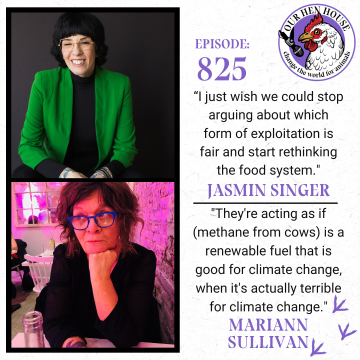
[00:12:16] Jasmin Singer: Yeah. This is honestly frustrating for me to hear, especially today and right now, and I just wish we could stop arguing about which form of exploitation is fair and start rethinking the food system, but
[00:12:28] Mariann Sullivan: Yeah, no, like I was saying before, even the good news is kind of in the context of how bad the bad news is.
[00:12:33] Jasmin Singer: Yeah. What about this other story? California misleadingly markets farm generated methane as Environmentally friendly, a falsehood now exported nationwide.
[00:12:43] Mariann Sullivan: All right. I think this is the worst news that is going on. This is huge. It's going on everywhere, but California is leading it. I actually had Christine Ball Blakely, who's quoted in this article on the Animal Law Podcast not too long ago talking about this, but it's getting bigger and bigger and bigger, and this has to do, California is leading the charge here and they're raising dairy cows and then they are using these methane digesters to get the methane out of the lagoons of poop. And then they are allowing people to, I mean, of course the then the dairy farms can sell the methane and, and it's counting under the low carbon fuel standards as a low carbon fuel. So they're getting huge, huge subsidies. California is leading this charge, but it's going, it's bad enough there. I mean, according to Christine, when she was on the podcast, I think this is where I heard this. There are dairy farms that don't even care about the milk. They're not even making money off of the milk. They're making money off of the methane.
And, you know, as, this article makes clear, and, and we were talking about at that time, methane is a fossil fuel, but you could also, so you know, it comes out of the ground and they call it a fossil fuel, but the exact same thing, the exact same gas chemically is produced by, by cows and other animals.
Uh, and, and then it's not considered a fossil. They'll call it a fossil fuel 'cause it's not coming from fossils then, it's coming from cows, and they, it's considered a renewable fuel resource. It's exact, the exact same stuff.
[00:14:25] Jasmin Singer: Policy makers are basically calling this climate policy.
[00:14:29] Mariann Sullivan: Yeah. No, this is being sold as good climate policy.
[00:14:33] Jasmin Singer: And, and all it is, is a workaround that avoids regulating factory farms
[00:14:38] Mariann Sullivan: Yeah, well, it's worse than that. It's a workaround because the cows are producing this methane. Now, it's really bad if the methane just goes off in the air and it is better if the methane is captured and used. But it would be much better if we didn't produce the methane, and it's not just the cows that are producing the methane, that's like a myth that they like to promote.
It's the, it's the shit. It's the, the lagoons of manure produce far more methane than the cows would produce. And because it's concentrated like that, it produces even more methane. They have made methane, even though it is an incredibly intense fossil, not, it's not a fossil fuel because it doesn't come from fossils, but it's the same as a fossil fuel.
And it's, and so they're building these dairies. Dairy's increasing everywhere because California is doing this and everybody else is gonna do it too. It's not just cows either. According to this article, um, industrial farms in Delaware with resulting chicken manure North Carolina's hog farms um, cash in on California's LCFS by pumping animal waste methane into a pipeline and shipping it west.
And this. I haven't the slightest out in this article actually confirms it. This is the reason of something that we have been seeing, that there is this huge push to increase dairy production right here where we live in upstate New York. But in New York is a huge dairy state. Not everybody knows that.
'Cause you know, it's confused with the city. Huge dairy state. It's become huger and huger. The governor is totally on board with this. Senator Gillibrand totally on board. There is money in methane even though it's a greenhouse gas. It's, this story makes me insane and there's a lot of money in it.
[00:16:23] Jasmin Singer: The people and the people who live next to the operations get the pollution and the groundwater contamination,
[00:16:30] Mariann Sullivan: Yeah, no, I mean the, the standards of, of everything that goes along with factory farming, but this is much bigger than that because this is really a, a huge climate change issue. And they're acting as if this is a renewable fuel that is good for climate change, when it's actually terrible for climate change.
It, this is the biggest scam that is going on in factory farming.
[00:16:54] Jasmin Singer: They're literally calling methane from shit a climate solution.
[00:16:59] Mariann Sullivan: Yeah. Yeah. Even though it's, it's a greenhouse gas and they're producing it, they're not just,
[00:17:06] Jasmin Singer: are just gonna believe it.
[00:17:08] Mariann Sullivan: yeah. 'cause people will believe anything. We all know that. We have found that out.
[00:17:13] Jasmin Singer: This is
[00:17:13] Mariann Sullivan: This makes me so mad. I mean, you wouldn't believe how much dairy is increasing. I think I, I, I think we recently talked about the fact that there's this huge dairy production facility, a Fairlife when we had, um, uh, ARM on, Animal Rescue Mission, and their undercover investigations of Fairlife. And now we have this huge Fairlife processing plant going up right outside of of Rochester. Not to focus on what's going on here. I know I am. 'cause it makes me so mad. I. Another huge processing facility just got funded in Buffalo, which is right down the road.
But according to this article, states such as Minnesota, Michigan, Illinois, Colorado, Pennsylvania, New York, Massachusetts, and New Jersey have or will soon consider incentive structures similar to the LCFS, which is this low carbon fuel standard.
[00:18:03] Jasmin Singer: Well, that's bad news, but let's turn to some good
[00:18:05] Mariann Sullivan: All right, I'm sorry.
[00:18:06] Jasmin Singer: I like this next story. And you know, it's about the use of monkey labor. Uh, so Thailand's coconut industry is finally taking some long overdue steps that I think a lot of us have, of vegans have been very concerned about for a long time, which is that use of monkey labor. Uh, a lot of animal rights organizations have exposed the use of, I think they're called pig tailed macaques. Like highly intelligent social primates, unlike humans.
[00:18:39] Mariann Sullivan: Seriously.
[00:18:40] Jasmin Singer: They're chained, they're, they're forced to climb
[00:18:42] Mariann Sullivan: They probably have better personality. Well, they certainly have better personalities.
[00:18:45] Jasmin Singer: Monkey-alities, they're trained under coercive conditions to harvest coconuts.
And so this is really a, a moral absurdity. And thankfully now thanks to growing international pressure and consumer backlash, the Thai coconut industry is starting to respond. So do you wanna talk a little bit more
[00:19:04] Mariann Sullivan: Well, I, I think you basically covered it. I mean, and I think this is, this is a success of the animal protection movement. I mean, people found out about this, publicized it, there was an outcry, apparently coconuts are big business in Thailand, so this was a really big black eye for them. They saw their industry suffering and, and hopefully, I mean, hopefully this is real and they're doing something about it.
[00:19:29] Jasmin Singer: Yeah. I was happy to hear that. Uh, so you have another good story today. And this is from Big Issue.
[00:19:39] Mariann Sullivan: Yeah, this is in the UK.
[00:19:41] Jasmin Singer: It's easier to buy a vape than an Apple. How Green Grocers on Wheels could change the UK. What's this story?
[00:19:47] Mariann Sullivan: It's JI just like this. I wish, I think everybody should do this. You know, we're always hearing about food deserts and, and about how hard it is to get decent food in neighborhoods that are not prosperous and so they like, this just seems so obvious. It's kind of like a bookmobile. I mean, they didn't say that, but it reminds me of that, the government is providing millions of pounds of funding to projects which aim to tackle food inequality and including this one, which is a mobile green grocer.
Uh, we don't really use the term green grocer here, but you know it, I think it means just selling fruits and vegetables. They have this truck that, that, it's in Liverpool called the Queen of Greens. And hopefully this is gonna be expanded. I think they should do this everywhere. It's so smart. They just bring affordable fruits and vegetables to local communities, uh, where people have a hard time finding them.
So they don't have to go to the local bodega, though they probably don't call it a bodega in Liverpool. And, and, you know, buy chips. They can actually buy some carrots and. And I really like this quote from the guy who's running it. We take the view that you can get on the bus with a pound and we'll find you something.
Um, they're perfectly willing to sell you one apple if you, if that's all you can manage. Like, you know, great idea. I, I just liked it. It's not exactly huge news, but it's good news. Everybody should do that.
[00:21:06] Jasmin Singer: uh, I think it was a couple weeks ago, maybe last week, I mentioned something about, oh, yeah, yeah, it was last week. We were talking about the, as a mother kind of trope that we find very annoying.
So I think if you're listening to this, you've probably heard the narrative by now that humanity is in crisis because birth rates are falling. And politicians and tech moguls, pundits, I'm seeing it everywhere. Uh, a lot of men who will never give birth are, are sounding this alarm, but current affairs contributor.
[00:21:40] Mariann Sullivan: This is a good article.
[00:21:41] Jasmin Singer: Yeah. Samuel Miller McDonald has, yeah, very good article, makes abundantly clear in his comprehensive piece, which is called, There are many threats to humanity, a low birth rate isn't one of them. And he says, this panic is not rooted in science. It's an ideology. So he says, the fact is that human population is not declining. We're currently at over 8.2 billion people and growing, adding the population of a mid-size city to the planet every day. That's Rochester Rochester's, a mid-size city. And so if our numbers dip slightly in, in a few regions, it's, it's not the dystopian collapse that the billionaires will have us believe is going on.
But what is collapsing? And if you're like, why are they talking about this on Our Hen House? What is collapsing is biodiversity and wildlife and planetary health, but somehow those are not the emergencies we're talking about.
[00:22:43] Mariann Sullivan: I thought this was a great article. I mean, it seems obvious like this whole dialogue about this has been crazy. We, there are so many people, but he goes into, you know, some of the whys and, and where fors of why this is going on. It's not just conservatives, it is conservatives. Matt Walsh is one, Elon Musk, but he also talks about a, an essay in, in the New Yorker.
And this woman, Elizabeth Brunick, who recently equated falling fertility with humanity's inability to persist on this earth. Are you joking? Like it's just so crazy. So he does kind of dive into what's, what's going on here since, as you pointed out, not only is the population unbelievably greater than it's ever been in history, but it's still growing.
And, uh, it's not just the humans, it's our livestock. Livestock mass is 30 times the wild terrestrial mammal biomass, and 15 times the marine mammal biomass. And, um, human collective body mass is six times greater than all wild mammals and human made material, including plastics and buildings, weighs more than all life combined.
Like how can, how has anybody been selling this nonsense that we're running outta people. Um, and he points out like some of, some of the motivations. Let's see. Nationalism is one. There are some people who really don't want, you know, they're really not that interested in world population.
They're interested in the population of their particular country. Another is just class war, and this is the quote I love this. Oligarchs are desperate to maintain an army of slaves and soldiers. Rich people like to have poor people around. Lots of them. Lots of them so that they're really in competition for jobs and all of that.
Another, there are a couple of other important motivations behind this birth rate panic. One is racial. Most of the people who champion higher birth rates tend not to extend that advocacy to non-white people. He points out Elon Musk in particular, and he doesn't say this, but, uh, an important point here is that the birth rate is not declining in Africa.
You know, like, why is that not a plus? They don't talk about how that can offset things? Another thing he doesn't mention is that this is happening at the same time that all of these countries that are worried about their birth rate do not want any immigration. Uh, we've heard a little bit about that in the news.
Uh, not wanting immigrant, like they don't want more people. They want a certain kind of people. Another motivation relates to gender, and of course, this is not, this doesn't have anything to do with like, the genders competing, that the women want there to be more women, and the men want there to be more men. It has to do with controlling women. Encouraging this idea that the birth rate is supposed to increase because it goes along with this kind of trad lifestyle in which women are necessarily financially dependent because there are all these kids they have to take care of and, and they're unable to, to work outside the house.
I mean, because if you have enough kids, it's really hard to, um, to live an independent life and to have, even if you're married and you know, you don't have to be alone, but you have that independence that really changes the dynamic within a relationship.
[00:26:03] Jasmin Singer: Yeah. You know, this, this really stuck with me. I, I can't even wrap my head around this. If 95% of people on Earth disappeared overnight. We'd still have more people than during the Roman Empire's peak. I can't,
[00:26:20] Mariann Sullivan: uh.
[00:26:20] Jasmin Singer: don't even understand that this, you know, the, and of course the, the reason why population issues are so, are such hot button issues for so many people in the animal protection movement is because the obsession with maintaining a massive human population directly harms non-human animals because obviously industrial animal agriculture expands to feed more people, which means more cruelty, which means more deforestation, which means more emissions,
[00:26:50] Mariann Sullivan: And all of this has to do not just with the lives of non-human animals, but with the lives of humans. Like, like people aren't living good lives, and that should be our goal, to have people live good lives, not to have more and more and more and more people living bad lives and living in poverty.
I like, so it's not just, I mean, it's for the animals, but it's also for the people. This article points out that, uh, the human population is currently so massive, so out of balance with the rest of life on earth, so pathologically abundant, that it would take decades or centuries of decline to put a noticeable dent in it, unless that is, there is some external force which leads to mass death and reproductive crisis, like say the ongoing ecological crises, pollution, nuclear war, or a deadlier pandemic than the one that's still ongoing.
Well all of those things are much more likely because of, of the huge population of humans. I mean, this is not an anti-human philosophy by any means. I get so offended when people say that. It's about improving the quality of human life.
[00:27:54] Jasmin Singer: Yeah, there's so much irony in this article. It's the same as you were kind of, uh, alluding to a moment ago. It's the same people who are panicking about these so-called low birth rates that that are the ones defunding public schools and cutting
[00:28:10] Mariann Sullivan: Totally.
[00:28:11] Jasmin Singer: ignoring climate collapse. And,
[00:28:13] Mariann Sullivan: They want there to be a lot of poor people. That is so clear. That is so obvious.
[00:28:19] Jasmin Singer: I saw by the way, you had a, there were some meows in the last 30 seconds, so
[00:28:23] Mariann Sullivan: No, the cats feel very strongly about this.
[00:28:26] Jasmin Singer: the I, a
[00:28:27] Mariann Sullivan: They would like there to be fewer people and more cats.
[00:28:29] Jasmin Singer: Uh, well, it is kitten season, so... a lot of people aren't avoiding having children because, you know, they're selfish, which is obviously the, the ridiculous
[00:28:40] Mariann Sullivan: People like to have kids.
[00:28:42] Jasmin Singer: about bringing a child into a precarious world and, and.
[00:28:45] Mariann Sullivan: also it just turns out, I think, I mean, people like to have kids. Most people like to have kids. Not everybody, but most people it seems like. But it, you know, when people live in, in, uh, developed societies and, life is, you know, the, the powers that be are not in the business of making life easier for people.
Then it, it's expensive to have children. It used to be a financial benefit to have children, so people would've 12 children. Now people want their children to be able to go to school and to have, uh, positive things. So they, they limit the number of children they have. But that doesn't mean that they don't want, everybody will just stop having children.
It's a different kind of attitude and it's great that people want their kids to do well and to be able to, uh, you know, get educations and live the lives they wanna live. That's a good thing. That's a positive thing, but, you know, it's, it's been made very hard. If the powers that be really wanted people to have more kids.
The way they should do it is to make their lives better and easier and more capacious and, you know, pay for childcare and uh, just make everybody feel more comfortable about having children. But that's not gonna happen.
[00:29:57] Jasmin Singer: Exactly. Do we wanna put more humans on the earth or do we wanna make the earth more comfortable for the humans that are already here?
[00:30:03] Mariann Sullivan: And by powers that be, I, I, you know, I know I'm acting a little bit like there's somebody in charge who knows what they're doing, and I know that's not true, but, uh, but there is a certain attitude on the part of the elites that, you know, we should just have more people. But like maybe taxing billionaires and providing the money for better housing and, and food for everybody would, would encourage people to have kids. That that's one way to go. Or maybe it wouldn't, which would be totally fine.
[00:30:29] Jasmin Singer: Yeah. Alright. Well, lots of food for thought there. When you came over the other day and June sat on your lap, I think you were reading. You've been reading a lot of animal rights
[00:30:43] Mariann Sullivan: Oh, I,
[00:30:43] Jasmin Singer: I.
[00:30:44] Mariann Sullivan: I've been reading, um. The Omnivores Deception by, um, John Sanbonmatsu, who's, I'm gonna be interviewing him. I've actually already interviewed him, but the interview is gonna be going up tomorrow. Unbelievably good book. I highly reco. This might be the best book I have ever read on our relationship with animals.
There are insights in here that, you know, were aha moments for me, which doesn't happen every day. 'cause you know,
[00:31:14] Jasmin Singer: Yeah,
[00:31:14] Mariann Sullivan: this shit a lot.
[00:31:16] Jasmin Singer: You've been, you've been talking about this
[00:31:18] Mariann Sullivan: It was really good. I highly recommend it. I don't say that all the time.
[00:31:22] Jasmin Singer: No, I
[00:31:23] Mariann Sullivan: mean, I don't insult people's books, but I don't go on and on about them. All right.
I have a couple of other books to talk about that we're not doing an interview and I haven't read, but I wanted, you know, I can't read everything and you can't either, but I wanted to share them. One is this book, World War Zoos. This is historical. It's about, um, humans and other animals in the deadliest conflict of the modern age, which is of course World War II.
And it is a history, if you're a history buff, it is a history of, of how zoos handled what was going on in World War II. I bet this book is really good. And one thing that I thought was interesting about it is that, you know, at first I thought maybe it was pro zoo, but, but I read in the, um, acknowledgements at the end by the author who is, um, John, either Kinder or Kinder.
But the more I think about zoos, the less I'm convinced that their upsides outweigh their shortcomings, not, at least in their current form. Spend any time at a zoo, and I mean any time, and you will be forced to confront their not so subtle messages that some animals more than others and humans matter most of all.
So I really like that he not only has that perspective, he apparently developed it in the process of writing this book. He's not hostile to zoos. And I think a lot of the stories in here are stories of heroism. Of people who were in charge of zoos or who worked at zoos and you know, we always read whenever there's a war situation of, of what happens to the zoo animals and it's usually horrible.
So if you're interested in that, um, I thought you might wanna know about that. And the other book I wanted to mention, is a book you've probably heard of because it's really getting a lot of play, which I am very pleased about. It's by Michael Grunwald, um, We Are Eating the Earth, The Race to Fix Our Food System and Save Our Climate.
And this is really bringing attention to the unbelievable ecological crisis, particularly in the context of climate change that our food system is creating. It's not a vegan perspective. I'm just letting you know that so you'll know and you won't be sadly surprised that it's not a vegan perspective, but it certainly is an anti meat um analysis, a careful analysis of how big the problem is with meat and, um, what we should do about it. And, you know, some of, some of the, uh, solutions are certainly things that we would like strongly support, but this book is big and it's not often that a book about our food system is big. So, uh, yeah, just thought you'd wanna know about it, just in case you haven't heard about it.
[00:33:52] Jasmin Singer: That's really cool. Yeah, there's been some really interesting books coming out lately. It.
[00:33:58] Mariann Sullivan: That there are. You know, you don't wanna get too hopeful, but there does seem to be a little bit more attention being paid.
[00:34:07] Jasmin Singer: Yeah. Alright. Well, as
[00:34:09] Mariann Sullivan: and it's such a great title. We are Eating the Earth.
[00:34:12] Jasmin Singer: It is.
Don't miss Mariann's interview with John Sanbonmatsu, author of the just published The Omnivores Deception: What We Get Wrong About Meat, Animals, and Ourselves.
[00:34:24] Mariann Sullivan: Yeah, John is coming from a very like passionate vegan animal positive perspective, and he's really smart and he really knows a lot. He is basically a philosopher, but covers a lot of territory.
[00:34:37] Jasmin Singer: And if you're a flock member, lucky you because an eye out in your email Monday for the link to your bonus content next week, which is John reading from the book. So that'll be really fun. I think that's probably it today. Don't forget to become a flock member if you'd like to support our efforts and keep vegan media alive and well.
You could do that at ourhenhouse.org/support. Make sure you like this episode of Our Hen House on YouTube and catch our episode tomorrow Friday, which is our interview.
[00:35:12] Mariann Sullivan: Bye.
_____________________________________________

Thank you for listening to the Our Hen House podcast! If you enjoy our podcasts, believe in our mission to effectively mainstream the movement to end the exploitation of animals, find community and solace in our shows and resources, and would like to show your support for vegan indie media, please make a donation today. Contributions of any amount will go towards our fundraising goal and are hugely appreciated. Our Hen House is a 501(c)(3) nonprofit organization, so it’s tax-deductible. Thank you for helping us create quality content!
Subscribe to our show on Apple Podcasts, YouTube, or your favorite podcatcher, and don’t forget to leave a 5-star review!
Check out Our Hen House’s other podcasts: The Animal Law Podcast, The Teaching Jasmin How to Cook Vegan Podcast, and the Antiracism in Animal Advocacy Audio Series.
Follow us on social media! You can find Our Hen House on Facebook, Instagram, TikTok, or Bluesky.
The Our Hen House theme song is written and performed by Michael Harren.