
 Apple Podcasts
 RSS
 Amazon Music
 Spotify
 YouTube
 PocketCasts
 CastBox
 Player.fm
 TuneIn
 Audible
 App not listed? Try this RSS link
 In this episode of Rising Anxieties, Mariann Sullivan dives into the meat industry’s desperate attempts to declare veganism “dead” while simultaneously scrambling to rebrand their unsustainable practices. With her signature blend of skepticism and hope, Mariann unpacks Jessica Scott-Reid’s insightful Sentient Media article that reveals how Big Animal Ag’s obituaries for veganism conveniently ignore their own $300 billion industry’s massive lobbying power and disinformation campaigns. Meanwhile, industry publications betray their anxiety as they awkwardly redefine “sustainability” to include profits and reluctantly embrace welfare reforms they once fought tooth and nail. The episode exposes the meat industry’s transparent panic while celebrating the slow but steady progress toward a more compassionate food system.
This episode explores:
- How the meat industry’s premature celebration of veganism’s “death” reveals their fear of the plant-based movement’s long-term potential
- The telling shift in industry rhetoric from “meat is necessary” to the weaker “meat can fit into a healthy diet”
- Ohio’s surprising new restrictions on gestation crates and what this industry concession means for animal advocacy
- The meat industry’s desperate attempt to co-opt “sustainability” by redefining it to include profitability
- Why even the industry has to admit that the growing market share of cage-free eggs (now at 40%) signals a significant consumer shift
INTERVIEW TRANSCRIPT
Mariann Sullivan: Welcome to Rising Anxieties. Happy New Year. It's another year of rising anxieties, they just keep rising.
This is of course the program where we, uh, unpack what's worrying the animal abuse industry or the biggest of the animal abuse industries. And, uh, you know, what's worrying me, which is a lot, we don't go through that entire list.
And, um, maybe some of the things that are worrying you, or a better way to think of it perhaps is the things that should be worrying you, 'cause that is my lot in life to tell people all the stuff that they're supposed to be worrying about.
Don't forget that we're on YouTube, but we're also a podcast. So however you listen, we're thrilled. Uh, please subscribe. And also hit like if you like, even if you don't like, do it anyway. Um, and alright.
Today, our first story is by one of my favorite commentators on, on the industry. And so this is from Sentient Media and, and by the always insightful Jessica Scott Reid, who of course has been on the podcast.
So this isn't from the industry, it's about the industry, and about the things that they would like to have us think, but that maybe we should like, you know, uh, uh, change our perspective a bit.
Alright, I'll just get into it. Critics declared veganism dead in 2025. Here's what those obituaries are missing. And this is one of my favorite topics.
Jessica, of course, does a great job of unpacking it That yeah, we didn't just like, it's not just a, a, a solid march to progress by this movement. Uh, things, you know, were better a few years ago, or they weren't actually better. Just, you know, the, the animals keep getting killed no matter what we do.
But, uh, things were looking more up... veganism was cool. Uh, it was everywhere. You know, no matter where you went, you could get a vegan option and things have like subsided. So she goes into why and tells us, just don't panic, which is exactly my position.
The massive scale and influence of the meat industry shouldn't be underestimated. Ain't that the truth? So, uh, she goes into how veganism was cool, like around 2020. And, um, today, uh, as she says, headlines suggest the opposite. The Atlantic, you know, that was a terrible, terrible article that plant-based eating has lost its appeal. Um, The Guardian had a story. Vegan burgers are losing the culture war over meat.
Um, The Financial Times, you know, I get all of my perspective from The Financial Times, Why the vegans lost. Yeah. Well, hold on a minute. Like, who, where's the influence coming for these stories and, uh, and, and, and is, is it really? Is it really totally unbiased? Are the people writing these stories people who went vegan and then stopped being vegan?
I doubt it. Um, she does point out about Beyond Meat, you know, Beyond Meat. Like I really hope Beyond Meat is going to survive. Uh, I love Ethan Brown, or at least, you know, I don't really know him, but I loved his interview and, and they just seem like really good people and really trying to do the right thing.
And they were so big and, uh, they got, they, you know, they all got some money out, I think. So I guess I shouldn't feel sorry for them, but I feel sorry for the movement because Beyond, I love Beyond Burgers. Um, she points out that vegan restaurants are closing and you know, I don't really keep track of that unless it's near me and there aren't a lot of vegan restaurants near me.
There are a couple and they seem to be doing absolutely fine. But they're small because it's a, Rochester is a small city, and it would be hard for a vegan restaurant that serves only vegan food to survive. That doesn't mean that other restaurants aren't serving... you can get plenty of good vegan food here, but actual vegan restaurants are having a tougher time of it.
Um, or some of them are adding meat to their menu, but of course if they're in it for the ethics, they're not doing that. So then they close, which is really sad. Uh, then she points out, however, these eulogies for veganism tend to downplay this critical point, taking on the meat industry, a monster machine with unparalleled lobbying and marketing resources, was never a fair fight.
Yeah, I mean, ain't that the truth? In 2024, the meat industry, just in the US um, made nearly $300 billion in revenue. And America... this is the most disgusting statistic. Americans consumed nearly 230 pounds of meat and poultry per capita that year, 230 pounds of dead animal, holy moly. Um, and she talks about the lobbying.
Um, they meat, uh, processing industry lobbyists collectively spent 5.5 million in Washington. And of course then there's other money spent at the state level, and that's just in the US. And a lot of their, um, their goals, which we don't really see, is to influence regulatory agencies, not just to influence, uh, uh, legislation.
So, so that's, we don't even see a lot of the lobbying that's going on, but it's really influencing what's happening, She points out, and this is what I keep trying to point out, that it's the classic innovation hype cycle that we've seen in the tech sector. Every time there is a new technology and here it's a new food, which is even tougher.
Like it, it... there's this initial surge of excitement and people get really excited about it and, and adopt it and, you know, and then, then, uh, things are found out to be wrong with it. And or people just get bored with it. And, and a lot of people were going plant-based just 'cause it was trendy. So the fact that it's gone up and then it went down doesn't mean it's dying.
It means that there are hurdles to be overcome. Uh, and as she points out, I don't know whether this is true, but I assume it's true, they're not, we're not there yet on taste, price and convenience. Yeah, on price for sure because the meat industry is so heavily subsidized, um, and because, you know, treating animals really poorly is cheap.
Uh, and, um, so, you know, we're not there yet with the products, except for people who are highly motivated. And, and this is just a predictable stage, uh, and we should all be expecting it and keep, keep not just hoping, but working. You know, the way we used to have, well we still do, I know all of you still do, but the attitude that was around in the vegan movement maybe 20 years ago was we had to be constantly at it and telling people what veganism was and, and, uh, pushing to get more in the, in, in the restaurants and the stores.
It was constant, constant. It needs to be constant, constant again. Well, it always did. But it is different. I mean, somebody's been doing this for a long time, I can attest that it's different. People didn't know what veganism was then. People, it was like people didn't think it was possible. People thought it was like that you would die.
I mean, I know there are still a few of those people, but the fact is, is there aren't a lot. Everybody knows it's, it's healthy. Everybody knows you can do it because a lot of us have been doing it for 20 years now. And you know, I don't dye my hair. That's what I always tell... I I actually don't. I'm 75 years old. I don't dye my hair. It's supposed to be a sign of good health.
I would say there's a few other things going on. Nothing serious. Nothing serious. Uh, but my hair, that's, so that's what I tell people. Like, this is proof that veganism is healthy for you. I don't know how I got, how did I go down there that route?
Um. And then of course there've been the meat industry, disinformation campaigns. They're working very, very, very hard. Uh, you know, at the, the, the ridiculous ultra process thing, um, just anything that they can do to portray vegan foods is unhealthy and unnatural. The Center for Consumer Freedom has been extremely active, the harm that that organization has done in so many different ways is incalculable.
Um, so they've gotten lots of, uh, lots of placement in the press for how unhealthy it is. You know, people wanna hear that. People wanna hear that the food they, they're used to eating is the food you have to eat. But, uh, she does, she does talk about Denmark, which is a part of her article. It is highly worth, well, the whole article is worth reading, but highly worth reading.
Um, because, uh, in Denmark, the government has gone about it, which is actually the government is actually motivated, um, and they've gone about it in a different way. Their plant-based options are presented as a business opportunity, climate smart choice, because the government in Denmark actually cares about the climate.
Wow, that's amazing. Um, and they position the plant-based sector as complimentary rather than disruptive to the meat industry. I mean, I certainly hope it's totally disruptive and the meat industry seems to think it is, but you know, the positioning is like, all right, we're not, we're not gonna take your meat away from you, but look at this delicious food that you could have 5, 6, 12 times a week.
Um. All right. She, she concludes by saying success is not measured by short-term sales spikes or viral trends. It comes from steady integration with plant-based foods becoming normalized, accessible, and appealing, and thus the work continues. The work is the same as it's always been and it continues. And, uh, you know, we're gonna beat them.
We're so much closer than we were 20 years ago. It's actually completely different, even though it, it, in some ways it feels like we've gone backwards. I don't think we've gone backwards. I, I, I think we've gone into, uh, you know, the, the, like, the goal is over there and we've, I'm, I'm doing this on YouTube, and if you're listening, you wouldn't understand anyway.
Anyway, my point, my point is that this is a new phase. It is not a repetition of the old phase. It's not going backwards. It's a lull. And, and once we've gotten out of this lull, there's going to be a, a new, more reliable and more well-motivated, um, people who are going to adopt vegan diets. And who are going, you know, obviously who are going to cut down on the amount of meat they eat, even though that's always been a hard pill for us to swallow, uh, you know, time to swallow it. Um, alright, that's enough of that. Thank you Jessica Scott Reid.
Um, alright. From Hoardes Dairyman, uh, Meat matters in a healthy, sustainable diet. In the first place, this is from a dairy site, so I'm not sure sure why they're talking about this, but you know, all these people stick together and actually a lot of dairy producers now are producing meat because they raise the mail calves for, for beef.
Um, all right, so she's talking a little bit about, um, the Make America Healthy Again campaign, the upcoming dietary guidelines, the release of the Eat Lancet 2.0 report, uh, and, and that all of these have caused a lot of discussion of the role of meat in a healthy diet. And she is, she says, everyone is asking the question, can meat, dairy, poultry, eggs, and seafood fit into a healthy, sustainable diet? The answer is enthusiastically yes, unquote.
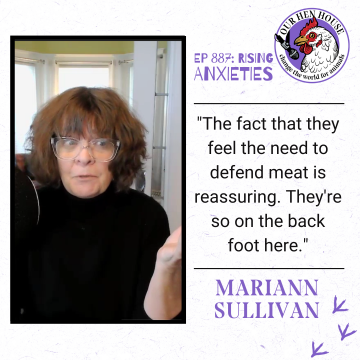
Isn't that interestingly put? Can it fit into a healthy system? Not is it necessary. They have changed their tune. They're, they're so on the back foot here. Uh, I mean, she does go on to, to talk about this. Um, The Animal Agriculture Alliance has put out the Meat Matters guide.
Just the fact that they feel the need to do that is reassuring, I think. And, um, these are some of the points that they make. And they're all stupid as you can guess. Complete protein power. I mean, how long ago did Francis Mor Lappe disprove the whole complete protein myth? Uh, you can get all of your amino acids from, from plant-based foods.
There are a few plant-based foods that have them all. No, actually a lot of 'em have them all, but some of them have really low numbers of some that you know, you should be getting more of. And all you have to do is eat a variety of foods. Most people like to eat a variety of foods and not just beef, except for like maybe our president, uh, no, he has the roll.
So, uh. Uh, stop me, stop me now. Um, alright. Many animal proteins provide all nine essential amino acids needed to support critical body functions. You can get all of those from plant-based foods. That's so stupid. Then, then B12, uh, we all know where, uh, animal-based foods get B12. They, they supplement their diets with loads and loads of B12, and that's why they get B12, uh, which you get from, you know, uh, dirt and most animals aren't out eating dirt.
Uh, you know, which we've, everyone has always done and, and, and, uh, we don't anymore. Heart health. Really? Alright, The only claim here is that lean beef can fit into a heart healthy diet. That's a pretty weak sauce kind of claim, um, when consumed alongside other important nutrients like fruits, vegetables, and whole grains.
It's the, the big claim is certainly that you need animal-based foods for heart health, but that maybe, if you're careful, you can tolerate them? Curb hunger, you know, uh, a lot of foods do that. Um, key to vulnerable populations. The Food and Agriculture Organization of the United Nations recognizes meat, milk, and eggs as essential sources of nutrients, particularly for vulnerable populations.
I mean, I don't know what, uh, this is... where this is from, but I would say that one of the issues is if people are in places where they can't get enough food, that, um, and they can get meat, milk, and eggs, which seems surprising, but, uh, I guess it's possible, then they might need to eat meat, meat, milk, and eggs.
Or if the food, the plant-based foods that they're getting don't have nutrients or something, I don't know. Like, it's not us, it's not anybody listening. It's not anybody reading this. And then the last one is sustainability progress. I, I mean, come, come on. Alright they made pro... they're not as bad as they used to be?
Like, is that the claim? Um, choosing food that is good for people and the planet should be based on facts, not a one-sided agenda. I totally agree. Don't fall victim to the misconceptions floating around. View the Meat Matters guide to see what research says.
And that, that was by one Emily Ellis, who's the manager of communications at the Animal Agriculture Alliance.
All right. That was a week, I'll tell you.
All right. This is interesting. I didn't know about this. Open pen gestation rule now in effect for Ohio pig farmers. This is from Pork Business, uh, which I read so you don't have to. Um, and Ohio is one of those states that years ago put in one of these, um, government, um, agencies that would set, set, uh, standards for how animals are to be treated.
And, uh, I, you know, I was always, uh, worse than skeptical. I mean, I, I always thought these were a disaster. This is real, this is really interesting because their, what do they call it? Their, um, Ohio Livestock Care Standards Board and, um, you know, it's full of industry people, and it prohibits like the legislature from, from passing, uh, laws to provide for animal welfare in farming.
I mean, it's like putting the industry in charge of the rules that are going to govern them. All right, so there's this new rule that breeding gestation stalls, which is what they call gestation crates, are only allowed post weaning for limited periods to confirm pregnancy and maximize embryonic welfare with new construction banning stalls except for these short confirmation windows. Now, assuming this is gonna get enforced, and I'm not saying it's not, I think it, it might be since it's coming from, from this, uh, governmental agency, basically. Uh, they're kind of banning gestation crates. I mean, not completely. 'cause they wouldn't wanna do what, you know, the activists want. But, and, and the, the organization, the Pork Council, points out that the timeline for implementation gives pig farmers the ability to plan, invest, and adapt responsibly. Every single law that has been passed requiring gestation crates to be, uh gotten rid of, has given low a huge, long timeline. So that's just bullshit.
Rather than face abrupt changes that could have forced families, those families only people who produce pork have families like most of the rest of us, out of a profession, they love providing nutrient dense protein for their communities.
Um, but it's interesting and Humane World for Animals, um, seems to think this is great. I took it just in case I was missing something, and I think this is just the industry facing up to the fact that they were... as, as I spoke about with Matt Dominguez last week, um, like the pork industry has been particularly recalcitrant about, about making any changes and part of it is just their personalities that, you know, they just don't wanna be beaten.
Well here, they're making it look like it's their idea. Um, this grassroots approach. What is grassroots about this? There's nothing grassroots about this. It's from The Livestock Standards Board. This grassroots approach doesn't try to dictate how farmers and their veterinary partners in other states raise their animals.
So there's no sales ban. They really hate the sales ban. Um, and the Ohio Pork Council, um, concludes by saying we care about our animals and their wellbeing. We care about food safety, and we certainly care about the people and the environment in the communities where we farm. Do you really? That's great.
But it's pretty interesting. It's like they're trying to come up with a way to cave without looking like they're caving, which is really good news.
Why is everyone talking about sustainability? This from Drovers? Like why? Why? While producers and consumers define sustainability differently, it's important for beef producers to become part of the story, not ignore it.
This is by Angie Stump Denton, and, uh, this is so interesting because it, it has all these different definitions of sustainability, which don't have anything to do with my def. I thought it had to do with, you know, the environment and climate. That's what I think of when I think of sustainability. But no, people like, this is a word we have to stop using 'cause people just take it to mean, um, anything that they want.
The US Roundtable for Sustainable Beef, um, says that sustainability encompasses socially responsible, environmentally sound, economically viable... oh yeah.... economically viable practices that prioritize climate, people, animals, and progress. Well, that's a lot of things to accommodate all at the same time. Um, this guy, Matthew Cleveland, who's the ABS global Senior Director of Global Bovine Sustainability, that's quite a title, um, says sustainability is fundamentally about stewardship.
Stewardship of the environment. Yeah. Alright. Caring for the land. Okay. Caring for the animals. I don't even consider that part of sustainability. I mean obviously I consider it a paramount importance, but I don't think it's about sustainability. Caring for our families. What? And caring for our communities.
Okay. Um, from a producer's perspective, sustainability is deeply rooted in profitability. Oh, is it really? Cleveland notes that in a survey of ranchers profitability was the largest consideration in sustainability discussions. Oh, great. That's really terrific. Quote, producers have to remain profitable in order to be sustainable, he says. Or on the other hand, if you can't be sustainable and have a profit, you have to go out of business.
Oh my God. Consumers, this points out, use sustainability differently. Still not the way I view it though. Uh, surveys reveal people are most concerned about practices like no antibiotics and animal management. Animal management. They do care about the animals, even though... with environmental factors ranking lowest in their priorities.
On the word sustainability, we obviously have no idea what this word means. Um, Cleveland also points out that the way they're going to deal with this in the beef industry is genetic intervention. Genetic intervention is the most important practice for permanent reduction of environmental impact on livestock production.
They're gonna fuck with the cows. That's, that's what they're gonna do. And there's actually, he says, a tremendous opportunity to use genetic innovations to drive efficiency and sustainability. Great. When we talk about sustainability, we have to frame that in a way that producers are going to get engaged.
No, we don't. We have to pass laws forcing them. Um, all right, let's talk about profitability, he says, let's talk about return on investment. No, let's talk about the planet! Crazy. These people are crazy. Sustainability, I mean, don't use that word anymore 'cause obviously it's lost its meaning.
Alright, from wattpoultry.net, um, The egg wars. We're having egg wars. Caged, cage-free, free range, pasture raised, and I would add, you know, plant-based, uh, but she didn't. This is by Meredith Dawson and she points out that this is a, it's really starting to happen. The egg industry is undergoing a conversion as cage-free, free range, and pasture raised eggs are beginning to slowly claim market share from eggs produced using what they like to call and what she calls conventional housing.
There's nothing conventional about what they do these birds. Distinct market segments that allow producers to target different consumer priorities, um, as alternative housing systems now account for approximately 40% of the nation's layer hens.
That's a lot. I know it's not even close to enough. That means 60% are still in battery cages. Um, conventionally housed, IE in battery cages, target the consumers that prefer a budget friendly option. So poor people have to give up their ethics. That's basically, what's that saying? Pasture raised in free range eggs are often marketed to the consumer whose priority is animal welfare.
Yeah, rich people get to pretend that they actually care about animals. And cage-free eggs occupy whatever middle ground is left over. People who can't afford, uh, people who care, kind of but not enough to spend really a lot of money that they can't either can't afford or don't want to. Um, then she just goes on to talk about, uh, like there's more competition in the industry, but I thought it was pretty interesting.
Um, they don't have an answer. They don't have an answer. They, they think that battery cages have to stay on the market so that poor people will have something to eat, basically.
Alright. There's an article here on wolves. I find wolves a really depressing topic. I've always had really, really mixed feeling, actually not that mixed, really bad feelings about wolf releases.
'Cause I think we're just putting them out there to suffer, so often. Um, I think wolves care so much about each other, so even if one survives, they probably lost pack mates and spouses and whatever. I guess spouse is the wrong word, but you know, mate, that's the word they use. Uh, this is from Ag Daily, More wolves, more conflict.
Livestock, depredation, that's the word that they, I like to use depredation in Colorado. Alright Colorado has like, you know, a lot of wolf release and they're talking about this, um, this woman, MaryLee Ellis, who's, um, part of one of the owners of Coberley Creek Ranch in Routt County, Colorado. Colorado, sorry. Um, and talking about how, you know, they found a, a calf Spotty.
It's, it's also... the other thing is, is these wolf, I mean, we have to get rid of the animal agriculture and get the cows, and the calves especially, off of the land before we release the wolves, not after. They can't live... uh, they can't survive together. And you know which one I think we need to get rid of.
Um, all right. So the Ellis family runs a cow calf and hunting operation on forest permits, so not their own land and private land in northwestern Colorado. Um, and, uh, they're really upset that wolves were released near their ranch. And most of this is about how unbelievably difficult it is to get money back because if you're, if you're, um, the way they did this so that they could release these wolves is, uh, they promised that you could be compensated if you lost a cow, um, because of, of the wolves.
So they get their money back. But apparently it's really hard to get your money back and the agency is really reluctant to get on and on and on and on. Yeah, I have the answer. Just stop. Get these cows off the land. Like it's just a disgrace. Um, and, and let the wolves have it.
Let the wolves do what they want to do. And you know, when Ellis told the ranch manager which calf it was, she said he just got despondent. He knows the mom. He knows the potential of this calf. When you see how they've been torn apart, it's very emotional. These are people who run a hunting, uh, preserve.
Give me a break. All right. That's enough. That's enough. I'm losing my voice. Can you tell? I keep losing my voice. Um, that's it for this week's rising anxieties. Oh, I do have stuff I'm supposed to say at the end. Um. Let's see. Last Friday's interview was with Matt Dominguez, I think I just mentioned that, from Compassion in World Farming, USA.
We talked a lot about strategy, theories of change. It was a fascinating conversation. I highly recommend it if you haven't listened. Um, this Thursday, the Hen Report, um, I think I'll be joined by, um, Michael Dorf. Excited about that. This Friday, Wayne Hsiung is gonna be joining me on what he's been up to of late.
This is a man who constantly reinvents himself, um, or at least reinvents his activism. He's currently, um, studying at a seminary. Yep. So I can't wait for that conversation. And, uh, thank you so much for joining me today on Rising Anxieties. Don't forget to tune into the Hen Report and the Our Hen House interview.
And don't forget to subscribe on your favorite pod catcher or on YouTube.
_____________________________________________

Thank you for listening to the Our Hen House podcast! If you enjoy our podcasts, believe in our mission to effectively mainstream the movement to end the exploitation of animals, find community and solace in our shows and resources, and would like to show your support for vegan indie media, please make a donation today.
Contributions of any amount will go towards our fundraising goal and are hugely appreciated. Our Hen House is a 501(c)(3) nonprofit organization, so it’s tax-deductible. Thank you for helping us create quality content!
Subscribe to our show on Apple Podcasts, YouTube, or your favorite podcatcher, and don’t forget to leave a 5-star review!
Check out Our Hen House’s other podcasts: The Animal Law Podcast, The Teaching Jasmin How to Cook Vegan Podcast, and the Antiracism in Animal Advocacy Audio Series.
Follow us on social media! You can find Our Hen House on LinkedIn, Facebook, Instagram, TikTok, Threads, or Bluesky.
The Our Hen House theme song is written and performed by Michael Harren.